PALMOILMAGAZINE, YOGYAKARTA — The impacts of climate change are becoming increasingly evident, creating serious challenges for independent oil palm smallholders. Unpredictable rainfall, prolonged droughts, and rising pest and disease attacks are putting the future of smallholder plantations at greater risk. In this situation, sustainability, adaptation, and mitigation efforts are essential to maintaining productivity and ensuring long-term resilience.
According to the Indonesian Sustainable Palm Oil Farmers Forum (FORTASBI), the organization has supported 60 independent smallholder groups throughout 2025, all of whom share a dual commitment: improving productivity while implementing sustainable farming practices. FORTASBI considers this commitment a crucial foundation in facing climate-related threats on the ground.
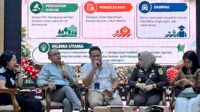
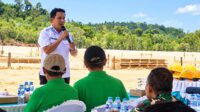
has been actively strengthening the climate-mitigation capacity of its members. Throughout the year, the organization has conducted various trainings, including regenerative agriculture, Carbon Training of Trainers (ToT), and workshops on carbon footprint assessment and greenhouse gas (GHG) reduction for hundreds of farmers. These activities aim to equip smallholders with the skills to implement low-carbon plantation management.
Also Read:
Sustainability certification also remains a key priority. Beyond establishing good agricultural practices, certification supports broader climate action by promoting more efficient and responsible plantation management.
For independent smallholders, climate mitigation is not just a slogan. They are already applying practical actions such as land intensification to avoid new land clearing, the use of organic fertilizers derived from empty fruit bunches and livestock manure, planting cover and beneficial crops, rehabilitating high conservation value areas, improving peatland management, as well as seedling and tree-planting efforts to enhance carbon sequestration.
Also Read: Smallholders Encouraged to Measure Carbon Emissions: FORTASBI Holds Training in Pekanbaru
These initiatives now form part of FORTASBI’s collaborative program with certified farmers to achieve lower-emission fresh fruit bunch (FFB) production.
For FORTASBI, climate mitigation is a collective movement that can only succeed through collaboration. It is not the responsibility of individuals alone but a shared commitment to ensuring independent smallholder oil palm plantations remain productive, sustainable, and climate-resilient. (P2)