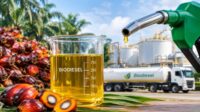
PALMOILMAGAZINE, JAKARTA – The launch of Indonesia’s B50 biodiesel mandate by President Prabowo Subianto on July 9, 2026 marks a new chapter in the country’s national energy policy. During the launch ceremony, Energy and Mineral Resources Minister Bahlil Lahadalia went even further by introducing the prospect of B60 by 2028. For many, the initiative represents a milestone toward Indonesia’s energy independence.
Yet beneath this optimism lies a more fundamental question: How far can palm oil support the country’s growing energy ambitions without undermining food security and export earnings?
This is Indonesia’s palm oil trilemma—finding the right balance between food, energy, and exports, all of which depend on the same commodity.
Also Read: Palm Oil as a Renewable Natural Resource
Palm oil occupies a unique position in Indonesia’s economy. It supports millions of workers and smallholders, generates tens of billions of dollars in export revenue annually, and serves as the backbone of the country’s biodiesel program.
Of Indonesia’s approximately 16 million hectares of oil palm plantations, about 42% are managed by smallholders, while the remainder belong to corporate estates. The industry also boasts one of the country’s most integrated agro-industrial value chains, supplying products ranging from food and oleochemicals to biomaterials and bioenergy.
According to GAPKI production statistics for January–April 2026, palm oil consumption for biodiesel reached 4.4 million metric tons, already surpassing the 4.2 million metric tons used for food and oleochemical production. This trend signals that competition for palm oil feedstock is becoming increasingly pronounced.
Also Read: Indonesia Sets July 2026 Biodiesel Market Index Price at IDR 14,562 per Liter
The issue becomes even more significant when viewed through the lens of biofuel technology.
Palm oil biodiesel—like bioethanol produced from sugarcane, cassava, or sorghum—is classified as a first-generation biofuel, meaning it relies on crops that can also serve as food. This has long fueled the global “food versus fuel” debate. When food crops are diverted to energy production, both availability and prices inevitably become intertwined.
Recognizing this concern, the European Union, through its Renewable Energy Directive II (RED II), has gradually reduced support for first-generation biofuels because of their high risk of Indirect Land Use Change (ILUC).
Also Read: Prabowo Launches B50 Biodiesel, Declares Indonesia First Nation to Mandate 50% Palm-Based Fuel Blend
By contrast, second-generation biofuels utilize waste materials and non-food feedstocks, such as used cooking oil (UCO), agricultural residues, and biomass waste. UCO has become a key feedstock for the development of Sustainable Aviation Fuel (SAF). Meanwhile, third-generation biofuels rely on more advanced feedstocks such as microalgae.
From an energy security perspective, however, the B50 program offers undeniable advantages.
Higher biodiesel blending ratios reduce diesel imports and lessen Indonesia’s dependence on volatile global oil markets. The price difference between FAME (B100) and conventional diesel is currently financed through palm oil export levies, allowing the government to shield consumers while promoting renewable fuel use.
Also Read: Indonesia Tightens Environmental Oversight as New Rules Raise Compliance Bar for Palm Oil Industry
In an era of geopolitical uncertainty and fluctuating energy prices, such a strategy carries considerable strategic value. Increased domestic biodiesel consumption also creates a more stable market for fresh fruit bunches (FFB), helping support the incomes of Indonesia’s oil palm smallholders.
Nevertheless, energy policy cannot be viewed in isolation from food security and export performance.
A study by the Center for Development Institutional Research at the University of Indonesia estimates that implementing B50 could reduce Indonesia’s palm oil export value by approximately IDR190 trillion, exceeding the projected IDR172 trillion in foreign exchange savings from lower diesel imports.
Also Read: B50 Biodiesel Mandate Requires a Cautious Approach
At the same time, rising palm oil demand for biodiesel could push domestic cooking oil prices up by around 9%.
In other words, the benefits of energy security must be weighed carefully against their potential impact on consumer purchasing power and export earnings. This is where the challenge evolves from a simple dilemma into a true trilemma.
The University of Indonesia researchers also warn that B50 would require substantially larger fiscal support to maintain the economic viability of biodiesel production. Under the current funding mechanism, these incentives are financed through higher palm oil export levies.
Also Read: Restoring the Original Spirit of Indonesia’s Cooperative Movement
Ironically, raising export levies could reduce the prices received by oil palm farmers. According to the study, every 1% increase in the export levy could lower FFB prices by approximately IDR333 per kilogram. If the levy were increased from 10% to 15.17% to support B50, FFB prices could decline by as much as IDR1,725 per kilogram.
Another challenge stems from supply
Indonesia’s palm oil production has remained relatively stagnant at around 50 million metric tons annually, while domestic demand continues to rise with each increase in the biodiesel blending mandate. If energy demand grows faster than production, exports will inevitably decline, potentially allowing competing vegetable oils such as soybean and sunflower oil to capture greater shares of the global market.
To address these concerns, the University of Indonesia researchers recommend replacing rigid blending mandates with a more flexible policy framework.
Also Read: GAPKI Strengthens Indonesia–Russia Vegetable Oil Cooperation Through Strategic Agreement
Instead of maintaining a fixed biodiesel blending ratio, the mandate could be adjusted dynamically based on key market indicators, including CPO prices, diesel prices, palm oil supply, FFB prices, and the need to stabilize domestic cooking oil prices.
Similar adaptive approaches have been implemented in varying forms in countries such as the United States, Brazil, Malaysia, and Thailand. The objective is not to weaken Indonesia’s energy ambitions, but rather to preserve a healthy balance among energy security, food affordability, and export competitiveness.
Looking ahead, Indonesia should also begin shifting more research funding and policy incentives toward second- and third-generation biofuels.
Also Read: Palm Oil Remains Indonesia’s Top Trade Surplus Contributor as Non-Oil Exports Reach US$16.31 Billion
The country’s palm oil industry generates enormous quantities of biomass, including empty fruit bunches, palm residues, and methane captured from palm oil mill effluent, all of which could serve as feedstocks for products such as BioCNG. Unlike food-based feedstocks, these resources do not directly compete with food production, reducing pressure on both supply and consumer prices.
Over the longer term, biofuels derived from waste materials and algae could also deliver greater environmental benefits while improving greenhouse gas emission reductions.
Even so, enthusiasm for next-generation biofuels should not diminish support for Indonesia’s upstream palm oil sector.
Also Read: KPBN CPO Price Rises Slightly to IDR15,605/kg on Monday (July 13)
Palm oil will remain the foundation of Indonesia’s bioenergy strategy for decades to come. Therefore, smallholder replanting programs, research into high-yield planting materials, productivity improvements, sustainability certification, and stronger farmer institutions must remain national priorities.
Increasing biofuel production through higher productivity is far more sustainable than expanding plantation acreage, which carries significant environmental and social risks—issues highlighted in the documentary Pesta Babi.
The government should also consider a more specialized institutional approach by assigning dedicated state-owned plantation companies specific roles. Under a “dedicated plantation” strategy, at least two state-owned enterprises could focus separately on ensuring food security (cooking oil supply) and energy security (biofuel feedstock).
Ultimately, the success of the B50 program will not be measured by how high Indonesia can raise its biodiesel blending ratio, but by the government’s ability to maintain equilibrium.
Energy security is essential, but food must remain affordable. Export earnings must continue to support the economy. Oil palm smallholders deserve a fair share of the benefits. And research and innovation that strengthen the palm oil industry must remain adequately funded.
That is the essence of Indonesia’s trilemma today.
The challenge is not choosing between food, energy, or exports, but ensuring that all three advance together. If that balance can be achieved, palm oil will remain not only a powerful engine of Indonesia’s economy, but also the cornerstone of a sustainable energy transition and long-term national energy independence. (*)
By Dr. Veritia Sukarta
Researcher in Palm Oil Economics and Management | Editor-in-Chief, KabarSDGs