PALMOILMAGAZINE, JAKARTA – The world depends on palm oil, yet often refuses to admit it. This contradiction lies at the heart of a complex web of environmental narratives, commercial interests, and geopolitical competition.
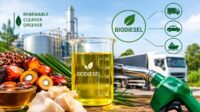
Few agricultural commodities are treated as paradoxically as palm oil. On one hand, it has become an indispensable ingredient of modern life. It is found in food, cosmetics, household products, pharmaceuticals, and increasingly in renewable energy. Billions of people benefit from palm oil every day, often without realizing it.
Yet palm oil has also become one of the world’s most criticized commodities, frequently portrayed as a leading driver of deforestation, biodiversity loss, and climate change.
Also Read: Risky reawakening of the state-controlled commodity export
This contradiction places palm oil in a unique position within global commodity markets. It is celebrated for its extraordinary productivity while simultaneously condemned for the very success that has made it indispensable. The more efficiently it serves global demand, the more scrutiny it attracts.
Ironically, palm oil has become a victim of its own strengths.
Its unmatched biological efficiency lies at the center of this debate. Compared with any other major vegetable oil crop, oil palm produces significantly more oil per hectare, allowing the world to generate higher output while using considerably less land.
Also Read: Palm Oil as a Renewable Natural Resource
A simple thought experiment illustrates the point. If the world were to abandon palm oil entirely and replace it with alternative vegetable oils, the environmental outcome would not necessarily improve. In fact, global pressure on land resources could become substantially worse.
Rapeseed (canola), for example, typically produces only around 0.7 tonnes of oil per hectare annually. Replacing palm oil with rapeseed would require roughly five times more farmland. Sunflower oil would demand even larger areas, while soybean oil—producing less than half a tonne of oil per hectare—could require nearly ten times more land to match palm oil’s output.
If Indonesia’s and Malaysia’s oil palm plantations disappeared overnight in pursuit of a “palm oil-free” world, agricultural expansion would simply shift elsewhere. New farmland would likely be developed across regions such as the Amazon Basin and other major grassland ecosystems, potentially creating environmental impacts on an even greater scale.
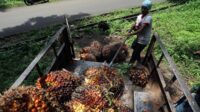
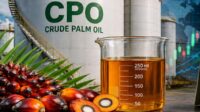
This is the essence of palm oil’s paradox. Because it is highly productive and relatively affordable, global demand continues to grow. Palm oil has become embedded in countless consumer products—from soap and lipstick to chocolate, instant noodles, and biofuels.
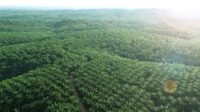
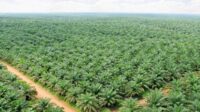
Growing demand has inevitably encouraged plantation expansion, particularly in tropical regions that are also home to some of the world’s richest biodiversity. Vast monoculture plantations replacing diverse forests have become powerful visual symbols for environmental campaigns, making palm oil an easy target—not simply because of what it is, but because of how successful it has become.
Viewing palm oil solely through an environmental lens, however, risks oversimplifying a much more complicated reality.
Also Read: Indonesia Cuts July 2026 CPO Reference Price to USD 1,000.90 per Ton Amid Weak Global Demand
Global political economy also plays an important role.
Europe and North America produce competing vegetable oils such as rapeseed, sunflower, and soybean. Yet these crops struggle to match palm oil’s efficiency, production costs, and versatility. As competitive advantages diminish, non-tariff trade measures increasingly become influential policy tools.
Environmental regulations, while often pursuing legitimate conservation objectives, can also reshape international trade.
Measures such as the European Union Deforestation Regulation (EUDR) represent important efforts to combat global deforestation. At the same time, their implementation places disproportionately greater pressure on tropical commodities produced by developing countries.
Also Read: Indonesia Sets July 2026 Biodiesel Market Index Price at IDR 14,562 per Liter
In this context, palm oil faces not only sustainability challenges but also geopolitical realities. The commodity increasingly carries the burden of historical emissions generated largely by industrialized nations, while millions of smallholder farmers across Southeast Asia and Africa bear much of the economic consequence.
None of this means the palm oil industry should dismiss legitimate criticism.
Land conflicts, historical deforestation, threats to wildlife habitats, and persistent inequality among independent smallholders remain real challenges. Weak governance and inconsistent law enforcement continue to create space for international criticism that cannot simply be attributed to foreign interests.
The world itself also reveals a striking contradiction.
Many urban consumers—both in Europe and in Indonesia—publicly advocate boycotts of palm oil while continuing to purchase products that contain it. The production process is criticized, yet dependence on the commodity itself remains largely unchanged.
Such contradictions demonstrate that the palm oil debate extends far beyond simplistic distinctions between good and bad.
Also Read: KPBN CPO Prices Rose 0.82% on Tuesday (July 7), Bursa Malaysia Closed Slightly Lower
For Indonesia, relying solely on defensive narratives is no longer sufficient.
While it is true that palm oil supports millions of livelihoods and remains a cornerstone of the national economy, economic arguments alone cannot adequately address growing environmental and social expectations.
For decades, palm oil has shouldered the burden of satisfying global demand for affordable, abundant, and versatile raw materials, while simultaneously becoming a target of global hypocrisy from societies reluctant to confront their own patterns of consumption.
As one of the world’s most strategic agricultural commodities, palm oil deserves to be freed from what might be called the “curse of success.”
That can only happen through comprehensive national reform—not as a public relations exercise, but as a genuine commitment to better governance. Such reform should rest on four pillars: improving land-use efficiency, increasing productivity through sustainable intensification, expanding downstream value-added industries, and ensuring a fairer distribution of economic benefits.
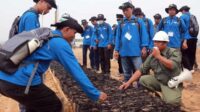
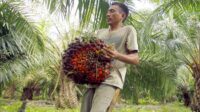
At the center of these efforts are Indonesia’s independent smallholders, who manage more than 40% of the country’s oil palm plantations yet continue to produce well below their potential. By adopting best agricultural practices, implementing transparent replanting programs, and strengthening farmer institutions, production can increase significantly without clearing a single additional hectare of forest.
Also Read: Palm Oil as a Self-Sufficiency Model and Engine of Economic Growth
These reforms should not be viewed merely as efforts to satisfy Western markets or gain international approval. The real objective is far more important: safeguarding Indonesia’s own ecosystems while ensuring that the benefits of palm oil development are shared more equitably across producing regions rather than concentrated among large corporations or global markets.
Ultimately, palm oil should neither be permanently branded as an ecological villain nor treated simply as a limitless engine of export revenue.
What the industry needs is more dignified governance—one that recognizes palm oil for what it truly is: a strategic commodity capable of demonstrating that economic efficiency and environmental sustainability are not mutually exclusive, but can reinforce one another when supported by responsible policies and sound stewardship. (*)
By Edi Suhardi, Sustainable Palm Oil Analyst