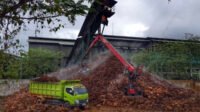
PALMOILMAGAZINE, JAKARTA – Indonesia’s abundant oil palm empty fruit bunches (EFB), long regarded as one of the plantation industry’s largest waste streams, could soon become a valuable source of renewable energy and bio-based industrial materials. Through ongoing research into pyrolysis technology, the National Research and Innovation Agency (BRIN) aims to maximize the value of oil palm biomass while supporting the country’s energy transition and circular economy agenda.
According to Dieni Mansur, Head of the Biomass Oil Pyrolysis Research Team at BRIN’s Research Center for Molecular Chemistry, converting biomass waste into renewable fuels and bio-based chemicals is a strategic step toward reducing Indonesia’s dependence on fossil fuels.
“Pyrolysis oil is being developed to support national energy diversification. Meanwhile, oil palm empty fruit bunches are generated in very large quantities, making their optimal utilization increasingly important,” Dieni said in an official statement received by Palmoilmagazine.com on Thursday (July 2, 2026).
Also Read: Riau Plasma Palm Fruit Prices Rise for July 1–7 Period, 9-Year-Old Trees Reach IDR 3,831.76/kg
Pyrolysis is a thermochemical process that heats biomass in the absence of oxygen. Depending on processing conditions, it can be carried out through slow, fast, or flash pyrolysis. BRIN’s current pilot-scale reactor is capable of processing EFB using slow pyrolysis, with each production cycle taking approximately two to four hours.
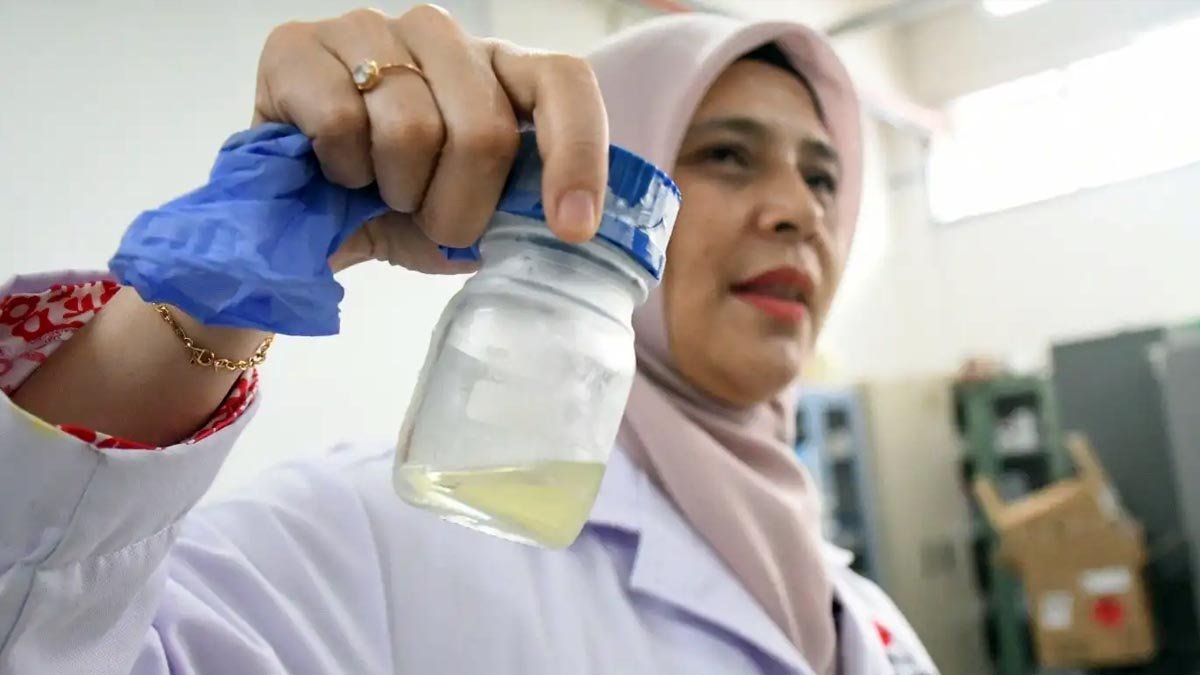
The process converts oil palm EFB into three high-value products: liquid smoke, bio-oil, and biochar. Each offers promising commercial applications across multiple industries.
Liquid smoke, for example, has the potential to serve as a natural coating that extends the shelf life of fresh fruit. Researchers are also exploring its use in developing film-based biomaterials designed to accelerate the healing of wounds inside the oral cavity.
Also Read: Thermal Stability and Pumpability Challenges in Large Palm Oil Storage Operations
Meanwhile, both bio-oil and liquid smoke contain valuable organic compounds—including phenols, acetic acid, ketones, and methanol—that are widely used as feedstocks in the chemical manufacturing industry.
Dieni explained that bio-oil produced from EFB can already be utilized as boiler fuel in industrial facilities. Although it is not yet suitable as a direct replacement for transportation fuels, its chemical composition offers significant potential for further development as an additive in liquid fuels, including gasoline.
“This technology creates new opportunities to transform oil palm waste into alternative energy sources while also producing sustainable bio-based chemicals,” she said.
Also Read: Indonesia’s Palm Oil Stocks Edge Lower as Biodiesel Consumption Accelerates
Beyond addressing the challenge of plantation waste accumulation, the research provides an integrated solution that combines renewable energy production with higher-value utilization of agricultural residues. The approach aligns closely with circular economy principles, which emphasize efficient resource use, waste reduction, and environmental sustainability.
Looking ahead, BRIN expects the pyrolysis technology to be adopted more widely by the palm oil industry, helping reduce biomass waste, strengthen Indonesia’s energy security, and increase the value-added potential of the country’s palm oil sector.
With Indonesia possessing one of the world’s largest supplies of oil palm biomass, the development of pyrolysis technology is viewed as a strategic opportunity to accelerate locally sourced renewable energy production while supporting the nation’s transition toward a greener and more sustainable economy. (P2)