Research presented at the Sustainable Landscape Seminar and Festival in Pontianak shows how forest protection, tembawang agroforestry, soil biodiversity and sustainable livelihoods can be managed as interconnected parts of a shared landscape.
PALMOILMAGAZINE, PONTIANAK — Forests, tembawang agroforestry systems, soils, crops and community livelihoods are all interconnected parts of a single landscape. Research conducted by the Farmers for Forest Protection Foundation (4F) and Indonesia’s National Research and Innovation Agency (BRIN) highlights the importance of understanding these connections to strengthen forest protection, improve land management and support sustainable livelihoods.
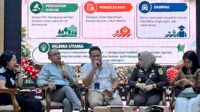
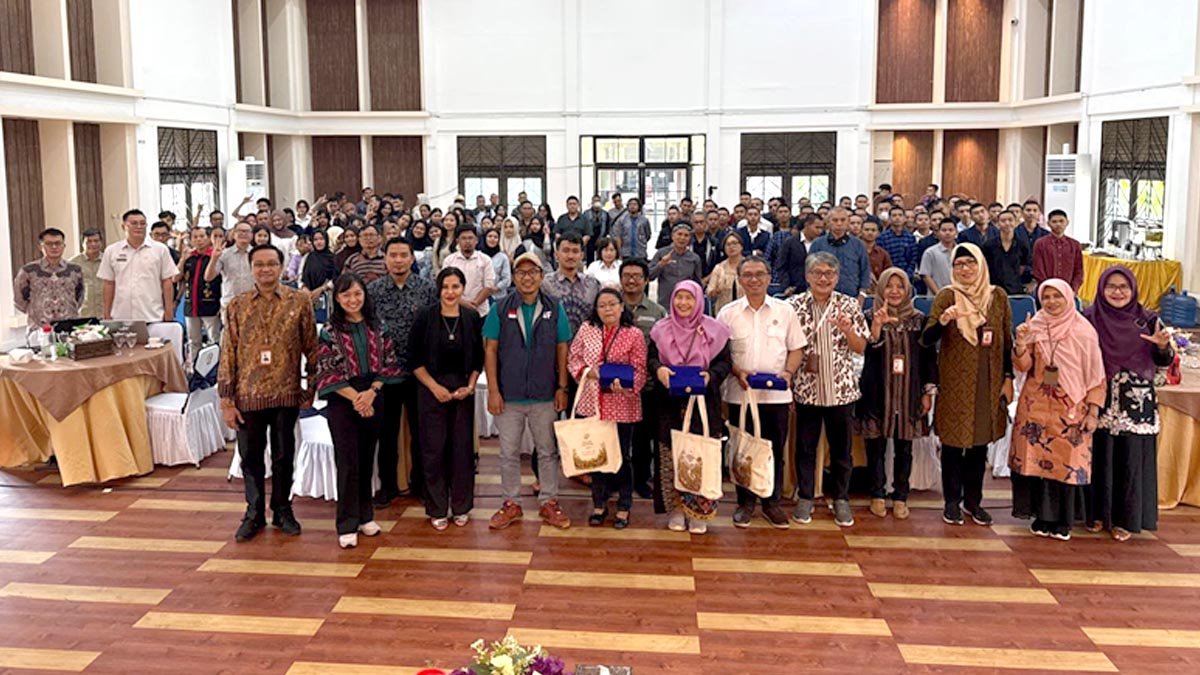
The findings were presented at the Sustainable Landscape Seminar and Festival, organized by 4F in collaboration with Tanjungpura University (UNTAN) and BRIN in Pontianak, West Kalimantan, on Wednesday, August 12, 2026.
The event brought together researchers, academics, government representatives, farmers, Indigenous communities, civil society organizations and private-sector stakeholders.
4F Executive Director Tirza Pandelaki said collaboration between scientific research and community experience is essential to ensure that knowledge does not remain confined to reports but can be translated into practical landscape management.
“Through our work with communities across different village landscapes, we have seen that forest protection and community livelihoods cannot be separated,” Tirza said in a statement received by PalmOilMagazine on Thursday, August 13, 2026.
Also Read: FORTASBI Highlights Independent Smallholders’ Role in Emissions Reduction and Forest Conservation
“Therefore, we want the research findings discussed today to go beyond reports, be discussed collectively and identify what can actually be implemented on the ground,” she said.
Support from academic institutions is also an important part of the collaboration.
In her opening remarks, Dr. Ir. Farah Diba, S.Hut., M.Si., Dean of the Faculty of Forestry at Tanjungpura University, emphasized the need to balance ecological and economic interests.
“Sustainability must be able to balance ecological and economic interests,” Farah said. “Scientific evidence should not stop in laboratories, but must be applied in communities and deliver tangible benefits, including improvements in local economies.”
Also Read: Industry and Public Accountability in Efforts to Mitigate Forest and Land Fires
Regenerating Forests and Tembawang Support Landscapes and Livelihoods
A spatial study conducted by 4F found that young regenerating forests and low-density forest areas remain vulnerable to forest-cover loss.
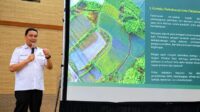
Harits Yowansyah Pandayu Putra, Spatial Expert at 4F, said an overlay of Ministry of Forestry deforestation data from 2023 to 2025 with High Carbon Stock (HCS)-based forest-cover data indicated that deforestation continues to affect both categories.
“Forest protection should not focus only on areas with dense forest cover,” Harits said. “Forests that are regenerating must also be protected so that their opportunity to recover is not lost.”
Also Read: Dry Season Fire Risk Rises, APHI-GAPKI Urge Palm Oil and Forestry Companies to Act Early
The analysis identified approximately 27,316 indicative tembawang locations in Sanggau Regency, along with around 103,584.63 hectares of land with potential for agroforestry development.
The findings could provide an initial reference for determining priorities for forest protection, restoration and agroforestry development. However, the identified tembawang locations still require verification at the field level.
Amir Mahmud, M.Si., a researcher at 4F, said tembawang, or traditional agroforestry, is more than simply a collection of trees remaining between plantation areas.
These landscapes serve social, historical, economic and ecological functions. Their diverse vegetation can provide food, fruit, timber, medicinal plants and sources of income, while also preserving traditional knowledge and cultural values.
However, agroforestry systems face increasing pressure from land conversion, including conversion to oil palm plantations.
While oil palm remains an important source of cash income for communities, the shift toward monoculture landscapes can reduce the diversity of local livelihood options.
“The issue is not about placing oil palm and agroforestry in opposition,” Amir said. “The challenge is to develop agroforestry models that can meet today’s economic needs without losing their social and ecological functions.”
He said agroforestry development should be tailored to land conditions, farmers’ commodity choices and capacities, as well as market opportunities. Such efforts also require support in the form of institutions, knowledge, financing, supply chains and appropriate policies.
Also Read: When Smallholders Support Global Palm Oil Markets, It Is Time to Rethink Farm Scale
Reading Plant Health Through the Soil
BRIN research presented by Dr. Ir. Asri Insiana Putri, M.P., showed that plant health is closely linked to communities of microorganisms living around plant roots, known as the rhizosphere.
Metagenomic analysis conducted in Menyabo, Gunam and Embala villages in Sanggau Regency found differences in fungal communities between the rhizosphere of healthy and unhealthy oil palms.
The study found that Fusarium had a relatively higher abundance in unhealthy plants.
Researchers also observed distinctive microbial communities in healthy oil palms located near natural forest areas, including the presence of Trichoderma virens, which has potential as a biological control agent.
Also Read: Indonesia Recovers IDR10.2 Trillion and Reclaims 5.8 Million Hectares in Forest Crackdown
Another BRIN study on nitrogen-fixing Azotobacter bacteria showed that natural forest and tembawang areas have higher levels of vegetation diversity, leaf litter, organic carbon, moisture and soil microbial activity.
“Plant health is not only related to the plant itself,” Asri said. “The soil contains communities of microorganisms that perform important functions, while landscape conditions also influence the environment in which those microorganisms live.”
The findings highlight the importance of understanding the relationships between landscapes, soils, microorganisms and plant health in supporting more sustainable land management.
Also Read: RSPO Certification Transforms Belayan Sejahtera Smallholders, Strengthens Village Economy
Scientific Knowledge Meets Community Experience
The research findings were complemented by the experiences of communities that have managed and lived within these landscapes for generations.
Isa Kenedy, a farmer representative and member of the Village Forest Protection Team in Setawar Village, Sekadau Regency, said oil palm remains important for rural livelihoods, but forests are equally important for maintaining environmental conditions and supporting agricultural sustainability.
Amid strong oil palm prices, he warned that customary and community-managed forests could face greater pressure for conversion into plantations.
“If the forests are gone, what will we leave for our children and grandchildren?” Isa said.
“Communities that protect forests need incentives. It should not be only those who clear forests who gain economic benefits. Those who maintain forests should also receive benefits.”
His remarks highlighted the importance of creating economic incentives for communities to protect forest cover while developing sustainable livelihood opportunities.
Also Read: Indonesia’s Social Forestry Model Boosts Sustainable Livelihoods While Protecting Forests
From Landscape to Festival, From Research to Action
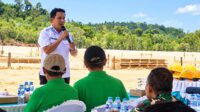
Community knowledge and experience were also showcased at the Sustainable Landscape Festival, themed “Celebrating Forests, Food, Culture and Community.”
Representatives from 11 villages supported by 4F brought and sold a range of non-timber forest products and locally produced goods. Community flagship products were also featured in a non-timber forest product competition.
The series of events also included the signing of a memorandum of understanding between BRIN and Tanjungpura University, as well as the handover of Azotobacter isolates to UNTAN to support further research and innovation adapted to local environmental conditions.
“Through this festival, we want to show that communities possess knowledge, experience, products and economic potential that grow from their landscapes,” Tirza said.
“Research helps us understand the landscape, while communities understand how that landscape is managed and used. The challenge is to bring the two together so they can be translated into real action and generate sustainable benefits for communities.”
Also Read: Bumitama Wins Medbun Awards 2026 for Community Economic Empowerment Initiative
About the Farmers for Forest Protection Foundation (4F)
The Farmers for Forest Protection Foundation (4F) is an organization committed to supporting smallholders, Indigenous communities and local communities in protecting forests while improving livelihoods through a landscape-based management approach.
4F works across priority landscapes, particularly in Kalimantan, by building collaboration with government institutions, research organizations, universities, civil society groups, private-sector stakeholders, cooperatives and local communities.
Its approach integrates ecological, social, economic and governance considerations to ensure that forest protection can move forward alongside improvements in community welfare. (P3)