

Inspections in Kuantan Singingi identified reported gaps involving waste management, emissions controls, environmental documents, river buffer protection and fire-prevention facilities.
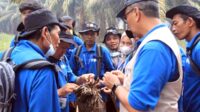
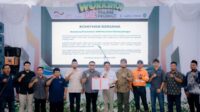
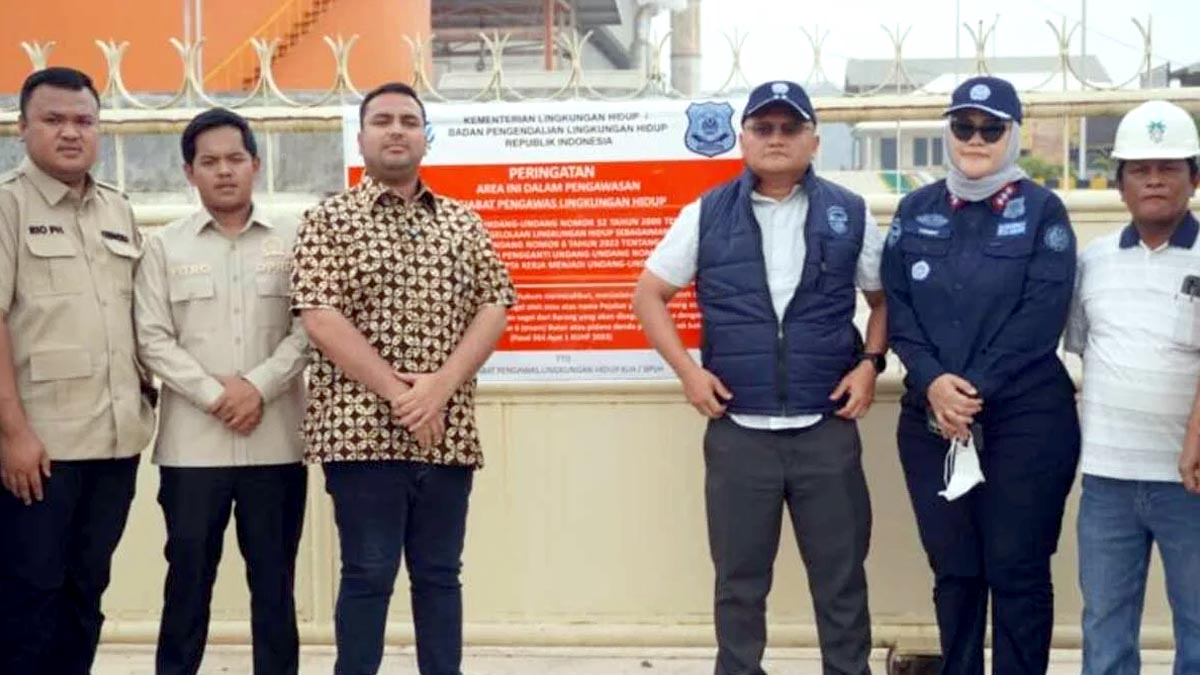
PALMOILMAGAZINE, KUANTAN SINGINGI — Indonesia’s environmental law enforcement authorities, accompanied by a member of the House of Representatives, have inspected eight palm oil plantation and processing companies in Kuantan Singingi Regency, Riau, identifying a range of reported environmental compliance issues.
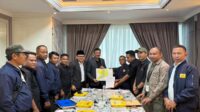
The inspection was conducted by a team from the environmental law enforcement unit, together with House of Representatives Commission XII member Muhammad Rohid. He was accompanied by Kuantan Singingi legislative council member Reky Fitro, S.Pt., M.Pt., Environmental Agency (DLH) head Dodi Fitrawan and other officials.
Also Read: US CBP Detains Palm Oil From Indonesia’s MAR and HIP Over Forced Labor Concerns
The inspection covered issues including wastewater management, emissions control, environmental documentation, river buffer protection and land-fire prevention.
At PT Karya Tama Bakti Mulia (KTBM), the team reported that some oil palm replanting activities were not yet included in the company’s environmental documentation.
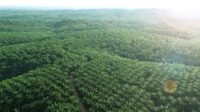
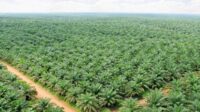
The inspection also identified oil palm planted within river buffer areas, including approximately 7.41 hectares along the Batang Pantai and Rukam rivers, around 2.9 hectares along the Tiu River, and approximately 1.76 hectares outside the company’s Cultivation Rights (HGU) boundary.
Also Read: Pekanbaru Develops Sustainable Palm Oil Action Plan for 24,000 Hectares of Plantation Area
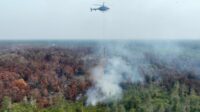
The team also recorded an approximately 4,237-meter elephant trench and identified shortcomings in land-fire prevention infrastructure at the site.
Mill Capacity and Emissions Issues
At PT Tamora Agro Lestari (TAL), the installed mill capacity was recorded at 75 tonnes of fresh fruit bunches (FFB) per hour, compared with 60 tonnes per hour stated in the company’s environmental documentation.
Inspectors also identified issues involving wastewater drainage, a malfunctioning flow meter, and a combustion furnace and chimney that were reported to require further compliance with emissions-control requirements.
Also Read: Indonesia Sets October 2026 Biodiesel HIP at IDR 15,072/Liter, Excluding Transport Costs
At PT Citra Riau Sarana (CRS), the inspection team installed an environmental monitoring notice related to an administrative sanction over a damaged wastewater treatment pond.
The company was also reported to have not yet obtained the required technical approval for compliance with emissions quality standards.
At PT Sinergi Inti Makmur (SIM), inspectors highlighted the management of combustion gases generated from empty fruit bunches, as well as runoff from the mill flowing toward a tributary of the Lantak Payo River.
Also Read: Indonesia’s GAPPKES MIKEMINO Urges Greater Smallholder Role in National Biodiesel Supply Chain
The team reported that the runoff was flowing without passing through the pollution-control facilities considered necessary. The company’s land application activities were also reportedly not included in its Environmental Approval.
Environmental Documents Under Scrutiny
At PT Mustika Agro Sari (MAS), the inspection found discrepancies between the mill’s operating capacity and its environmental documentation.
Additional equipment that was not listed in the relevant documents was also identified, along with issues concerning the completeness of operational documentation for wastewater and emissions management.
Also Read: Indonesia Agrarian Reform Law Raises Land Risk for Malaysian Palm Oil Companies
The findings require verification and follow-up by the relevant authorities in accordance with applicable regulations.
The inspection is expected to strengthen environmental oversight of Riau’s palm oil industry, particularly in ensuring compliance with environmental regulations, protecting river buffer zones and improving land and forest fire prevention measures.
The inspections also highlight the importance of keeping environmental approvals and operational activities aligned as companies expand mill capacity, add equipment or modify plantation and processing activities. (P2)