U.S. Customs and Border Protection has issued Withhold Release Orders against palm oil and derivative products from Mitra Aneka Rezeki and Hardaya Inti Plantation, putting greater focus on labor standards and supply-chain traceability.
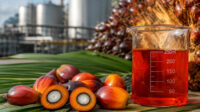
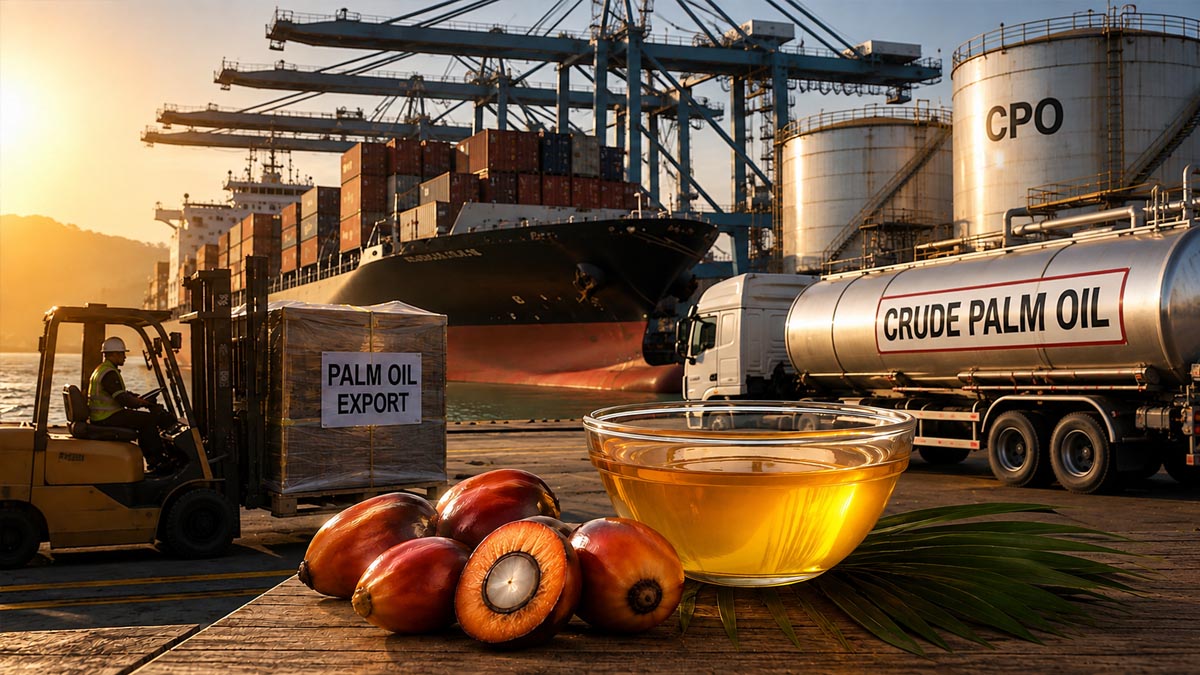
PALMOILMAGAZINE, JAKARTA — Indonesia’s palm oil exports to the United States face a new trade challenge after U.S. Customs and Border Protection (CBP) issued Withhold Release Orders (WROs) covering palm oil and derivative products produced by two Indonesian companies, Mitra Aneka Rezeki (MAR) and Hardaya Inti Plantation (HIP).
The orders, issued on Sept. 29, 2026, took immediate effect at U.S. ports of entry. CBP said its review found information that reasonably indicated the use of forced labor in the production of palm oil and derivative products associated with the two companies.
Under a WRO, CBP officers can detain covered shipments arriving in the United States. The measure does not constitute a blanket ban on Indonesian palm oil or a conclusive finding that all products from Indonesia involve forced labor. Rather, the orders specifically target products produced by the two named companies based on CBP’s assessment of the available evidence.
Susan S. Thomas, Executive Assistant Commissioner of CBP’s Office of Trade, said labor exploitation poses risks beyond workplace conditions.
“Exploiting workers is inhumane and undermines our economic and national security,” Thomas said, according to Kompas cited by PalmOilMagazine.
Also Read: Indonesia Sets October 2026 Biodiesel HIP at IDR 15,072/Liter, Excluding Transport Costs
CBP Identifies Forced Labor Indicators
CBP issued the WROs under 19 U.S.C. §1307, which prohibits the importation into the United States of merchandise mined, produced or manufactured wholly or in part through forced labor.
In reviewing production practices linked to MAR and HIP, CBP considered a range of evidence, including interview transcripts, payroll records, harvest quota information, photographs, reports from nongovernmental organizations and government agencies, media reports and academic research.
Also Read: Indonesia Palm Oil and Derivatives Support 6.72% Export Growth in August 2026
CBP said its assessment identified several indicators of forced labor recognized by the International Labour Organization (ILO).
For MAR, CBP identified nine indicators: withholding of wages, debt bondage, deception, retention of identity documents, isolation, excessive overtime, intimidation and threats, abusive working and living conditions, and abuse of vulnerability.
For HIP, CBP identified seven indicators: debt bondage, withholding of wages, deception, excessive overtime, abusive working and living conditions, intimidation and threats, and abuse of vulnerability.
Also Read: KPBN Inacom CPO Price Rises to IDR 14,666/kg on Tuesday (Oct. 6) as Malaysia CPO Futures Fall
CBP said the evidence provided a reasonable basis to suspect forced labor, which refers to work performed involuntarily under the threat of a penalty. The agency also cited trade data indicating that products covered by the orders were being, or were likely to be, imported into the United States.
Importers Face Detention Risk
The WROs mean shipments of covered palm oil and derivative products linked to MAR and HIP can be detained when they reach U.S. ports.
Importers whose merchandise is detained have several options. They may seek to export or destroy the goods, or provide evidence demonstrating that the merchandise was not produced using forced labor. CBP’s WRO framework allows an order to remain in effect until it is modified or revoked based on sufficient evidence and remediation.
Also Read: Kembang Janggut OVOP Program Targets MSME Growth and Palm Oil-Based Industry in East Kalimantan
The measure underscores the importance of supply-chain traceability, particularly for palm oil derivatives that may pass through multiple processing and trading stages before reaching the U.S. market.
CBP receives information related to potential forced labor from a range of sources, including government agencies, nongovernmental organizations, media organizations and members of the public.
Following the addition of the MAR and HIP orders, CBP said its enforcement portfolio had reached 60 WROs and eight Findings under 19 U.S.C. §1307.
Also Read: WWF-Indonesia and CPOPC Strengthen Sustainable Commodity Supply Chains
Supply-Chain Compliance Under Greater Scrutiny
The action against MAR and HIP highlights the growing importance of labor conditions in international palm oil trade.
For Indonesian palm oil exporters and downstream manufacturers, market access increasingly depends not only on production capacity, pricing and product quality, but also on the ability to demonstrate responsible labor practices and traceable supply chains.
Also Read: Indonesia’s B50 Biodiesel Push Puts Smallholder Access to CPO Supply Chain in Focus
The WROs also demonstrate how labor-related concerns can translate into direct border enforcement. Companies whose products or inputs are connected to covered producers may face shipment delays or detention in the U.S. market.
For Indonesia’s palm oil industry, the development reinforces the need for stronger labor safeguards, transparent supply-chain documentation and effective due diligence across the production chain as exporters seek to maintain access to global markets. (P1)