The partnership puts supply chain transparency, certification, EUDR compliance, biodiversity protection, and smallholder inclusion at the centre of efforts to improve the global market recognition of sustainable palm oil.
PALMOILMAGAZINE, JAKARTA — WWF-Indonesia and the Council of Palm Oil Producing Countries (CPOPC) are stepping up cooperation on supply chain transparency and sustainability standards, with smallholder inclusion and access to global markets emerging as key areas of focus.
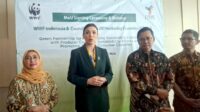
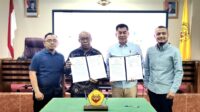
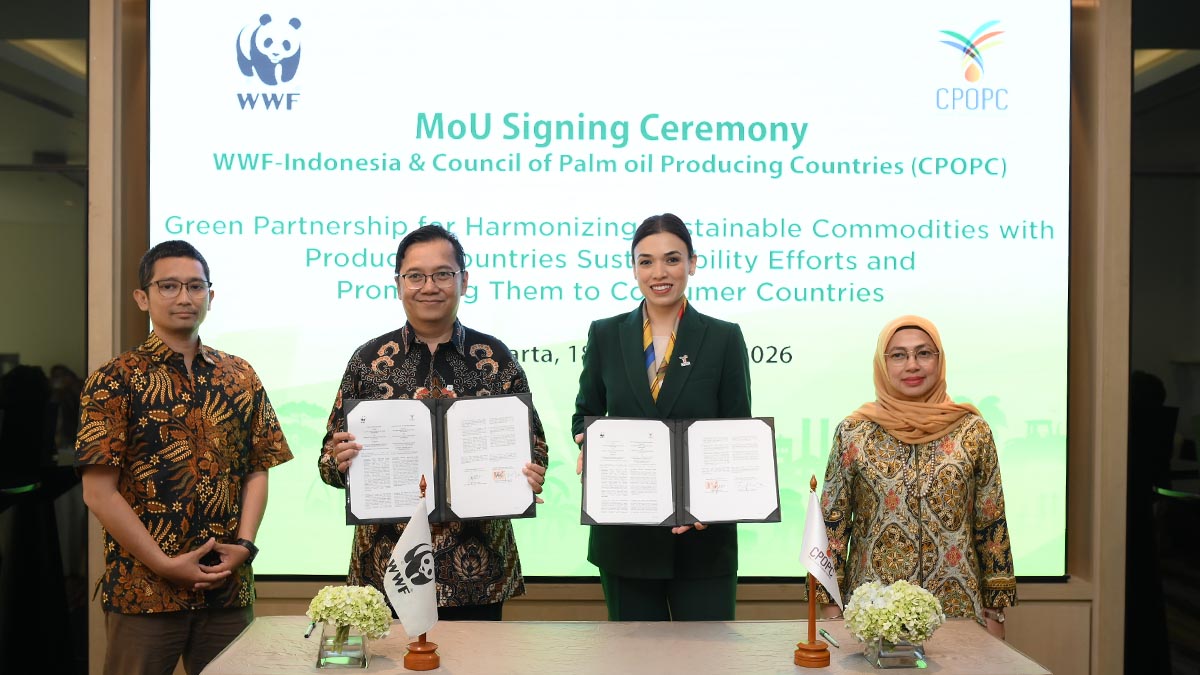
The two organisations signed a Memorandum of Understanding (MoU) at Pullman Thamrin Jakarta on September 18, 2026, establishing what they described as a “Green Partnership” to strengthen sustainable commodity systems at national and global levels.
Also Read: CPOPC Highlights Sustainable and Inclusive Palm Oil Trade at Singapore Dialogue
The cooperation covers supply chain transparency, certification, responsible production, biodiversity conservation, and the participation of independent smallholders in sustainable supply chains.
For palm oil-producing countries, the partnership comes as sustainability requirements in international markets increasingly place emphasis on traceability, deforestation risks and the ability of producers to demonstrate compliance.
Strengthening National Sustainability Standards
One area of cooperation is the Indonesian Sustainable Palm Oil (ISPO) certification system. WWF-Indonesia and CPOPC said national sustainability standards need to be strengthened within the broader global sustainability framework to improve their credibility and recognition in international markets.
Aditya Bayunanda, CEO of WWF-Indonesia, said the credibility of sustainable plantation commodities depends on cooperation among producing countries and stakeholders across the supply chain.
Also Read: Stricter ISPO Enforcement Urged to Ensure Certified Palm Oil Supply Chain
“Establishing the credibility of sustainable plantation commodities requires collaboration among producing countries, including business actors, certification bodies, civil society, independent smallholders, and the global market,” Aditya said at the event attended by PalmOilMagazine.
He said sustainability should be viewed beyond supply chain management, particularly in Indonesia, where commodity production is closely connected with biodiversity and forest protection.
According to Aditya, sustainable plantation commodities need to be produced without compromising forests, biodiversity, or the rights and livelihoods of independent smallholders.
He also highlighted what he described as a gap between certified production capacity and acceptance in global markets. Cooperation with CPOPC, he said, could help strengthen ISPO and other national certification schemes developed by producing countries and improve their international recognition.
Izzana Salleh, Secretary-General of CPOPC, said producing countries and industry stakeholders have invested significantly in sustainability practices, human rights and livelihood improvements across the palm oil supply chain.
National schemes such as ISPO and the Malaysian Sustainable Palm Oil (MSPO), she said, reflect the commitment of producing countries to improving sustainability standards.
Also Read: Malaysia Nears Full MSPO Coverage, Advances Digital Traceability to Meet EUDR Standards
However, Izzana said further work is needed to ensure that smallholders have the resources, capacity and opportunities required to participate in sustainable supply chains.
The partnership with WWF-Indonesia is expected to combine the organisations’ expertise, experience and networks to support practical approaches to sustainability while maintaining smallholder participation.
EUDR Puts Smallholder Access in Focus
The issue of smallholder inclusion was also discussed in a webinar jointly organised by WWF-Indonesia, CPOPC and Competere following the MoU signing.
Titled “Leave No Smallholder Behind: Making EUDR Compliance an Opportunity for Inclusive Development,” the webinar examined the implications of the European Union Deforestation Regulation (EUDR) for palm oil smallholders.
Also Read: Izzana Salleh: Indonesia and Malaysia to Reinforce Dialogue with EU on EUDR Implementation
The discussion focused on requirements such as geolocation, traceability and documentation, which can create significant challenges for smallholders seeking to remain connected to international supply chains.
The first session, moderated by Samuel Pablo Pareira of WWF-Indonesia, brought together smallholder representatives from Indonesia and Malaysia, Rukaiyah Rafik of Fortasbi Indonesia and Muhammad Shofi Bin Mustapa of NASH Malaysia.
They discussed their experiences with sustainability and market compliance requirements.
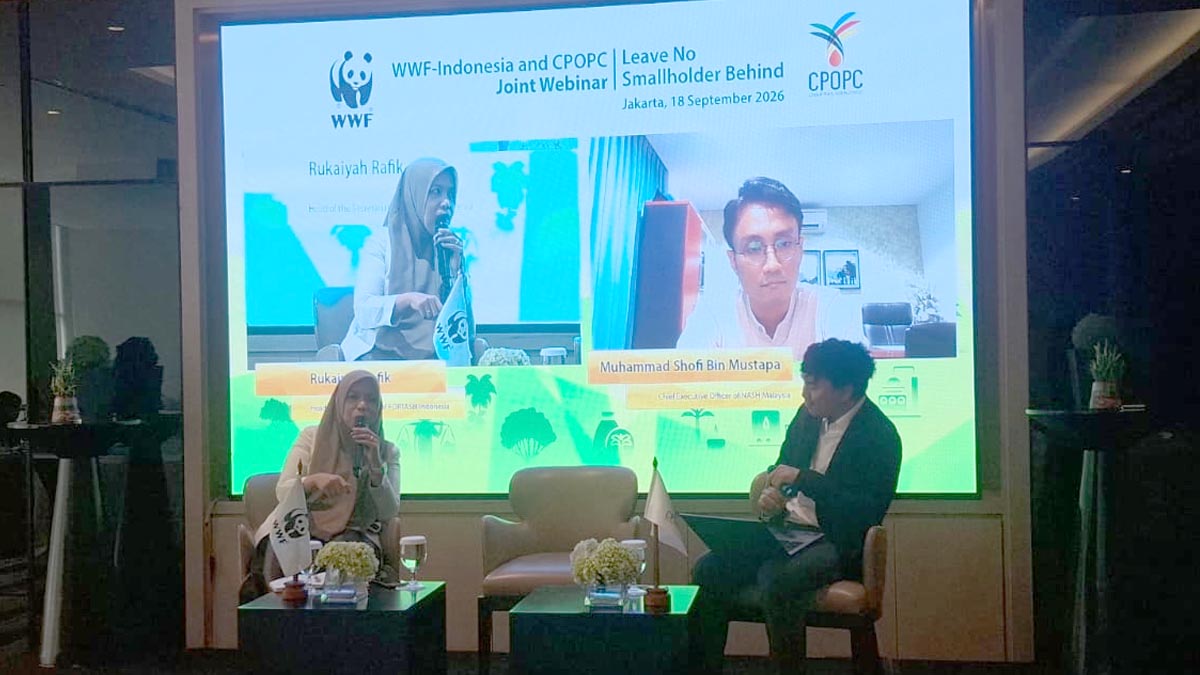
The second session, moderated by Pietro Paganini of Competere, examined the support mechanisms needed to help smallholders transition toward sustainable supply chains without losing market access.
The panel included Michel Riemersma of Solidaridad Europe, Emily Meijaard of Borneo Futures, Djono Albar Burhan, representing Indonesian smallholders, and Francesco Tramontin of Ferrero.
Also Read: Indonesia Expands Funding Support for Smallholders Pursuing ISPO Certification
From Traceability to Biodiversity Protection
Beyond certification and market access, WWF-Indonesia said the partnership would support efforts to move plantation commodity supply chains toward production systems that avoid deforestation and illegal land conversion.
The organisation links these efforts to the protection of forest ecosystems and biodiversity, as well as the reduction of environmental risks such as floods and forest fires that can affect local communities and protected wildlife.
Also Read: Cargill Highlights Changing Indonesian Consumer Preferences at Fi Asia 2026
WWF-Indonesia also cited its “Beli yang Baik” (Buy Well) campaign to encourage demand for environmentally responsible and eco-labelled products, along with the development of traceability through the Hamurni application.
The cooperation is also linked to Indonesia’s broader climate commitments under its Second Nationally Determined Contribution (NDC), which targets a reduction in greenhouse gas emissions of 31.89% by 2030 through domestic efforts and up to 43.20% with international support.
For CPOPC, the partnership provides another platform for palm oil-producing countries to participate in developing sustainability approaches that are practical, science-based and inclusive.
A central issue is whether smallholders can meet increasingly complex sustainability and traceability requirements while maintaining access to global markets.
CPOPC also acknowledged the investments made by the palm oil industry in preparing for EUDR implementation, while stressing the need for cooperation among producing countries, industry, civil society and international partners.
The broader challenge, the organisations said, is to ensure that sustainability requirements strengthen environmental and social performance without excluding smallholders whose livelihoods depend on access to international palm oil markets. (P3)