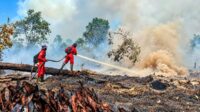


RSPO monitoring recorded about 126,000 hotspots in August, with roughly 2,500 detected within concessions operated by RSPO members, underscoring the need for field verification to establish the cause of fires.
PALMOILMAGAZINE, JAKARTA — Most forest and land fires (karhutla) recorded in Indonesia in 2026 occurred outside oil palm plantation concessions, according to the Roundtable on Sustainable Palm Oil (RSPO), which said satellite monitoring found only a small share of detected hotspots within areas managed by its members.
RSPO Director of Assurance Aryo Gustomo said the organization’s monitoring system recorded about 126,000 hotspots in August 2026. Of that total, approximately 2,500 were detected within concessions belonging to RSPO members.
Also Read: Zero Tolerance For Fires: RSPO Reinforces Strict Zero-Burning Standards
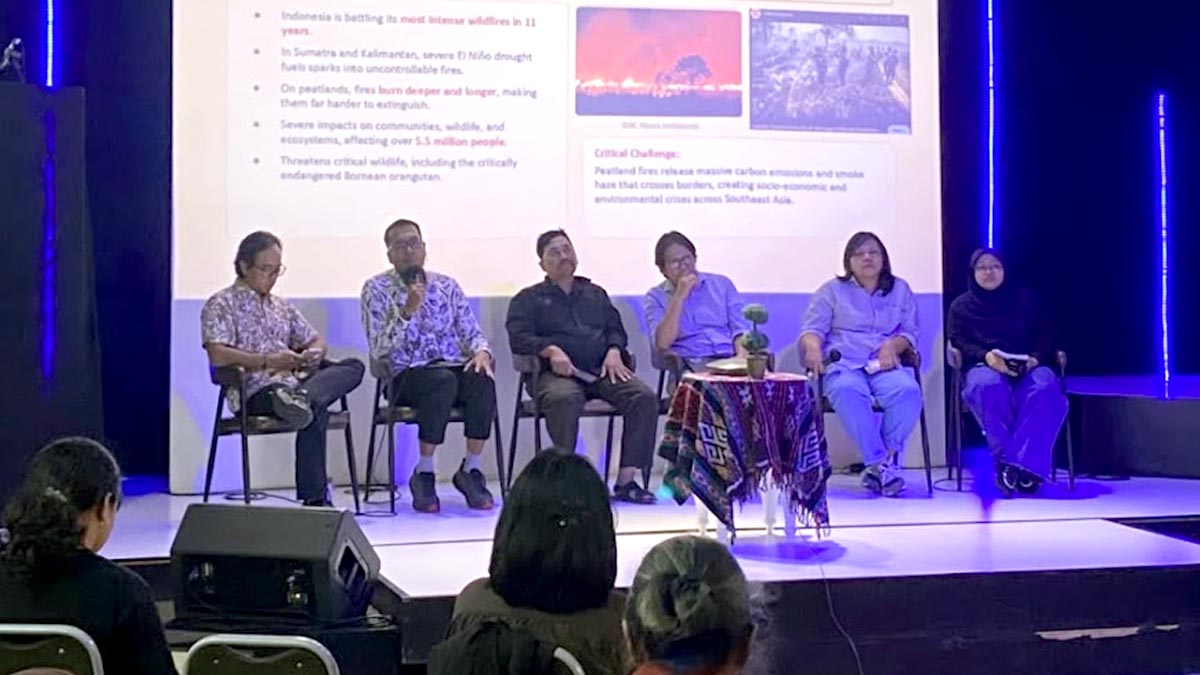
“In August, around 126,000 hotspots were detected. Meanwhile, hotspots in RSPO concession areas accounted for only about 2,500. So the share was very small, only around 1–3%,” Aryo said during a public discussion titled “Forest and Land Fires, Ecosystem Protection and Palm Oil Sustainability” in Jakarta on Friday (Oct. 30, 2026).
Aryo cautioned, however, that satellite-detected hotspots do not automatically confirm the presence of a fire. Ground verification remains necessary to establish whether a fire actually occurred and to determine its cause.
He also cited data from Nusantara Atlas indicating that nearly 90% of the 1.9 million hectares of land burned in Indonesia between January and September 2026 was located outside oil palm plantation concessions.
Also Read: Indonesia Cuts November 2026 CPO Reference Price 6.07% to US$978.90/MT, Sets Export Duty at US$124
According to Aryo, confirmed fires can be linked to a range of activities, including community activities and the spread of fires from areas surrounding plantation concessions. He also pointed to suspected deliberate burning by unidentified individuals as another possible cause.
“Interestingly, a small portion is also suspected to involve sabotage. This involves unidentified individuals deliberately starting fires, and there have even been reports of fires allegedly caused by a discarded cigarette,” he said.
The comments highlight the importance of thorough investigations to establish the causes of forest and land fires. Identifying the source of a fire, its location and the parties responsible is essential to ensure that enforcement and mitigation measures are based on verified evidence.
RSPO Maintains Zero-Burning Policy
To reduce fire risks in plantation areas, RSPO maintains a zero-burning policy under its 2024 Principles and Criteria Standard. The standard prohibits the use of fire for land clearing and includes requirements related to peatland protection and High Conservation Value (HCV) areas.
RSPO also uses its FireWatch satellite monitoring system to detect hotspots. The system serves as an early-warning and risk-monitoring tool, although detected hotspots must still be followed by inspection and verification.
Also Read: PTPN IV PalmCo Expands RSPO Certification to 124 Estates and 67 Mills, Certified Sales Jump 148%
Beyond monitoring, RSPO operates an independent complaints mechanism through which stakeholders can report alleged violations of its sustainability standards. Complaints are recorded in a public database as part of the organization’s case-management process.
Where violations are substantiated, RSPO can impose sanctions under its applicable rules. These may include requirements for corrective action, suspension of certification or termination of membership.
Aryo stressed that allegations must be assessed against available evidence before any decision or sanction is imposed on an RSPO member. Case handling therefore needs to take into account investigation findings and verified facts from the field.
He also emphasized that preventing forest and land fires cannot rely solely on plantation companies or certification bodies. Stronger cooperation among government agencies, businesses, communities and civil society organizations is needed to strengthen prevention efforts and reduce the risk of recurring fires.
As scrutiny of the environmental impacts and sustainability of the palm oil industry intensifies, forest and land fires remain an issue requiring stronger monitoring, transparency and consistent enforcement. Monitoring data can provide an important starting point, but determining the cause of a fire and assigning responsibility requires further investigation and evidence.
Meanwhile, global palm oil stakeholders are scheduled to gather in Jakarta for the annual RSPO Roundtable Conference (RT2026) on Nov. 3–4, 2026. The conference is expected to bring together industry players, governments, civil society organizations and other stakeholders to discuss sustainability and the future of the global palm oil sector. (P2)