As Indonesia expands palm-based biodiesel demand under its B50 mandate, smallholders are seeking direct access to the supply chain, stronger cooperative partnerships and a share of downstream value.
PALMOILMAGAZINE, JAKARTA — Indonesia’s expansion of its palm-based biodiesel mandate is putting a new focus on how much of the economic value generated by higher CPO demand reaches smallholder farmers.
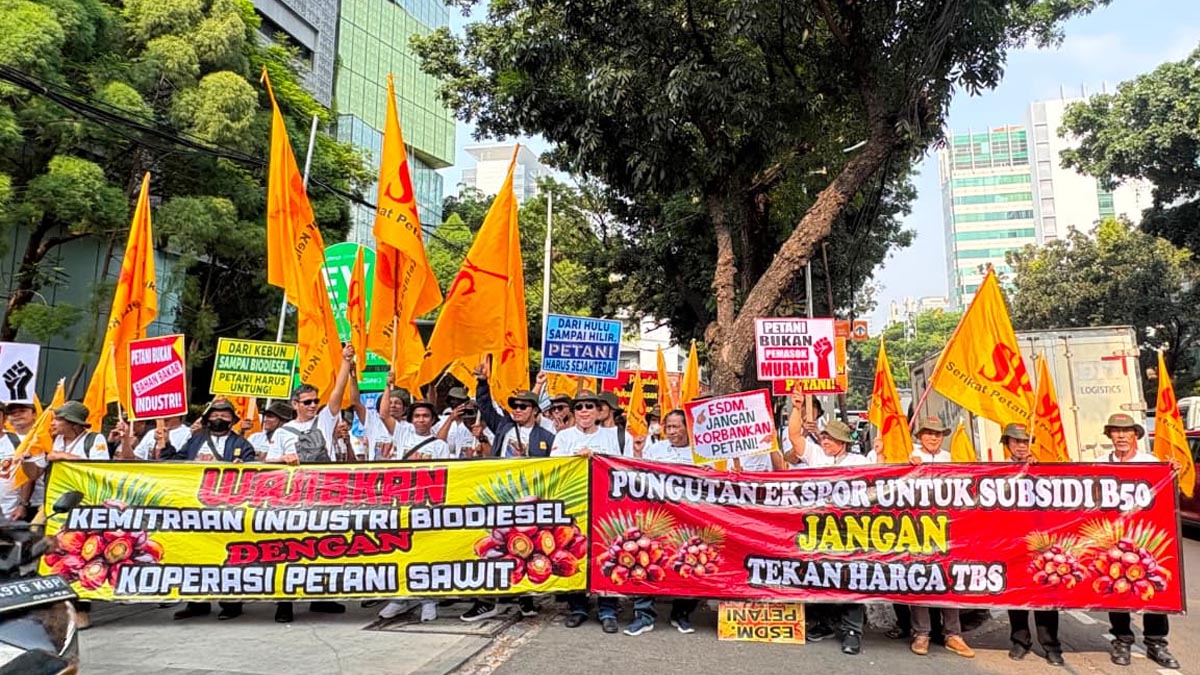
The Oil Palm Smallholders Union (SPKS) is calling for smallholders and their cooperatives to be given a more direct role in the B50 supply chain, arguing that higher CPO absorption for biodiesel should translate into greater market access and economic opportunities for farmers.
Also Read: SPKS Warns Indonesia’s Palm Oil Export Margin Fee Could Cut Smallholder FFB Prices
The demands were presented during a National Farmers Day rally in Jakarta on Thursday (Sept. 24, 2026), as Indonesia moves into the first months of its B50 mandate, which took effect on July 1.
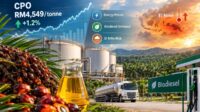
Under B50, palm-based biodiesel is blended at a 50% level with diesel fuel. The government has positioned the policy as a means of increasing domestic biofuel consumption, absorbing more CPO, strengthening energy security and reducing diesel imports.
For smallholders, however, the central issue is not simply whether B50 increases demand for CPO, but where farmers sit in the supply chain created by that additional demand.
Also Read: SPKS Backs North Konawe’s Sustainable Palm Oil Roadmap with Focus on Smallholder STDB and ISPO
B50 Demand Does Not Automatically Mean Direct Farmer Access
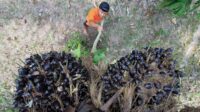
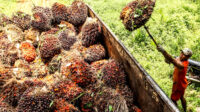
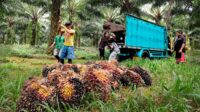
SPKS said many smallholders continue to sell fresh fruit bunches (FFB) through traders and intermediaries. That structure can limit farmers’ direct access to industrial buyers, market information and longer-term supply arrangements.
As biodiesel demand expands, farmers are therefore seeking a more formal connection between smallholder production and the downstream biofuel industry.
Also Read: Indonesia Sets September 2026 Biodiesel HIP at IDR 15,025/Liter, Up IDR 101
SPKS is calling for biofuel business entities to establish partnerships with smallholder cooperatives. The cooperatives, it said, should have a role beyond collecting FFB and should be given a pathway to participate as business actors in the wider biofuel ecosystem.
The farmers are also proposing that every B50 allocation to a biofuel business entity include a minimum quota or supply requirement for raw materials sourced from farmers through smallholder cooperatives.
Such a mechanism, according to SPKS, should be measurable and verifiable, allowing farmer participation to become part of the evaluation of B50 allocation and implementation.
Also Read: Indonesian Lawmaker Urges Stable CPO Supply as B50 Biodiesel Boosts Palm Oil Downstream Industry
The Value-Chain Question
The issue reflects a broader question surrounding Indonesia’s biodiesel policy: how the economic benefits of domestic CPO absorption are distributed along the palm oil value chain.
The government expects B50 to increase domestic CPO utilization while reducing demand for imported diesel and generating foreign-exchange savings. For farmers, the challenge is ensuring that the additional domestic demand also strengthens the economics of smallholder plantations.
Also Read: Malaysia CPO Price Thursday (Sept. 24) Edges Up to RM4,771/Ton as Dalian Oils Gain
SPKS is therefore proposing that cooperatives become an institutional bridge between farmers and the downstream biodiesel industry.
Rather than remaining primarily as FFB collection organizations, cooperatives could potentially consolidate supply, negotiate commercial arrangements and participate in downstream activities, subject to licensing and other regulatory requirements.
Also Read: Desacralizing Local Wisdom to Mitigate Forest and Land Fires
Farmers Seek Flexible B50 Implementation
SPKS is also calling for regular evaluations of the B50 mandate and has proposed a flexible blending approach.
Under the proposal, the blending rate could be adjusted according to CPO availability, domestic demand and market conditions.
The farmers argue that higher CPO absorption for biodiesel needs to be considered alongside the broader palm oil market, including export demand and the prices received by farmers for FFB.
The issue is particularly relevant as domestic biodiesel demand increasingly becomes an important component of Indonesia’s CPO balance.
Also Read: Indonesia Accelerates IEU-CEPA Process to Expand Access to European Market
Export Levy Also Under Scrutiny
Farmers are also seeking a review of the 12.5% CPO export levy.
In their National Farmers Day demands, they argued that the financing structure surrounding biodiesel should not create additional pressure on the prices received by smallholders.
Under the regulations applicable in September 2026, the CPO export levy is set at 12.5% of the CPO reference price. The Trade Ministry set the September reference price at US$1,007.51 per metric ton, resulting in an export levy equivalent to US$125.9389 per ton.
The farmers’ argument is that the policy framework should be assessed not only from the perspective of biodiesel economics and government revenues, but also from its effect on the upstream producers supplying the palm oil industry.
Also Read: Indonesia Renames BRAN as LPRA Under Agrarian Reform Bill, Agency to Report to President
Cooperatives Seek Entry Into Biofuel Business
SPKS is also asking the government to provide a clearer legal pathway for smallholder cooperatives to become biofuel business actors.
Existing regulations administered by the Energy and Mineral Resources Ministry provide a framework for biofuel business activities and the utilization of biofuels. Farmers are seeking greater clarity on how cooperatives could qualify to participate directly while meeting licensing, technical, safety, quality and environmental requirements.
Such participation would potentially shift cooperatives from being primarily upstream aggregation institutions toward more active participants in the downstream palm oil economy.
Also Read: PTPN IV PalmCo Accelerates Smallholder Replanting as Partnership PSR Reaches 27,000 Hectares
Replanting Seen as Key to Future B50 Feedstock
The farmers are also linking B50’s long-term feedstock requirements to the acceleration of Indonesia’s Smallholder Palm Replanting Program (PSR).
SPKS is calling for simpler PSR procedures and an increase in government support to IDR90 million per hectare, including assistance for farmers’ living expenses during the replanting period.
The underlying argument is that additional CPO supply for biodiesel should come primarily from productivity gains on existing plantations rather than expansion into new areas.
For smallholders, replanting aging palms could increase yields while maintaining the existing plantation footprint.
Farmers Link B50 to Deforestation Risk
SPKS is also calling for B50 feedstock to be sourced from existing plantations, particularly smallholder estates, rather than creating incentives for new oil palm expansion.
The farmers’ position is that Indonesia can increase CPO availability through higher productivity, replanting and improvements in smallholder plantation management.
This would connect the biodiesel expansion agenda with Indonesia’s broader efforts to improve productivity without increasing the agricultural land footprint.
Four Demands Centered on Smallholder Participation
SPKS summarized its National Farmers Day demands in four main points:
- Every B50 allocation should include a quota or supply requirement for CPO sourced from farmers through smallholder cooperatives.
- Biofuel business entities should establish partnerships with smallholder cooperatives.
- Smallholder cooperatives should have a legal pathway to become biofuel business actors.
- Biodiesel downstream development should involve smallholder cooperatives and give them access to added value.
The demands underline a shift in the smallholder debate. With B50 already in force, the issue is moving beyond whether Indonesia should increase biodiesel consumption toward how the resulting CPO demand is organized across the supply chain and how much value reaches farmers.
For the government, B50 remains a tool for energy security, domestic CPO absorption and reducing diesel imports. For smallholders, its longer-term significance will also depend on whether the program creates a more direct commercial link between millions of farmers and the downstream biofuel economy.
That supply-chain question is likely to become increasingly important as Indonesia’s biodiesel market expands and the domestic industry absorbs a larger share of the country’s palm oil production. (P3)