


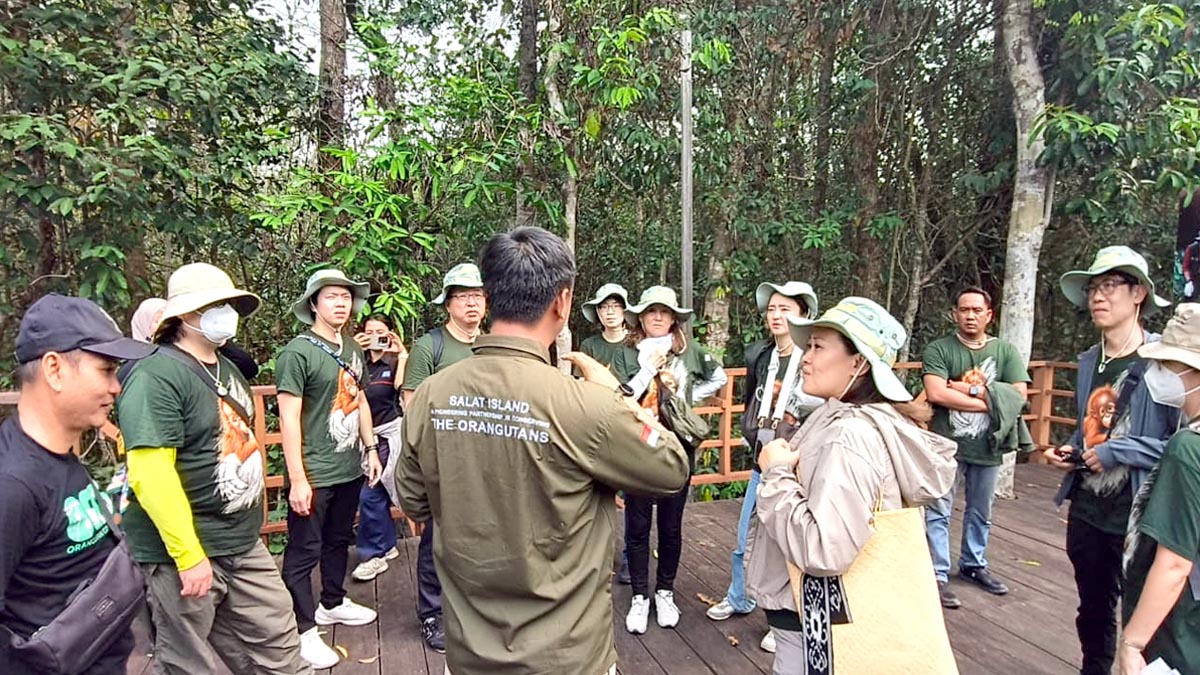
Through its 2026 Meet and Green Tour in Central Kalimantan, FORTASBI introduced Japanese and Belgian buyers to RSPO-certified independent smallholders and demonstrated how RSPO Credit proceeds help fund orangutan rehabilitation on Salat Island.
PALMOILMAGAZINE, PALANGKARAYA – Independent smallholders are playing an increasingly important role in advancing sustainable palm oil production, with their contributions extending beyond certification and market access to environmental protection and biodiversity conservation. Through collaboration with industry stakeholders, certified smallholder groups are also helping support orangutan rehabilitation in Central Kalimantan.
This contribution was highlighted during the 2nd Meet and Green Tour 2026, organized by the FORTASBI Foundation in collaboration with PT Sawit Sumbermas Sarana (SSMS), the Borneo Orangutan Survival Foundation (BOSF), and the Manis Mata Farmers Association (PPMH). The event took place in Palangkaraya, Central Kalimantan, on November 5–7, 2026.
Also Read: RSPO Urges Palm Oil Buyers to Purchase Credits from Sustainable Smallholders
According to information received by PalmOilMagazine on Monday (November 9, 2026), the programme brought together buyers of sustainable palm oil products and credits with independent smallholders. Participants were also given the opportunity to observe plantation management practices firsthand and learn how different stakeholders are contributing to orangutan conservation.
Following its first Meet and Green Tour in Jambi Province in 2023, FORTASBI selected Central Kalimantan for this year’s programme to highlight two interconnected dimensions of sustainable palm oil: the efforts of independent smallholders to produce sustainable palm oil and the contribution of industry stakeholders to orangutan conservation.
Buyers Gain Firsthand Insight into Smallholder Challenges
The 2026 tour attracted 28 participants, including buyers from Japan and Belgium, farmer representatives from PPMH Manis Mata in West Kalimantan, APKSM from West Kotawaringin, SPKS, representatives of PT SSMS, and RSPO representatives from Japan and Jakarta.
Although preparations were initially accompanied by concerns over the threat of forest and land fires in Central Kalimantan, participants remained enthusiastic about proceeding with the visits. They wanted to gain a firsthand understanding of local communities and farmers operating amid fire risks, as well as the potential implications for orangutan conservation.
Also Read: RSPO RT2026: Solidaridad and Henkel Win Excellence Award for Reaching 39,000 Palm Oil Smallholders
Fortunately, field conditions remained relatively favourable throughout the programme, with no fires or smoke disrupting the participants’ activities.
On the first day, November 5, participants visited PT MKM’s palm oil mill, part of the SSMS Group, in Pulang Pisau, Central Kalimantan. The visit provided an opportunity to observe the fresh fruit bunches (FFB) processing chain, from fruit reception through to crude palm oil production.
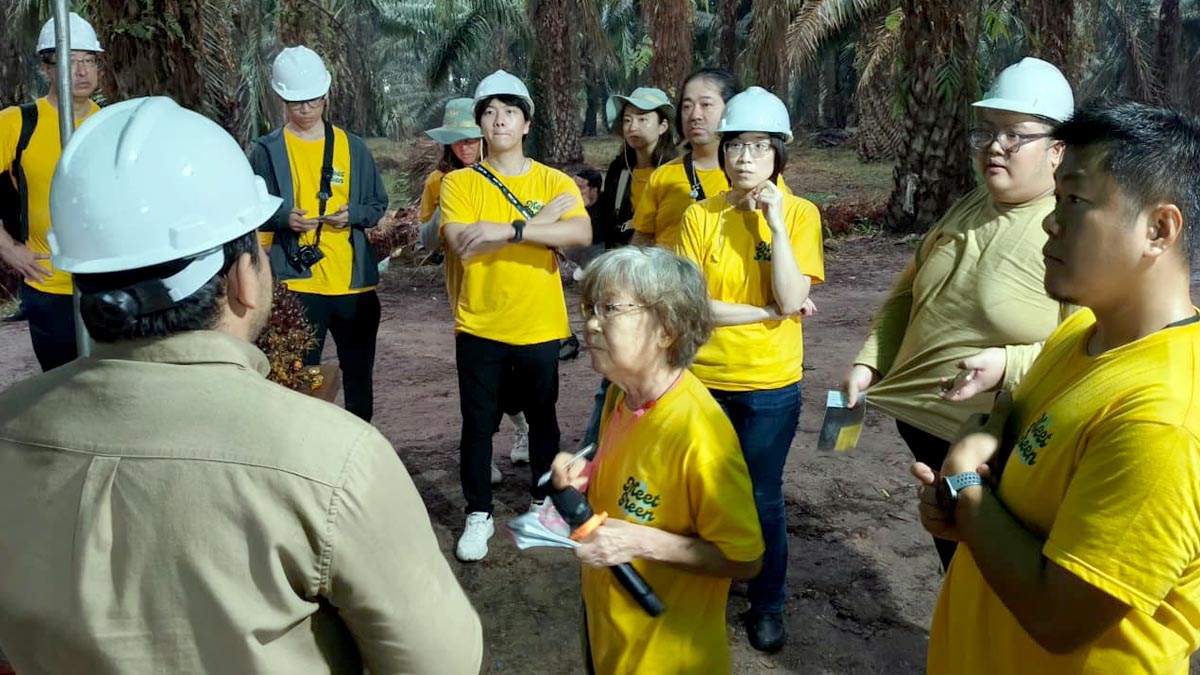
The programme continued in Pangkoh III Village, Pulang Pisau, where participants met independent smallholders preparing to pursue RSPO certification.
Also Read: Indonesia’s DSI Says Single Export Gateway Will Strengthen Palm Oil Trade Ahead of 2027 Launch
Reaching the village was an experience in itself. The group had to cross the Kahayan River by ferry, a journey of approximately 15 minutes. Heavy rain greeted their arrival, but it did not dampen their enthusiasm to learn about smallholder plantation activities.
At the plantation, participants were introduced to various aspects of farm management, including crop maintenance, harvesting, and FFB transportation. Buyers from Japan and Belgium even had the opportunity to try lifting FFB weighing as much as 25 kilograms.
The hands-on experience offered buyers a new perspective on the physical demands and everyday challenges faced by independent smallholders.
Also Read: RSPO, CPOPC and Kadin Strengthen Sustainable Palm Oil Collaboration
“I have only now realized how much effort and risk smallholders face in producing palm oil. I also did not know that FFB could be so large and heavy,” said one participant from Belgium, who was visiting an oil palm plantation and handling fresh palm fruit for the first time.
The experience underscored the human effort behind every palm oil product, particularly the contribution of independent smallholders, who continue to face challenges in securing recognition, market access, and economic benefits from sustainable production practices.
From Smallholder Certification to Orangutan Conservation
On the second day, November 6, participants travelled by traditional klotok boat to Salat Island, a pre-release orangutan rehabilitation area developed through a partnership between PT SSMS and BOSF that began in 2018.
Salat Island serves as a rehabilitation site where orangutans undergo preparation before their eventual release into natural habitats.
However, FORTASBI wanted to highlight a broader message to participating buyers: orangutan conservation is not solely the responsibility of companies or environmental organizations. Independent smallholders can also play an active role.
One example of this collaboration is the involvement of the Pilang Village community. All orangutan food supplies on Salat Island are sourced through the business unit of the Pilang Village-owned enterprise, known as Badan Usaha Milik Desa (BUMDes). This arrangement allows conservation activities to generate economic benefits for the surrounding community.
The partnership has expanded further through the participation of RSPO-certified independent smallholder groups.
Since 2024, two farmer groups – APKSM from West Kotawaringin and BUMDes Berkah Mulya Jaya from Lamandau – have regularly allocated part of the proceeds from their RSPO Credit sales to support the provision of food for orangutans on Salat Island.
In 2026, the initiative expanded to include three additional independent smallholder groups: PPMH from Manis Mata, PPSK from Ketapang, West Kalimantan, and PPSRU from Jambi. All three contributed assistance and donations to support orangutan conservation activities on the island.
The initiative demonstrates how RSPO certification can create opportunities for broader collaboration. Beyond connecting smallholders with buyers through sustainable palm oil credit trading, certification can also facilitate partnerships among farmers, companies, environmental organizations, and local communities to protect biodiversity.
Also Read: Indonesia Sets November 2026 Biodiesel Price at IDR 14,312 per Liter, Excluding Transport
In this context, the benefits of certification extend beyond improved plantation management and market access. It can also provide smallholders with a platform to contribute to wider environmental objectives.
Strengthening Collaboration Across the Palm Oil Value Chain
SSMS Group Sustainability Director Hengky Satrio Wibowo welcomed FORTASBI’s initiative to introduce Salat Island to a broader range of stakeholders, including international buyers.
“We greatly appreciate FORTASBI’s efforts in supporting Salat Island and BOSF’s orangutan rehabilitation programme. This is the second time FORTASBI has brought visitors to Salat Island. Last year, the organization brought 20 influencers. Activities like this represent a very powerful form of education. We hope this collaboration will continue to develop and grow in the future,” Hengky said.
Also Read: RSPO Strengthens Fire Monitoring in Indonesia with Satellite Data and Independent Audits
Through the 2026 Meet and Green Tour, FORTASBI sought to demonstrate that sustainability in the palm oil industry cannot be achieved through standards and certification alone. It requires meaningful engagement across the entire supply chain, from smallholder producers and plantation companies to processors, buyers, conservation organizations, and local communities.
The visit also gave buyers an opportunity to understand that purchasing sustainable palm oil products or RSPO Credits generated by independent smallholders is more than a commercial transaction. Meaningful market support can help farmers maintain sustainable practices, strengthen their group economies, and expand their contribution to environmental protection.
From oil palm plantations to orangutan habitats, the 2026 Meet and Green Tour delivered a clear message: when independent smallholders receive meaningful market support and fair access to economic opportunities, they can become not only key contributors to a more sustainable palm oil industry but also important partners in protecting nature and biodiversity. (P3)