

The organization proposes integrating smallholders, PABKESRA mills, cooperatives and downstream biofuel industries to ensure Indonesia’s biodiesel mandate creates greater economic value in palm-producing communities.
PALMOILMAGAZINE, JAKARTA — The Indonesian Association of Micro, Small and Medium Palm Oil Mills (GAPPKES MIKEMINO) is calling on the government to expand the participation of smallholder palm oil farmers and community-based palm oil mills, known as PABKESRA, in the national biodiesel supply chain.
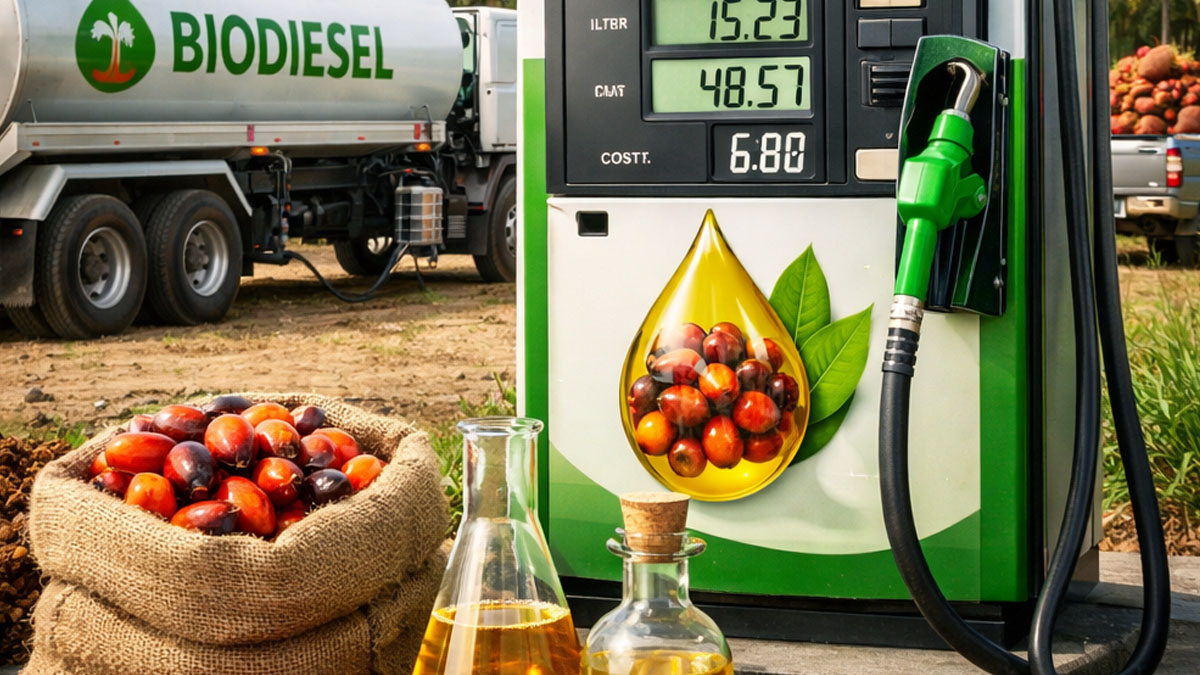
The organization said broader participation would help ensure Indonesia’s mandatory biodiesel program strengthens not only energy security but also economic value creation for smallholder plantations.
Also Read: Indonesia Sets October 2026 Biodiesel HIP at IDR 15,072/Liter, Excluding Transport Costs
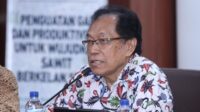
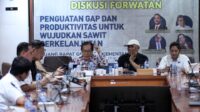
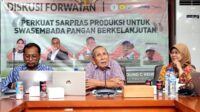
GAPPKES MIKEMINO Chairman M. Salim Simangunsong, together with Advisory Board members Dr. Sabil Rachman and Helmi Djen, said the success of downstream palm oil development should also be measured by how widely its economic benefits are distributed.
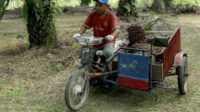
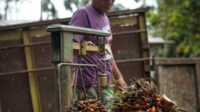
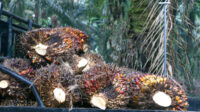
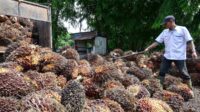
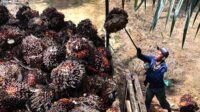
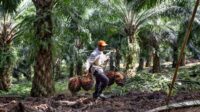
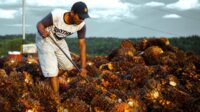
Smallholders, they argued, should not remain limited to supplying fresh fruit bunches (FFB) to larger processors. They should also have opportunities to participate in downstream processing and gain ownership stakes in businesses across the value chain.
“Indonesia’s biodiesel mandate must become a catalyst for transforming the smallholder palm oil economy. Farmers should not remain merely suppliers of fresh fruit bunches to large-scale industries,” Salim said in a joint statement from GAPPKES MIKEMINO received by PalmOilMagazine on Oct. 2, 2026.
Also Read: Indonesia’s B50 Biodiesel Push Puts Smallholder Access to CPO Supply Chain in Focus
Indonesia has significant potential to develop bioenergy industries based on smallholder plantations, Salim said. Unlocking that potential, however, will require policies that improve farmers’ access to processing facilities, markets, technology and financing.
Smallholders continue to face challenges ranging from FFB price volatility and limited processing capacity to dependence on particular buyers and limited opportunities to participate in downstream industries.
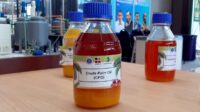
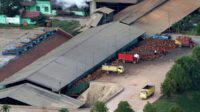
According to GAPPKES MIKEMINO’s internal data, around 604 micro, small and medium-scale palm oil mills are included in its PABKESRA development base. Aggregate production of high-free-fatty-acid palm oil, or High Acid Crude Palm Oil (HACPO/HAPMO), from these mills is estimated at 2.17 million tonnes per year.
Also Read: UK Biodiesel Industry Under Pressure as Government Rejects Tariffs on US Imports
The organization believes this feedstock could be developed for biodiesel and Sustainable Aviation Fuel (SAF) production through appropriate processing and refining technologies that account for its characteristics and comply with applicable standards.
PABKESRA Seen as Key to Smallholder Downstream Development
GAPPKES MIKEMINO Advisory Board member Sabil Rachman said the biodiesel mandate should not be viewed solely as a program for blending biofuel with conventional diesel.
It also has implications for job creation, the development of small and medium-sized industries, and more balanced economic growth in palm-producing regions, he said.
Sabil proposed developing smallholder palm oil downstream industrial zones that integrate farmers, cooperatives, PABKESRA mills, biodiesel and SAF producers, and supporting industries.
Such integrated zones could encompass food processing, community-scale cooking oil production, animal feed, organic fertilizer, biogas and biomass. The model is intended to improve resource efficiency while creating additional income streams for communities in palm-growing areas.
Implementation would require cooperation among central and local governments, financial institutions, cooperatives, businesses and smallholder industry organizations. Technology transfer, human-resource development, product standardization and market certainty would also be essential.
Also Read: New Palm Oil Mill Breaks Ground in Bangka, Investment Expected to Create Jobs
Helmi Djen, meanwhile, highlighted the need for clearer feedstock governance to enable PABKESRA products to enter the biodiesel supply chain in a transparent and measurable manner.
He said high-free-fatty-acid palm oil has different characteristics from conventional crude palm oil (CPO). Clear product nomenclature, quality standards, commodity classification, feedstock traceability and appropriate trading mechanisms are therefore needed.
Greater regulatory certainty could provide stronger business protection for smallholder-scale processors while increasing confidence among potential investors and downstream users of the feedstock.
Also Read: KPBN Inacom CPO Price Rises to IDR 14,666/kg on Tuesday (Oct. 6) as Malaysia CPO Futures Fall
Five-Point Agenda for Smallholder-Based Biodiesel
To expand the role of farmers and PABKESRA in the biodiesel industry, GAPPKES MIKEMINO has proposed five strategic priorities.
First, the government should establish partnership mechanisms linking PABKESRA mills, farmer cooperatives, feedstock processors and biodiesel producers while maintaining compliance with technical and regulatory requirements.
Also Read: 176 OKU Smallholders Receive Palm Oil Cultivation Training to Boost Productivity
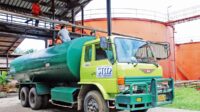
Second, it proposed the development of Pabrik Biodiesel Rakyat (BIORA), or community-based biodiesel plants, integrated into smallholder palm oil downstream industrial zones. Development would need to be supported by feasibility studies, appropriate technology, quality standards and financing.
Third, farmer cooperatives and ownership structures should be strengthened so smallholders can participate in business management and capture a greater share of the economic benefits from downstream processing.
Fourth, the palm oil trading system should be improved through digitalization and traceability. GAPPKES MIKEMINO has proposed developing SITASRA, or the PABKESRA Information and Governance System, as well as studying the establishment of a PABKESRA exchange.
Also Read: Indonesia Palm Oil and Derivatives Support 6.72% Export Growth in August 2026
Fifth, integrated downstream zones should connect the bioenergy industry with food, animal feed, organic fertilizer, biogas, biomass and micro, small and medium-sized enterprises (MSMEs).
B50 Creates New Opportunity for Smallholder Integration
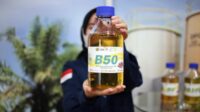
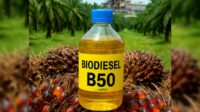
The proposals come as Indonesia moves into the implementation phase of its B50 biodiesel mandate, which began in July 2026.
GAPPKES MIKEMINO cited a Sept. 15, 2026 publication by Indonesia’s Ministry of Energy and Mineral Resources (ESDM), which reported that the B50 program had reached 6,050 fuel stations, while a number of distribution terminals were still undergoing transition.
Also Read: Indonesia Locks In 2026 B50 Biodiesel Quotas, Clearing the Way for Nationwide Rollout
For GAPPKES MIKEMINO, the rollout provides an opportunity to reshape the biodiesel ecosystem so that it is not focused solely on increasing biofuel production but also expands business opportunities for communities in palm-producing regions.
Salim said bioenergy development needs to balance national energy requirements, sustainable feedstock availability, food security and smallholder welfare.
The organization is calling for cross-ministerial dialogue on integrating PABKESRA into the biodiesel supply chain, developing feedstock standards, assessing appropriate technologies, facilitating financing and establishing industrial partnerships.
Also Read: KAI’s CPO Rail Shipments Jump 18% Through July 2026 as B50 Boosts Demand
GAPPKES MIKEMINO said it is prepared to work with the government, biodiesel producers, investors, cooperatives and other stakeholders to develop an industrialization model that gives farmers and smallholder-scale processors a greater role.
For the organization, strengthening Indonesia’s biodiesel industry should go beyond achieving greater energy self-sufficiency. Downstream policies should also enable palm oil farmers to become participants in the industrial value chain and capture more of the value generated from the plantation resources they manage. (P2)