


PALMOILMAGAZINE, JAKARTA, INDONESIA — Improving yields on existing plantations could unlock an additional 14 million tonnes of palm oil production in Indonesia, offering a major opportunity to strengthen the industry without relying primarily on plantation expansion, according to PASPI Executive Director Tungkot Sipayung.
Speaking at a discussion hosted by the Agricultural Journalists Forum (FORWATAN) under the theme Strengthening Good Agricultural Practices and Productivity to Achieve Sustainable Palm Oil, at the Ministry of Agriculture’s Building C in Jakarta on Wednesday (Nov. 18, 2026), Tungkot said productivity improvements should become a central priority for the country’s palm oil industry.
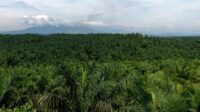
He noted that Indonesia’s oil palm plantation area had expanded from approximately 4 million hectares in 2000 to 16.8 million hectares based on current official data. He described the expansion as a major achievement in the country’s agricultural development.
Also Read: South Sumatra FFB Prices Drop to IDR 3,500/kg in Second Half of November 2026
“Over the past 26 years, we have managed to expand oil palm plantations fourfold. This is a revolution. At the time, we had limited funding, yet we were able to build plantations on such a large scale,” he said.
Tungkot urged industry stakeholders not to become pessimistic about the challenges facing the sector, arguing that greater development inevitably brings more complex issues.
“We should not be pessimistic. We faced major challenges in the past as well. As an industry advances, the challenges naturally become greater,” he said.
Also Read: KPBN Inacom CPO Price Falls to IDR 14,008/kg on Friday (Nov. 20), Dumai Records Highest Bid
Palm Oil’s Economic Contribution and Untapped Potential
Tungkot highlighted the industry’s substantial contribution to the national economy. He cited palm oil’s contribution to Indonesia’s gross domestic product (GDP), covering activities from upstream plantations to downstream processing, at 13.8% in 2020.
Meanwhile, the industry’s combined export earnings and foreign exchange savings were estimated at US$45 billion, equivalent to nearly IDR 800 trillion.
“The US$45 billion figure includes foreign exchange savings. That is nearly IDR 800 trillion, a substantial contribution,” he said.
Despite its significant economic footprint, Tungkot believes Indonesia has yet to fully capitalize on the industry’s potential, estimating that only around 30% has been utilized. Downstream development, in particular, still has considerable room for expansion.
“We have only utilized around 30% of the potential. Downstream development has covered only three kilometers out of a possible ten. This means there is still considerable room for growth,” he said.
He also pointed to projections indicating that Indonesia’s domestic CPO requirements could reach 43 million tonnes by 2045. Meeting this demand while maintaining export supplies will require stronger production capacity, with productivity improvements offering one of the most practical solutions.
Existing Plantations Hold the Key to Higher Output
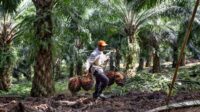
According to Tungkot, existing plantations represent the industry’s greatest opportunity to increase production. With approximately 84% of the plantation area already established, even a modest improvement in average yields could deliver substantial additional output.
“If productivity across existing plantations can be increased by one tonne per hectare, Indonesia could add at least 14 million tonnes to its production,” he said.
Also Read: PTPN IV PalmCo Accelerates Smallholder Replanting as Partnership PSR Reaches 27,000 Hectares
He cited improvements in Good Agricultural Practices (GAP), supported by plantation block-level analysis, as an effective way to raise yields without expanding cultivated areas.
At state-owned plantation company PTPN, for example, productivity reportedly increased from 22 tonnes to 24 tonnes per hectare following GAP improvements and block-level analysis. Some plantation areas have even achieved yields of 30 tonnes per hectare, he added.
Beyond improving productivity, Tungkot stressed that the industry must also reduce emissions through better agricultural technology and more efficient input management.
Also Read: Astra Agro Steps Up Palm Oil Pest and Disease Research to Protect Plantation Productivity
One option is the use of coated fertilizers, which could help reduce emissions compared with conventional fertilizer broadcasting methods.
He said adopting better plantation management practices and appropriate technologies would be essential to improving productivity while supporting the industry’s long-term sustainability. (P3)