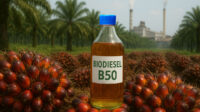


PALMOILMAGAZINE, JAKARTA — Improving plantation productivity, rather than relying primarily on land expansion, is emerging as a key priority for Indonesia’s palm oil industry as domestic demand increases and the government prepares to implement the B50 biodiesel mandate.
Stronger Good Agricultural Practices (GAP), closer partnerships between plantation companies and smallholders, and accelerated implementation of the Smallholder Palm Oil Replanting Program (Peremajaan Sawit Rakyat/PSR) are among the measures considered essential to maintaining production growth while strengthening the industry’s sustainability.
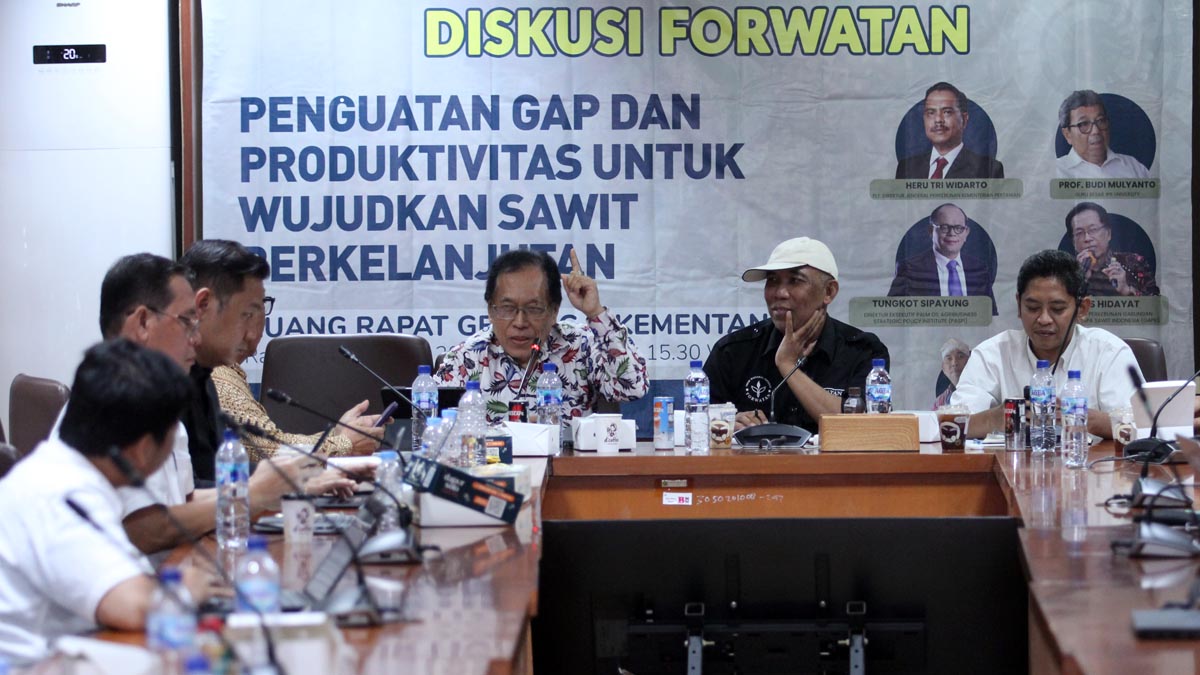
These issues were highlighted during a discussion organized by the Agricultural Journalists Forum (Forum Wartawan Pertanian/FORWATAN), titled Strengthening GAP and Productivity to Achieve Sustainable Palm Oil, at Building C of the Ministry of Agriculture in Jakarta on Wednesday (November 18, 2026).
Also Read: Indonesia Targets Smallholder Palm Oil Productivity Gains Through GAP and Land Legalization
Rising Production, but Productivity Remains a Challenge
Chairman of the Plantation Affairs Division at the Indonesian Palm Oil Association (GAPKI), R. Aziz Hidayat, said Indonesia’s palm oil production continued to increase.
National output, which reached 48.16 million tons last year, is projected to rise to 51.66 million tons in 2026.
Production through July also increased to 35.6 million tons from 33.4 million tons in the corresponding period last year. Meanwhile, palm oil export earnings reached US$23.2 billion, up from US$20.9 billion during the same period in 2025.
“What is encouraging is that export earnings through July reached US$23.2 billion, compared with around US$20.9 billion in July last year. Foreign exchange earnings amounted to IDR 403 trillion. Hopefully, we can surpass the record achieved during the COVID-19 period, when earnings reached around IDR 700 trillion by year-end,” Aziz said during the discussion, which was attended by Agricom on Wednesday (November 18).
Nevertheless, he cautioned that rising production did not necessarily indicate improvements in plantation productivity. Yields in several regions remained stagnant and, in some cases, had declined.
Also Read: Indonesia Strengthens Fertilizer and Seed Industries to Sustain Food Self-Sufficiency
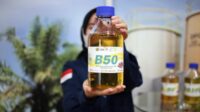
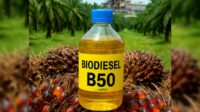
“Production and productivity remain major challenges. Productivity has stagnated and, in some cases, even declined, particularly as our biodiesel mandate increases from B40 to B50,” he said.
Aziz emphasized that the Smallholder Palm Oil Replanting Program (PSR) needed greater attention to improve the condition of smallholder plantations and maintain the availability of palm oil feedstock.
According to figures presented by Aziz, PSR implementation had covered approximately 420,000 hectares and involved 190,000 smallholders as of November 2026. However, implementation continued to face obstacles, particularly land ownership documentation and plantations located within forest areas.
Also Read: Indonesia-EU Trade Deal Could Boost Indonesian Palm Oil Access to European Market
“Challenges facing the PSR program include STDB and SHM documentation, plantations located in forest areas, and concerns among smallholders about being summoned by law enforcement authorities,” he said.
GAPKI has also encouraged the implementation of PSR through partnership arrangements with plantation companies. The approach has been implemented since 2022, including for smallholders who previously participated in nucleus-plasma schemes and subsequently continued their relationships with companies through partnership arrangements.
“Collecting the necessary documents to qualify as company partners requires patience and time. Most of these smallholders previously participated in plasma schemes. The former nucleus-plasma model is no longer operating in the same way,” Aziz said.
Also Read: Rising Biodiesel Demand Could Push CPO Prices Higher in 2027, GAPKI Says
He added that assistance with documentation and PSR requirements could also help smallholders meet Indonesian Sustainable Palm Oil (ISPO) certification requirements.
“Once these requirements are fulfilled, obtaining ISPO certification becomes much easier because the requirements are similar,” he said.
According to Aziz, ISPO should not be viewed merely as a regulatory compliance instrument. It also plays a role in improving plantation governance, environmental protection, respect for human rights and the competitiveness of Indonesian palm oil products.
He therefore called for faster certification, accompanied by efforts to resolve land legality issues and improve licensing services.
His proposals included accelerating the free issuance of Plantation Registration Certificates (STDB), facilitating land certification and addressing oil palm plantations located within forest areas through a measured approach.
He also called for a transparent and accountable electronic licensing system with clearly defined requirements, processing times and costs.
Also Read: Airlangga: Indonesia’s Palm Oil Industry Key to Food and Energy Security
Optimizing Existing Plantations to Unlock Production Potential
Executive Director of the Palm Oil Agribusiness Strategic Policy Institute (PASPI), Tungkot Sipayung, said improving productivity on existing plantations represented a major opportunity for Indonesia to strengthen its palm oil industry.
He argued that increasing production should not depend solely on expanding plantation areas.
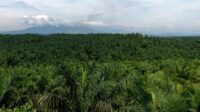
Tungkot noted that Indonesia’s oil palm plantation area had grown from approximately 4 million hectares in 2000 to 16.8 million hectares based on current official data. He described this expansion as a significant achievement in the country’s plantation development history.
“Over the past 26 years, we have managed to expand oil palm plantations fourfold. This is a revolution. At the time, we did not have much money, yet we managed to develop plantations on such a large scale,” he said.
He urged industry stakeholders not to become pessimistic about the challenges facing the sector.
Also Read: Indonesia Prepares B50 Biodiesel Framework as Infrastructure and Financing Take Centre Stage
“We should not be pessimistic. We also faced major challenges in the past. As development progresses, the challenges naturally become greater,” he said.
Tungkot estimated that the palm oil industry’s contribution to Indonesia’s gross domestic product (GDP), covering upstream and downstream activities, reached 13.8% in 2020.
Meanwhile, the combined value of exports and foreign exchange savings generated by the palm oil industry was estimated at US$45 billion, equivalent to nearly IDR 800 trillion.
Also Read: DSI to Launch Palm Oil Export System on January 1, 2027, with Single-Digit Dollar Service Fee
“The US$45 billion figure includes foreign exchange savings. That is almost IDR 800 trillion, which is substantial,” he said.
Despite its significant economic contribution, Tungkot argued that Indonesia had yet to fully capitalize on the industry’s potential. He estimated that only around 30% of the sector’s potential had been utilized, leaving considerable room for downstream development.
“We are only utilizing around 30% of our potential. Downstream development has only covered three kilometers of a possible ten kilometers. There is still considerable room for growth,” he said.
He also cited projections indicating that Indonesia’s domestic CPO requirements could reach 43 million tons by 2045. Meeting this demand while maintaining export availability would require substantial productivity improvements.
“The greatest opportunity lies in increasing productivity. Around 84% of our plantations are existing estates. If we can increase yields by one ton per hectare, we could add at least 14 million tons to production,” Tungkot said.
He pointed to plantation block analysis and improvements in GAP as practical ways to increase yields.
Also Read: PTPN IV PalmCo Accelerates Smallholder Replanting as Partnership PSR Reaches 27,000 Hectares
At PTPN plantations, he said, productivity had increased from 22 tons to 24 tons per hectare following GAP improvements and block-level analysis, with some estates achieving yields of up to 30 tons per hectare.
Beyond productivity gains, Tungkot emphasized the need to reduce emissions through better agricultural technologies.
One approach involves the use of coated fertilizer, which he said has the potential to reduce emissions compared with conventional fertilizer broadcasting methods.
Also Read: Indonesia’s B50 Biodiesel Plan Faces Export, Fiscal and Environmental Risks, Expert Warns
Land Tenure Certainty and Environmental Management
Professor Budi Mulyanto of IPB University said Indonesia’s tropical climate provided favorable conditions for oil palm cultivation.
Originally native to Central Africa, oil palm requires suitable rainfall and a relatively short dry season to achieve optimal growth. Indonesia’s climatic conditions, he argued, provide a favorable environment for the crop.
Also Read: Thriving on Marginal Land, IPB Professor Highlights Palm Oil’s Strategic Role for Indonesia
“Oil palm has found a suitable home in Indonesia. We are a tropical country, with appropriate rainfall and a dry season that does not exceed three months,” he said.
Budi also highlighted the plant’s photosynthetic capacity, through which oil palms absorb carbon dioxide (CO2), utilize solar energy and release oxygen.
“If people say oil palm causes global warming, that is a major misconception. When oil palm absorbs CO2, it also captures solar energy and stores it. The plant absorbs CO2 and releases oxygen,” he said.
Also Read: PGN to Integrate Palm Oil Waste-Derived Biomethane into Indonesia’s Gas Network
He added that various parts of the oil palm and its by-products could be utilized, including palm oil mill effluent (POME). Developing processing technologies for these materials could create additional value for the industry.
On forest and land fires, Budi emphasized the importance of establishing clear land ownership and tenure rights.
He argued that clearly identifying the parties responsible for each plot of land would encourage better land management and environmental protection.
“Every piece of land must have a clearly identified rights holder. When ownership is clear, the land is more likely to be properly maintained. When it is unclear, problems like those we see today can arise,” he said.
Smallholder Productivity Requires a Comprehensive Approach
During the discussion, Mula Putra, Palm Oil Development Coordinator at the Directorate of Oil Palm and Other Palm Crops, Directorate General of Plantations, Ministry of Agriculture, outlined several structural challenges affecting Indonesia’s smallholder plantations.
These challenges extend beyond productivity to include land legality, human resources, access to financing, agricultural inputs and supply chain efficiency.
Also Read: East Kutai Accelerates Palm Oil Replanting, 1,900 Hectares Target ISPO Certification
From a productivity perspective, the use of uncertified seeds or planting materials with unclear origins, together with limited adoption of GAP, remains a significant obstacle.
At the same time, some smallholders still lack land ownership certificates (SHM), Plantation Registration Certificates (STDB) and ISPO certification.
Other constraints include fragmented plantation plots, limited mechanization, restricted access to financing and rising production costs.
The use of agricultural inputs that do not meet recommended standards, as well as low fresh fruit bunches (FFB) extraction rates, also affects plantation efficiency.
Mula added that lengthy supply chains and the underutilization of palm oil by-products and waste-processing opportunities remained important issues for the industry.
Limited human resource capacity, both among individual smallholders and within farmer institutions, also affected the adoption of good plantation management practices.
He stressed that improving productivity could not be the responsibility of smallholders alone. Plantation companies and farmers needed to establish stronger partnerships to make improvements across smallholder estates more effective.
Support for large plantations and smallholder estates, he explained, required different approaches.
Large-scale plantations could be encouraged through regulations and incentives, while smallholder development required financing support, technical assistance, and adequate infrastructure and production facilities.
Mula also emphasized the importance of spatial planning in developing plasma plantations. Land allocations needed to be established from the outset, while land legality issues should be addressed as part of the subsequent implementation process.
Human resource development was another critical priority.
He stressed that ISPO implementation should go beyond completing documentation and obtaining certification signatures. Both companies and smallholders needed to change their plantation management practices to ensure that sustainability principles were genuinely implemented in the field.
“ISPO is not just a matter of paperwork. The critical point is changing habits,” Mula said. (P3)