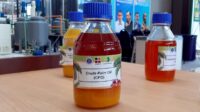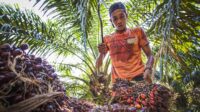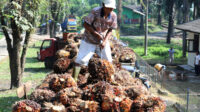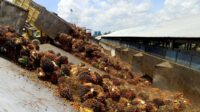


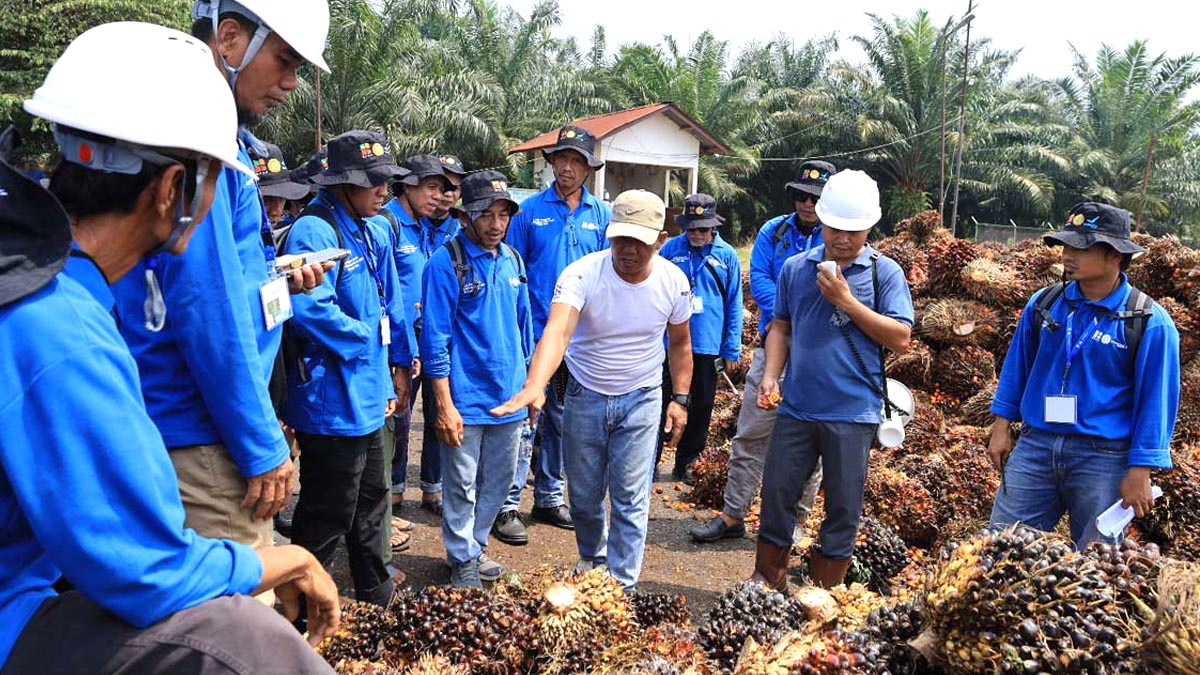
The five-day training programme in South Sulawesi focused on fruit ripeness standards, harvesting techniques, yield estimation and post-harvest handling to improve FFB quality and palm oil extraction rates.
PALMOILMAGAZINE, MAKASSAR — Harvesting fresh fruit bunches (FFB) at the right level of ripeness is essential to maintaining palm oil quality and maximising oil extraction rates. Harvest timing also affects free fatty acid (FFA) levels, making proper harvesting practices a critical factor in the productivity and quality of smallholder plantations.
Against this backdrop, 116 oil palm smallholders from North Luwu Regency, South Sulawesi, took part in a Harvesting and Post-Harvest Training Programme held on Nov. 3–7, 2026. The programme was organised under the 2026 Oil Palm Plantation Human Resources Development Programme, through a collaboration between the Plantation Fund Management Agency or Badan Pengelola Dana Perkebunan (BPDP), the Directorate General of Plantations, and IPB Training.
Also Read: BPDP and Ditjenbun Strengthen Palm Mapping Skills for Independent Smallholders
According to an official statement received by PalmOilMagazine on Sunday (Nov. 8, 2026), the training was delivered in four batches, covering Groups I, II, III and IV. Participants received technical instruction on the development of oil palm fruit, from pollination to the formation of FFB.
The programme also introduced participants to the visual characteristics of unripe, ripe and overripe fruit as a basis for determining the appropriate harvesting time.
Understanding fruit maturity is particularly important because harvesting too early or too late can affect both oil extraction rates and FFA levels. Consequently, harvesting performance should not be measured solely by the number of bunches cut, but also by compliance with established fruit ripeness standards.
Also Read: FORTASBI Shows How Sustainable Palm Oil Smallholders Support Orangutan Conservation in Indonesia
During interactive discussions, participants shared practical challenges in applying harvesting standards in their respective plantations. One of the main issues concerned the geographical conditions of North Luwu, where many oil palm plantations are located in hilly areas with relatively steep slopes.
Such terrain can make it difficult for harvesters to reach bunches at the appropriate stage of maturity, particularly when loose fruits begin falling from the bunches. Participants also discussed the practice of harvesting less mature fruit to minimise loose-fruit losses during transportation.
The discussions highlighted the importance of balancing field conditions with established harvesting standards. Efforts to minimise loose-fruit losses should not come at the expense of FFB quality.
Also Read: RSPO RT2026: Asian Agri, Apical and Kao Target 7,000 RSPO-Certified Smallholders by 2030
Beyond fruit maturity, the training covered oil extraction rate calculations, production forecasting and harvest density figures, commonly known as Angka Kerapatan Panen (AKP).
These techniques are intended to help smallholders estimate potential production and determine harvesting labour requirements. A better understanding of production forecasting and AKP is also expected to support more systematic harvesting schedules, taking into account crop conditions and available workforce capacity.
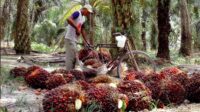
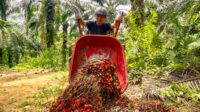
The programme combined classroom instruction with practical field activities. Participants visited PTPN IV Regional 2’s Luwu 1 Business Unit, where they observed and practised harvesting operations directly in the plantation.
Also Read: Indonesia Sets November 2026 Biodiesel Price at IDR 14,312 per Liter, Excluding Transport
The visit also provided an opportunity to observe palm oil mill operations and identify the different types of fruit bunches received by the processing facility. This experience helped participants understand the quality requirements that must be maintained from harvesting in the plantation through to delivery at the mill.
The training programme was officially opened by North Luwu Regent H. Andi Abdullah Rahim, together with representatives of relevant government agencies.
In his remarks, the regent expressed hope that improving smallholders’ technical capabilities would contribute to higher plantation productivity and generate positive impacts on their livelihoods and welfare.
Also Read: RSPO Urges Palm Oil Buyers to Purchase Credits from Sustainable Smallholders
Through the programme, BPDP, the Directorate General of Plantations and IPB Training aim to strengthen smallholders’ technical knowledge, particularly in understanding fruit maturity standards and proper post-harvest handling.
Harvesting accuracy remains a critical component of the palm oil production chain. With improved knowledge of fruit maturity, oil extraction rates, production forecasting and FFB handling, smallholders are expected to improve product quality and strengthen the management of smallholder oil palm plantations. (P2)