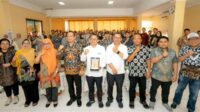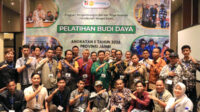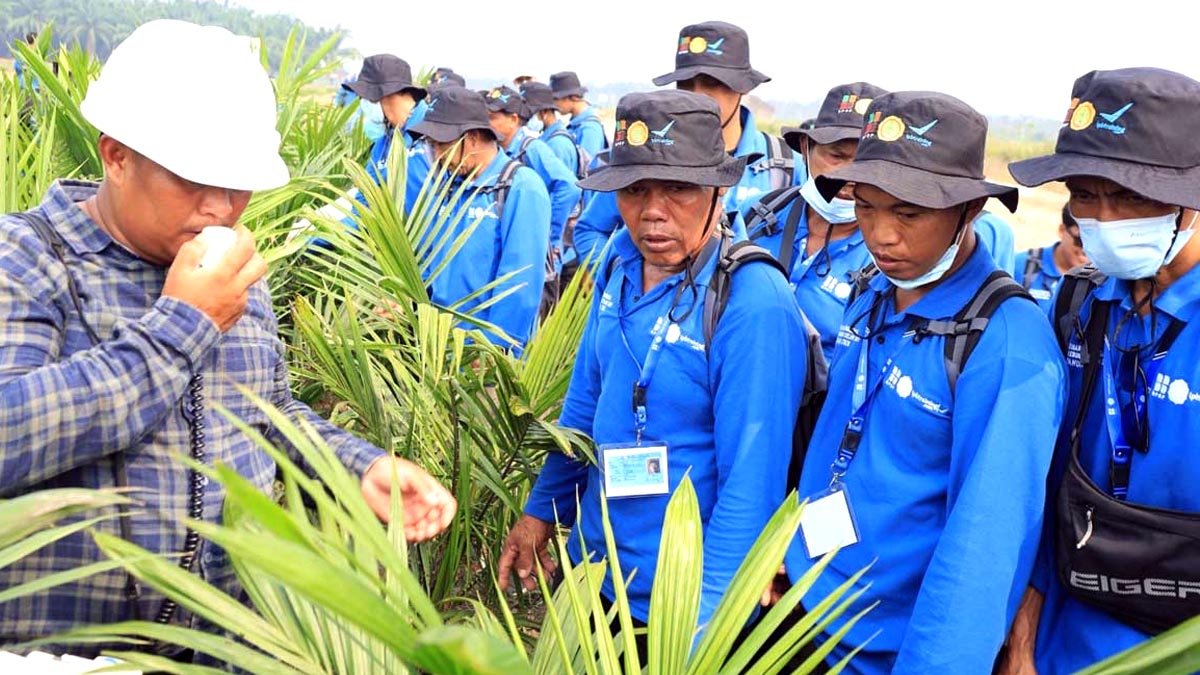
The six-day program covered planting materials, nursery management, land preparation, fertilization, crop maintenance, and integrated pest and disease management.
PALMOILMAGAZINE, PALEMBANG — A total of 174 oil palm smallholders from Ogan Komering Ulu (OKU) Regency, South Sumatra, participated in a six-day oil palm cultivation training program in Palembang to strengthen their knowledge and technical skills in managing plantations.
Held from August 26–31, 2026, at Beston Hotel Palembang, the training combined classroom sessions with discussions, practical exercises and field visits. The program was organized under the 2026 Oil Palm Plantation Human Resources Development Program, a collaboration between the Plantation Fund Management Agency (BPDP), the Directorate General of Plantations at the Ministry of Agriculture, and IPB Training.
Also Read: ISPO Training Prepares 87 Aceh Singkil Oil Palm Smallholders for Certification
According to an official statement received by PalmOilMagazine on Monday (Aug. 31), the participants were divided into six training batches, from Batch XXIV to Batch XXIX.
The opening session was attended by stakeholders from the provincial and regency governments, representatives of the Agricultural Human Resources Development and Extension Agency (BPPSDMP), the Directorate General of Plantations, and IPB Training Lead Trainer Prof. Hariyadi, M.S.
The training covered a broad range of topics, from plantation policies and planting materials to practical techniques for establishing and maintaining oil palm plantations.
The combination of classroom learning and field-based training allowed participants to relate technical concepts to challenges they encounter in their own plantations.
Also Read: Riau Independent Smallholder FFB Price Falls IDR 40.50/kg
Focus on Quality Planting Materials and Nurseries
One of the key topics was the selection and management of planting materials. Participants learned about superior planting materials, procurement procedures, pre-nursery (PN) and main nursery (MN) management, as well as techniques for distinguishing genuine seedlings from counterfeit planting materials.
The topic was particularly relevant because some participants already operate their own nurseries and face challenges in obtaining reliable planting materials.
Also Read: Organic Fertilizer Helps Indonesia’s Palm Oil Industry Cut Production Costs
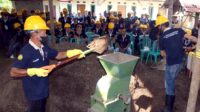
The classroom sessions were followed by practical exercises, including transferring seedlings from the pre-nursery to the main nursery using ponjok, a traditional tool used to assist the process.
Participants also learned about land preparation, including site suitability, growing requirements, replanting and field lining. After receiving instruction on planting patterns and spacing, they practiced field lining directly in the field.
The training then moved into planting and crop maintenance. Participants studied field planting techniques, plant population and spacing, planting-hole preparation, basal fertilization, the use of cover crops, and the management of immature oil palms (TBM) and mature oil palms (TM).
Also Read: Indonesia Raises September CPO Reference Price 1.10% to US$1,007.51/MT
Hands-On Training in Oil Palm Maintenance
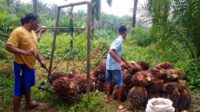
Field-based learning was an important component of the program. Participants practiced several plantation operations, including the use of harvesting poles with egrek blades, castration, manual and mechanized circle weeding, and tractor operation.
The practical sessions were accompanied by discussions with trainers from IPB Training and PT Dutareka Mandiri, allowing participants to deepen their understanding of plantation management practices under field conditions.
Also Read: KPBN Inacom CPO Price Rises to IDR 16,018/Kg on September 1
Fertilization and weed management were also covered. Participants learned about equipment calibration, spraying techniques, nutrient requirements and the 5T principles of fertilization. They also conducted soil and fertilizer pH measurements as part of the practical sessions.
Another major topic was the management of oil palm pests and diseases. The training covered integrated pest management (IPM), pest identification, early detection, pest and disease census methods, the use of biological control agents and beneficial plants.
Rat infestations, which are commonly encountered in some of the participants’ plantations, were also discussed as part of the pest management sessions.
Also Read: SPKS Warns Indonesia’s Palm Oil Export Margin Fee Could Cut Smallholder FFB Prices
Strengthening Smallholder Capacity
The training highlighted the importance of strengthening smallholder capacity through a combination of technical knowledge and practical field experience. Rather than focusing solely on theory, the program provided opportunities for participants to discuss and practice techniques relevant to the conditions of their own plantations.
For the smallholders, the training also served as a forum to raise practical challenges encountered in day-to-day plantation management. At the same time, discussions with trainers and organizers provided insights into the diverse challenges faced by oil palm smallholders in the field.
Over the six-day program, the training brought together plantation policy, technical knowledge, farmers’ experiences and hands-on practices. The collaboration between BPDP, the Directorate General of Plantations and IPB Training forms part of efforts to strengthen the human resources directly involved in Indonesia’s oil palm plantation sector. (P2)