


Indonesia’s palm oil industry association supports the proposed revision of the 2009 Environmental Protection Law, saying removal of the land-burning exemption would strengthen law enforcement and improve forest and land fire prevention.
PALMOILMAGAZINE, JAKARTA — The Indonesian Palm Oil Association (GAPKI) has thrown its support behind the government’s plan to revise Law No. 32 of 2009 on Environmental Protection and Management, particularly provisions that allow limited land clearing by burning under certain local customary practices.
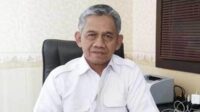
GAPKI Chairman Eddy Martono said removing the exemption would establish clearer and more uniform rules for preventing and prosecuting forest and land fires, known locally as karhutla.
Also Read: GAPKI IPOC 2026 to Shape Indonesia’s Palm Oil Strategy Amid Global Trade and Geopolitical Risks
“GAPKI fully supports the government’s plan to revise the Environmental Protection Law, particularly the provision allowing land clearing through burning,” Eddy said. “Removing the exemption would make the rules stricter and more consistent, leaving less room for ambiguity in the field,” said Eddy, in a statement to PalmOilMagazine on Friday (Oct. 16).
According to Eddy, the government has imposed a moratorium on new permits for oil palm plantations since the administration of President Joko Widodo. He said the industry is therefore not pursuing large-scale expansion into new areas, while GAPKI member companies have implemented zero-burning policies.
He also stressed that oil palm companies can themselves become victims of land fires, with some companies suffering plantation losses, business disruptions and even legal sanctions as a result of fires allegedly started by third parties.
“We hope law enforcement is carried out fairly and based on evidence gathered in the field,” Eddy said.
GAPKI Sees Stronger Rules Improving Fire Prevention
Eddy said eliminating the burning exemption could also make it easier for authorities and businesses to identify and contain potential sources of fires.
“When burning no longer has an exemption as a legal basis, potential sources of fires can be isolated and detected more easily. Every hotspot can be addressed more quickly, while its source can be traced more clearly,” he said.
The government’s proposed amendment was previously outlined by Environment Minister Jumhur Hidayat, who said the administration was preparing a revision of Law No. 32/2009 for submission to the House of Representatives (DPR).
One of the provisions under consideration for removal is the exemption allowing land clearing through burning based on local wisdom.
Speaking at a press conference in Jakarta on Monday (Oct. 12, 2026), held ahead of Indonesia’s delegation to the 31st UN Climate Change Conference (COP31), Jumhur said the government was preparing an initiative to revise the provision allowing communities to burn up to two hectares of land under local customary practices.
Also Read: IPOC 2026 to Strengthen Indonesia’s Palm Oil Strategy for Food, Energy and Economic Resilience
The provision is contained in Article 69, Paragraph 2 of the Environmental Protection and Management Law. Its explanatory provision allows land burning of up to two hectares per household for planting local varieties, subject to the establishment of firebreaks.
The government is also considering alternatives for communities that have traditionally relied on burning to clear land, including the use of climate-finance mechanisms to support more environmentally sustainable land-clearing methods.
GAPKI Calls for Support for Smallholders
GAPKI said stronger environmental regulations should be accompanied by practical support for communities and smallholders.
“We hope stronger regulations will be accompanied by financing, technology and assistance so communities can clear land without burning,” Eddy said. “GAPKI is ready to collaborate with the central government, local governments and communities to strengthen karhutla prevention.”
Also Read: GAPKI Strengthens Forest and Land Fire Prevention, Expands Monitoring Around Palm Oil Concessions
Within the oil palm sector, GAPKI member companies have adopted zero-burning policies supported by regular patrols, hotspot monitoring, standby firefighting teams, water reservoirs and observation towers.
For 2026, GAPKI has also urged its members to strengthen surveillance, ensure personnel and firefighting equipment are ready, and improve coordination with local governments and surrounding communities.
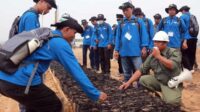
Community participation is being encouraged through Masyarakat Peduli Api (MPA), or Fire-Aware Community, programs, education on zero-burning land preparation and joint patrols in fire-prone areas.
Also Read: Indonesian Smallholders Step Up Fire Patrols as Land Fires Spread
Satellite-based hotspot information is used for early detection and subsequently verified in the field to ensure that fire response is targeted and law enforcement is based on verified evidence.
GAPKI said stronger cooperation among the government, businesses and communities will be essential to ensure environmental protection can progress alongside local economic needs and Indonesia’s national emissions-reduction targets. (P3)