The 22nd Indonesia Palm Oil Conference (IPOC) 2026 will bring together policymakers, market analysts, and industry leaders to examine the resilience of the palm oil sector amid geopolitical fragmentation, trade tensions, and evolving sustainability regulations.
PALMOILMAGAZINE, JAKARTA — Indonesia’s palm oil industry will come under the spotlight at the 22nd Indonesian Palm Oil Conference (IPOC) and 2027 Price Outlook, as industry leaders, policymakers and international analysts examine how the sector can strengthen food security, energy resilience and economic stability in an increasingly fragmented global economy.
Organized by the Indonesian Palm Oil Association (GAPKI), IPOC 2026 will be held on November 11–13 at the Bali International Convention Center (BICC), The Westin Resort Nusa Dua, Bali, under the theme “Palm Oil in a Fragmented World: Securing Food, Energy, and Economic Resilience.”
Also Read: GAPKI Backs Inpres 11/2026, Calls for Stronger Collaboration to Prevent Forest and Land Fires
The theme reflects a global landscape increasingly shaped by trade conflicts, protectionism, geopolitical rivalry and divergent sustainability standards across markets. For Indonesia, the world’s largest palm oil producer, these developments are putting greater pressure on the industry to maintain competitiveness while reinforcing its strategic contribution to food, energy and economic resilience.
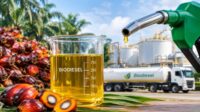
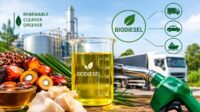
Palm oil remains a key feedstock for cooking oil and processed food in Indonesia, while also serving as the backbone of the country’s biodiesel program and efforts to strengthen energy self-sufficiency.
The sector is also a major source of non-oil and gas export earnings and supports millions of people in plantation areas, including smallholder farmers. These roles, GAPKI said, require the industry to continuously adapt to changing policies, environmental challenges and the global transition toward renewable energy.
Also Read: Prabowo Calls Oil Palm a “Miracle Crop,” Highlights Potential for Energy and Downstream Products
GAPKI Chairman Eddy Martono said IPOC 2026 comes at a critical time as industry stakeholders reassess the rapidly changing global trade landscape. The conference is expected to generate strategic ideas and policy recommendations aimed at strengthening the resilience of Indonesia’s palm oil industry.
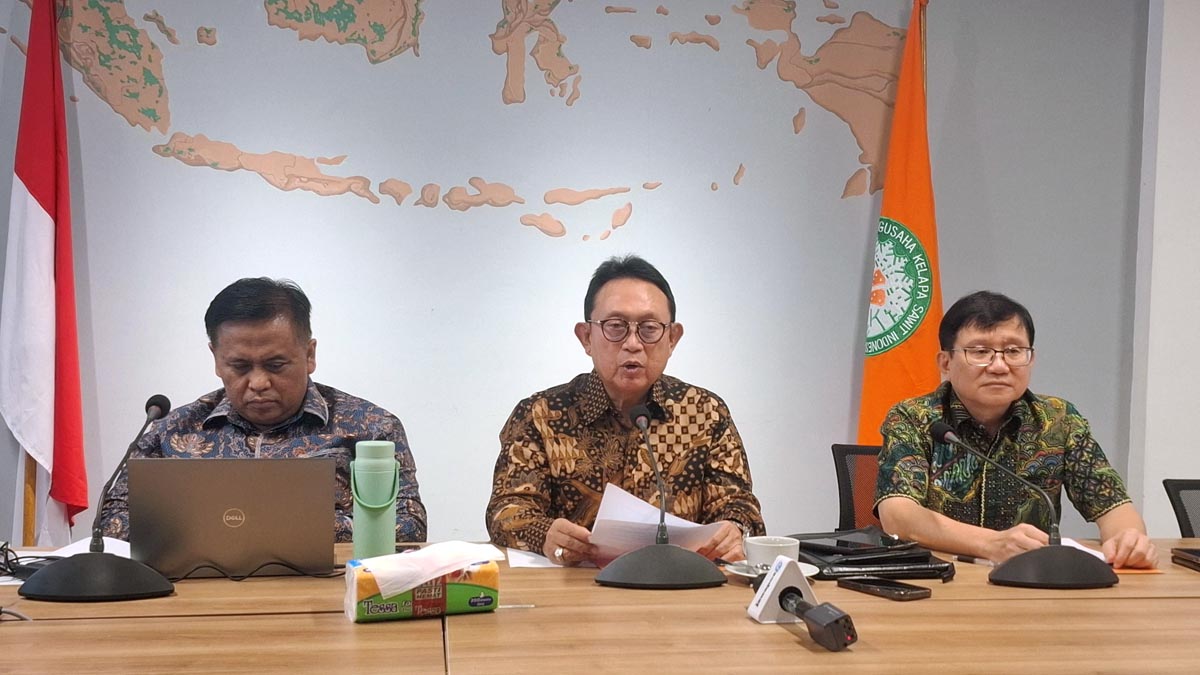
“The world is becoming increasingly fragmented, both economically and geopolitically. Through IPOC 2026, we want to discuss how Indonesia’s palm oil industry can remain resilient and become part of the solution to food and energy security, both domestically and globally,” Eddy said during an event attended by PalmOilMagazine on Friday (Oct. 9).
Policymakers, analysts to assess palm oil’s strategic role
The conference will feature senior government officials and international experts, with Coordinating Minister for Economic Affairs Airlangga Hartarto scheduled to deliver a keynote speech on the role of palm oil in strengthening Indonesia’s economic resilience.
Other key speakers include National Development Planning Minister and Bappenas Chief Rachmat Pambudy, who will discuss Indonesia’s strategy for building food and energy resilience through palm oil; Deputy Foreign Minister Arif Havas Oegroseno, who will address the implementation of the European Union Deforestation Regulation (EUDR) and Indonesia’s preparedness; and Deputy Finance Minister Juda Agung, who will examine Indonesia’s economic resilience and the palm oil industry.
Also Read: Indonesian Lawmaker Urges Palm Oil to Become a Major Source of Energy
On the second day, Luke Thomas Mahony of PT Danantara Sumber Daya Indonesia is scheduled to deliver a special address on new export governance, including challenges and opportunities arising from the latest export regulations.
The two-day conference will feature four main sessions: Economic Resilience; Food Security and Energy Transition; Trade and Geopolitics; and Economic Outlook and Market Trends.
The Economic Resilience session, moderated by GAPKI Foreign Affairs Chairman Fadhil Hasan, will examine palm oil’s contribution to Indonesia’s economic resilience. Bayu Krisnamurthi of IPB University will discuss palm oil as a pillar of economic resilience, while Teuku Muhammad Riefky Hasan of the University of Indonesia’s Institute for Economic and Social Research (LPEM FEB UI) will present Indonesia’s 2027 economic outlook.
Also Read: IPOSS Outlook 2026: Indonesia’s Palm Oil Industry Enters Transition, Productivity Takes Centre Stage
The session will also feature Khor Yu Leng of Segi Enam Advisors, who will discuss data-driven district-level resilience metrics for sustainability, trade and support for palm oil farmers; Quick C.K. of S&P Global, who will assess Asia’s 2026 palm oil market outlook from policy and geopolitical perspectives; and Sathia Varga of Fastmarkets Palm Oil Analytics, who will examine the impact of Indonesia’s palm oil policies on global markets.
Biodiesel and sustainability in focus
The second session will focus on food security and the energy transition, with GAPKI Research and Development Chairman Dwi Asmono serving as moderator.
Eddy Abdurrachman, president director of the Plantation Fund Management Agency or Badan Pengelola Dana Perkebunan (BPDP), will discuss the agency’s role in supporting a sustainable palm oil industry. Eniya Listiani Dewi, director general of New, Renewable Energy and Energy Conservation at the Ministry of Energy and Mineral Resources, will address biofuel policy as an instrument of economic resilience.
Also Read: Indonesia Accelerates Biofuel and Bioethanol Drive to Strengthen Energy Independence
Economist and public policy expert Achmad Nur Hidayat of UPN Veteran Jakarta will examine opportunities and challenges surrounding sustainable biodiesel policy.
Pietro Paganini of John Cabot University in Rome will discuss market trends and risks behind the growing “palm oil-free” movement, while Datuk Mohamad Helmy Othman Basha of the Malaysian Palm Oil Board (MPOB) will examine whether sustainability continues to deliver added value for the industry.
The third session, Trade and Geopolitics, will be moderated by Izzana Salleh of the Council of Palm Oil Producing Countries (CPOPC). Former Indonesian Foreign Minister Mahendra Siregar is scheduled to discuss palm oil’s position amid trade wars, protectionism and geopolitical rivalry.
Also Read: WWF-Indonesia and CPOPC Strengthen Sustainable Commodity Supply Chains
The session will also feature Susan Stroud of No Bull Agriculture, who will examine global vegetable oil markets and shifting demand; Abdul Rasheed Jan Mohammad of Pakistan’s Westbury Group, who will discuss the rise of emerging markets and Indonesia’s palm oil diplomacy; Hanson of DBS Bank Indonesia, who will address the new geopolitics of sustainability, trade and market access; and Atul Chaturvedi of the Asian Palm Oil Alliance (APOA), who will provide an Indian perspective on the geopolitical implications for vegetable oil trade.
2027 price outlook takes center stage
The final session, Economic Outlook and Market Trends, will be moderated by Sandeep Bhan of SD Guthrie International Trading.
Ryan Chen of Cargill Investments China will present trends and prospects for palm oil in China and their implications for prices. Julian McGill of Glenauk Economics will examine how Indonesia’s palm oil industry can manage the relationship between food and energy, while Joko Supriyono of GAPKI will discuss policy dynamics, opportunities and pathways toward greater industry resilience.
Also Read: CPO Prices Forecast to Stay High Through 2027 on El Niño Risk and Biodiesel Demand
Thomas Mielke of ISTA Mielke GmbH (Oil World) will provide an outlook for supply, demand and prices across palm oil and other vegetable oils.
IPOC 2026 will also feature veteran vegetable oil analyst Dorab Mistry of Godrej International Ltd., who will present his outlook for vegetable oil prices in 2027 amid what he describes as a “perfect storm” facing the palm oil industry.
Beyond the conference sessions, IPOC 2026 will host an industry exhibition showcasing the latest technologies, products and supporting services across the palm oil value chain.
Also Read: Indonesia Strengthens Palm Oil Traceability Under EUDR, Alongside Cocoa and Coffee
The program will begin with the GAPKI Golf Tournament and Welcome Cocktail Reception on November 11, followed by a Networking Night on November 12. The events are intended to provide opportunities for businesses, policymakers and international partners to strengthen networks and explore sustainable business partnerships.
“We designed IPOC 2026 to provide participants with a comprehensive picture, from government policy direction and geopolitical and trade dynamics to the 2027 price outlook. We hope the entire program will provide important input for Indonesia’s palm oil industry as stakeholders formulate their strategies for the future,” said IPOC 2026 Organizing Committee Chairman Suryanto Bun.
According to Suryanto, IPOC 2026 will bring together business leaders, policymakers, analysts and investors from around the world. Now in its 22nd edition, the conference is positioned not only as an industry forum but also as a strategic platform for understanding market direction and building partnerships in an increasingly fragmented global economy. (P3)