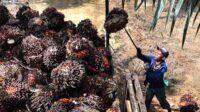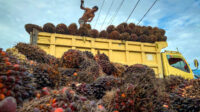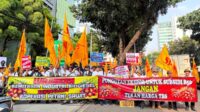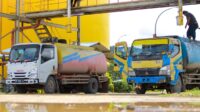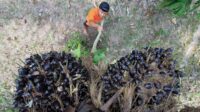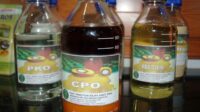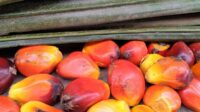
A cooperative-based mini mill processing about 10 tons of FFB per hour could require IDR30–40 billion in investment, highlighting financing and feedstock consolidation as key challenges for smallholders seeking to move beyond selling fresh fruit bunches.
PALMOILMAGAZINE, JAKARTA — Indonesian oil palm smallholders are being encouraged to move further into the palm oil value chain by developing cooperative-based mini mills capable of processing their own fresh fruit bunches (FFB) into crude palm oil (CPO).
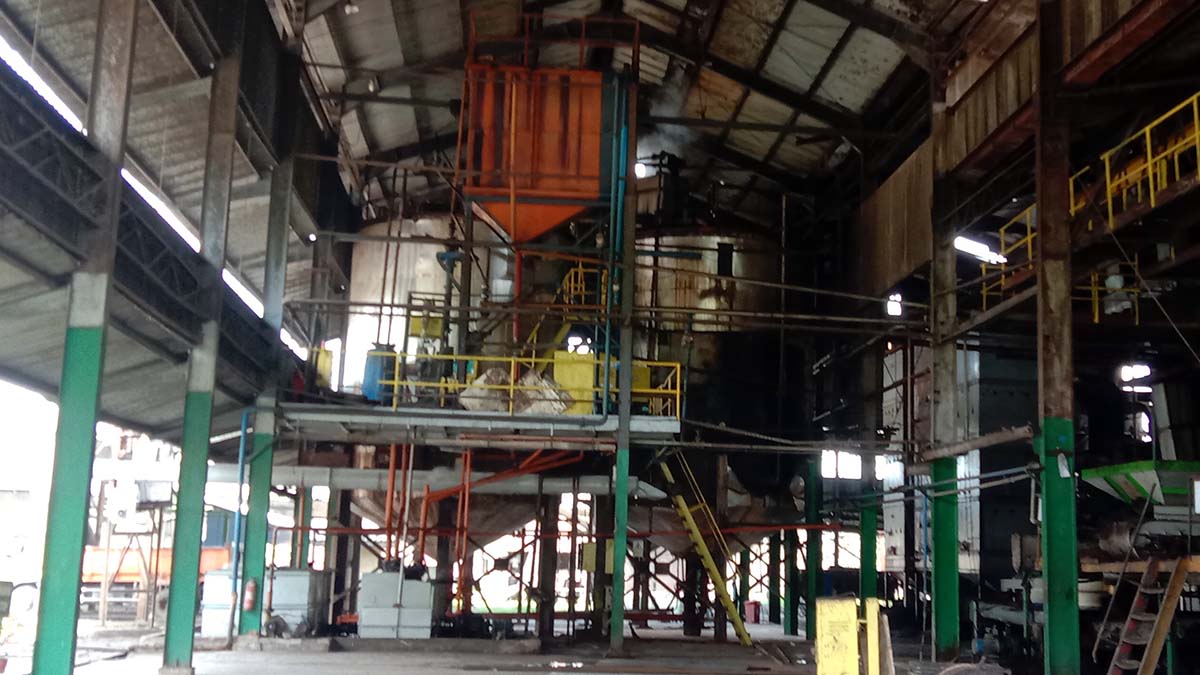
Sabarudin, chairman of the Oil Palm Farmers Union (SPKS), said a mini CPO mill with processing capacity of around 10 tons of FFB per hour could require an investment of IDR30 billion to IDR40 billion, making access to financing one of the main barriers for farmers seeking to move beyond selling FFB.
Also Read: Indonesia’s B50 Biodiesel Push Puts Smallholder Access to CPO Supply Chain in Focus
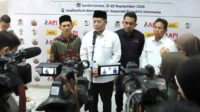
Sabarudin made the remarks at the Second National Conference on Smallholder Plantations in Jakarta on Sept. 21, 2026. He said the high cost of financing remains a significant challenge for farmers seeking to establish their own processing facilities.
“Access to financing for building a mill is expensive and requires substantial investment,” Sabarudin said, as quoted by PalmOilMagazine from Antara on Sept. 24.
Cooperatives Seen as Foundation for Mini CPO Mills
Sabarudin said mini mills could be developed through cooperatives representing around 1,000 to 2,000 farmers, with a combined plantation area of approximately 5,000 to 6,000 hectares.
Such a scale, he said, could provide a sufficient economic base for farmers to develop their own processing facilities, particularly independent smallholders who currently sell FFB to other parties.
Also Read: GAPKI Warns Unregulated Palm Oil Mills Threaten Indonesia’s Supply Chain
Around 80% of smallholder oil palm farmers are estimated to be independent growers, while the remaining 20% are plasma farmers who operate under partnership arrangements with plantation companies, according to Sabarudin.
Under this structure, cooperative-based mini mills could give smallholders greater control over where and how their FFB is processed, potentially strengthening their position within the palm oil value chain.
“Going forward, farmers could have their own mini mills and work with larger companies,” Sabarudin said.
Also Read: Indonesia’s Palm Oil Smallholders: 3 Key Demands to the Government
The proposal is consistent with discussions at the Second National Conference on Smallholder Plantations, where the government called for farmer cooperatives to expand beyond plantation management and become more involved in processing activities.
Government Offers Support for Cooperative Processing
Cooperatives Minister Ferry Juliantono said the government is prepared to provide assistance to farmer cooperatives seeking to establish processing facilities.
Cooperatives with established institutions and adequate business readiness could receive mentoring, business incubation and access to financing, he said.
Also Read: KPBN Inacom CPO Price Holds at IDR 15,515/kg Thursday (Sept. 24), Rotterdam Mixed
“If there are already cooperatives, we are ready to assist and incubate them and prepare them for financing,” Ferry said.
He added that the processing capacity of cooperative-owned mills could be adjusted according to the cooperative’s capabilities and available feedstock, ranging from 10 tons to 45 tons of FFB per hour.
The initiative comes as large plantation companies continue to play a significant role in Indonesia’s CPO processing industry. The government sees cooperatives as a potential mechanism for increasing smallholder participation in downstream palm oil activities.
Also Read: Indonesia Accelerates IEU-CEPA Process to Expand Access to European Market
According to data presented by Ferry at the conference, Indonesia has approximately 16 million hectares of oil palm plantations. Large corporations account for about 52% of the area, smallholders 43%, while the remainder is managed by state-owned enterprises.
South Sumatra Cooperative Provides Existing Example
Cooperative-based CPO processing is not entirely new in Indonesia. One example highlighted at the conference was KUD Sejahtera in Musi Banyuasin, South Sumatra.
The cooperative operates a CPO mill with processing capacity of 45 tons of FFB per hour.
Also Read: Agrinas Plans Palm Oil Plasma Pilot Project with Cooperatives in North Sumatra
The example illustrates how farmer cooperatives can move further into plantation processing when they have a sufficient feedstock base, institutional capacity and access to investment.
For smallholders, however, developing a mini mill involves more than financing the physical facility.
A viable processing operation also requires reliable FFB supply, effective cooperative governance, CPO quality standards, operational management and access to buyers.
Also Read: Malaysia CPO Price Thursday (Sept. 24) Edges Up to RM4,771/Ton as Dalian Oils Gain
This means cooperative-based palm oil downstream development will depend on a combination of farmer consolidation, stronger cooperative institutions and financing structures suited to the economics of smallholder plantations.
For independent farmers in particular, the ability to aggregate sufficient FFB volumes may determine whether a mini mill can operate efficiently and generate additional value beyond the sale of unprocessed FFB.
The cooperative model therefore offers a potential route for smallholders to participate more directly in palm oil processing, but its viability will depend on whether farmers can overcome the capital, supply-chain and market-access requirements associated with running an industrial processing facility. (P2)