As Indonesia marks 81 years of independence, the next challenge is not simply to expand the economy, but to ensure that more farmers, workers and small businesses gain ownership, bargaining power and a greater share of the value they create.
PALMOILMAGAZINE, JAKARTA — Eighty-one years after Indonesia proclaimed its independence, the challenge is no longer simply to make the economy grow. The greater task is to ensure that the people who sustain the economy have an increasingly meaningful share in it.
Every August, Indonesia returns to the story of independence. But after 81 years, the question deserves to be broadened: what does independence mean for people who work every day in plantations, rice fields, at sea, in markets, workshops, factories and countless small businesses that keep the national economy moving?
Also Read: When Smallholders Support Global Palm Oil Markets, It Is Time to Rethink Farm Scale
Through several years of working with farmers’ cooperatives, I have seen that their challenges are not always limited to low prices or a lack of capital. A more fundamental problem is that too many economic decisions remain in the hands of others.
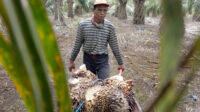
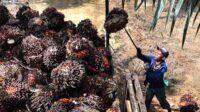
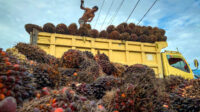
Farmers may own their land, yet have little influence over fertilizer prices. They plant and maintain their crops, but often lack transparency over how the quality of their products is assessed. They bear production risks but do not own the processing facilities. When prices fall, farmers absorb the consequences. When additional value is created after processing, the largest share often remains far from the farms where the raw materials were produced.
Owning an asset does not necessarily mean having economic power.
Also Read: Restoring the Original Spirit of Indonesia’s Cooperative Movement
There is a difference between owning a plantation and controlling the plantation business; between producing a commodity and having influence over its trade; and between owning production and having the power to decide who buys it, at what price and under what terms.
This is where economic independence needs to be discussed.
Economic independence does not mean that everyone must become wealthy, nor does it mean rejecting large corporations, banks, investment or cooperation with outside parties. Economic independence means having sufficient power to make choices rather than constantly accepting decisions made by others.
Indonesia’s economy itself continues to grow. Yet behind the headline figures is a labor force in which a large number of people continue to operate through small businesses, self-employment, family enterprises, farming and informal trade.
Indonesia’s problem is not that its people do not work.
They produce food, palm oil, rubber, fish, coffee, vegetables, livestock, handicrafts, services and countless other goods and necessities. The problem is that the economic strength of ordinary people remains fragmented across millions of small units, while markets, industry, financing, technology and distribution are increasingly organized through much larger institutions.
The real problem, therefore, is not that the people are too small.
Their economic strength is too fragmented.
This is where cooperatives find renewed relevance.
Also Read: FORTASBI Pushes Faster STDB Issuance to Unlock Sustainable Palm Oil Certification
Building Bigger Businesses Without Reducing the Number of Owners
Cooperatives offer the possibility of building large businesses without concentrating ownership in the hands of only a few people.
One thousand farmers could own a transport company. Five thousand farmers could own a processing plant. Dozens of cooperatives could jointly own a fertilizer company. Hundreds of cooperatives could build shared distribution networks, technology platforms, financing institutions or even export companies.
The scale of the business can be large. Management can be professional. Technology can be modern.
Also Read: 4F and BRIN Research Highlights Links Between Forests, Soil, Oil Palm and Community Livelihoods
Yet the owners can still be thousands, or even millions, of members.
The problem is that for decades, Indonesia has often approached cooperatives with an imagination that is too limited. Cooperatives are frequently associated with small retail shops or savings and loan services. But when the discussion turns to industry, technology, national trade, processing or exports, the imagination quickly shifts toward corporations and large capital owners.
There is no reason why thousands of farmers should not own a large factory. There is no reason why millions of cooperative members should not own a technology company.
Also Read: Palm Oil EFB Nanolignin Shows Potential to Remove Lead from Contaminated Water
The ideas of Soekarno and Mohammad Hatta remain relevant in this context. Soekarno placed economic self-reliance, or Berdikari, at the heart of independence, while Hatta saw cooperatives as a path toward economic democracy.
But these ideas must now be applied in a 21st-century context shaped by global corporations, digital technology, climate change, international markets and increasingly complex supply chains.
Self-reliance does not mean living in isolation.
Also Read: BPDP and Ditjenbun Strengthen Palm Mapping Skills for Independent Smallholders
Indonesia will continue to need banks, investors, large corporations, foreign technology, export markets and even foreign capital. The real meaning of independence is the ability to cooperate from a more equal position.
For farmers, the measure is simple.
When prices offered by buyers are unreasonable, do they have other options? When fertilizer becomes expensive, can they purchase it collectively? When transport costs rise, do they own or control their own logistics? When raw materials are undervalued, can they move into processing?
Every answer that changes from “no” to “yes” represents a step toward greater economic independence.
Also Read: UNDIP Students Turn Palm Oil Empty Fruit Bunches Into Livestock Feed, Win Gold Medal
Cooperatives Must Go Beyond Small Retail
The development of the Merah Putih Village and Urban Village Cooperatives also presents a major opportunity.
In July 2025, the government launched an institutional initiative involving 80,081 Merah Putih Village and Urban Village Cooperatives, aimed at strengthening self-reliance, food self-sufficiency and more equitable economic development from the village level.
But Indonesia does not need 80,000 new signboards.
It needs economic organizations that actually work.
Also Read: East Kalimantan FFB Price Rises to IDR 3,561.69/kg in First Half of August 2026
Legal registration can be completed within weeks. Building a functioning cooperative requires something far more difficult: trust among members, real transactions, capable management, capital, discipline, experience and time.
Buildings can be constructed with a budget. A sense of ownership cannot be purchased.
That is why cooperatives must be built around real economic problems.
Also Read: Agrinas Palma Opens Partnership with Cooperatives to Accelerate Palm Oil Downstreaming
In one village, the challenge may be fertilizer. In another, it may be rice prices, palm oil transportation, fish storage, fruit warehouses, packaging or market access.
Cooperatives must also move beyond operating as retail shops.
They need to move up the economic ladder—from collective procurement into marketing, transportation, storage, processing, branding and access to larger markets.
Not everything has to be owned by a single cooperative. What matters is having a clear direction: increasing the share of economic activity that communities themselves own and control.
Also Read: 11 Defendants to Face First Trial in Alleged CPO Export Corruption Case Disguised as POME
The Road to 2045
Indonesia has less than two decades to go before reaching one century of independence.
We often ask how large Indonesia’s economy will become by 2045. But another question is just as important: when Indonesia’s economy becomes larger, who will own it?
The success of cooperatives cannot be measured simply by the number of cooperatives or their turnover.
More important questions include how much of members’ production is marketed collectively, how much production costs are reduced, how many productive assets are collectively owned, how much capital is built internally, how much added value remains with members and how strong their bargaining position becomes.
On the road to 2045, cooperatives need to consolidate the fragmented economic activities of their members, build ownership over assets that strengthen bargaining power and connect cooperatives so they can participate in large-scale industry, technology, financing and trade.
If that can be achieved, there is no need to fight against large corporations.
Indonesia simply needs to ensure that its people also have large companies of their own.
Ultimately, economic independence is not a project designed to make everyone equally wealthy.
Its purpose is to ensure that more people have choices, bargaining power and ownership in the economy they help to build.
Eighty-one years ago, Indonesia reclaimed the right to determine the future of the nation.
The task now is quieter, longer and perhaps more difficult: organizing the economic strength of the people until they are able to determine their own future.
That is where cooperatives should do their work. (*)
Written by Jamaluddin, Chairman of Koperasi Belayan Sejahtera
Disclaimer: This article reflects the author’s personal views and is solely the responsibility of the author.