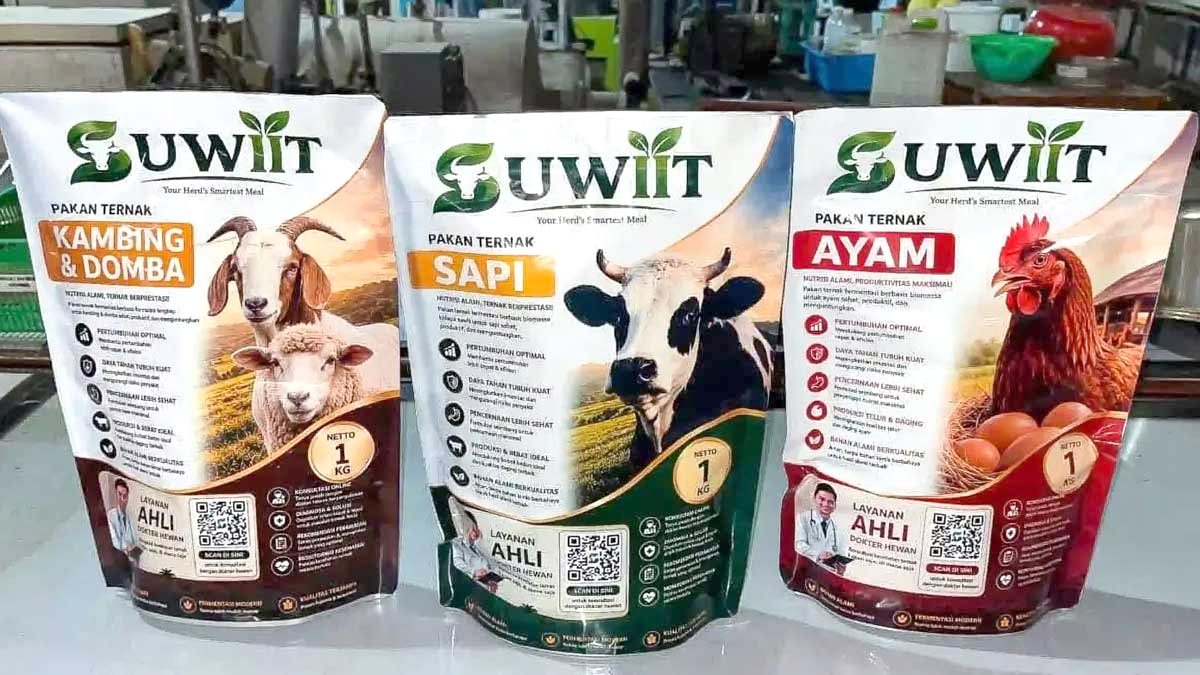
The SUWIIT innovation combines fermented empty fruit bunch biomass with probiotics and natural immunostimulants, while an AI-powered platform provides livestock health, education and market services for farmers.
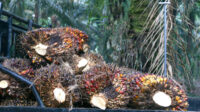
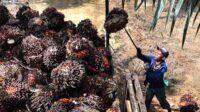
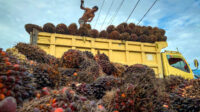
PALMOILMAGAZINE, SEMARANG — Oil palm empty fruit bunches (EFB), often regarded as a biomass management challenge in the palm oil industry, are being transformed into a potential value-added livestock feed product by students from Diponegoro University (UNDIP).
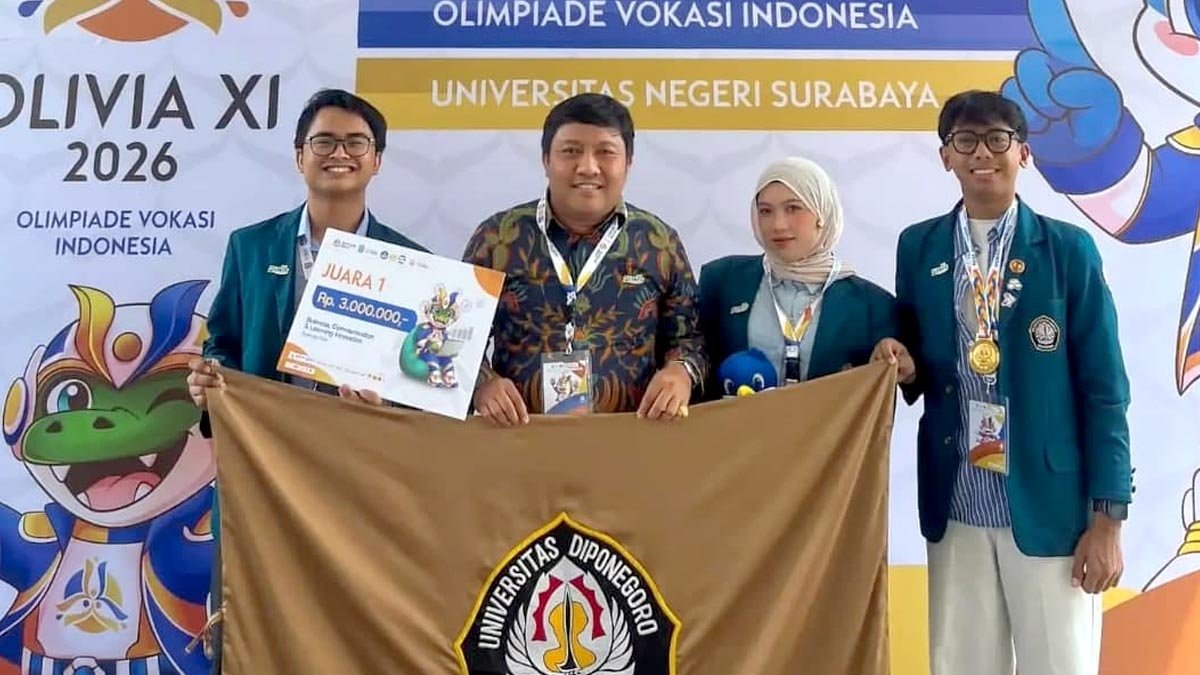
The student team developed SUWIIT (Smart Livestock Integrated Technology), an innovation combining palm oil biomass-based livestock feed with digital livestock services. The concept won a Gold Medal in the Business Plan category at the 11th Indonesian Vocational Olympiad (OLIVIA XI) 2026.
Also Read: Palm Oil EFB Nanolignin Shows Potential to Remove Lead from Contaminated Water
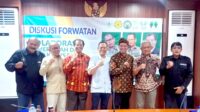
The competition was held at Surabaya State University from August 2–4, 2026. The UNDIP team comprised Luis Ibanez Sitinjak, Kholis Na’imah and Irgy Khoiroel Al Fahrezi from the Applied Bachelor’s Program in Industrial Chemical Engineering Technology at UNDIP’s Vocational School.
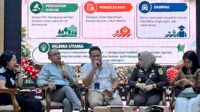
The team presented its concept before a panel of judges comprising academics, industry professionals, business practitioners and government representatives. The idea was developed in response to challenges faced by communities in the students’ home region of Sumatra.
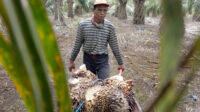
Oil palm plantations produce not only crude palm oil but also large volumes of biomass, including EFB. Meanwhile, livestock farmers continue to face high feed costs, which represent one of the largest components of livestock production expenses.
SUWIIT seeks to address both challenges by converting palm oil biomass into a potential source of livestock feed while creating additional value for farmers.
Also Read: GAPKI Urges Industry-Driven Research to Strengthen Sustainable Palm Oil Innovation
Turning EFB Into Value-Added Feed
Under the SUWIIT concept, EFB is processed into a nutraceutical livestock feed ingredient. The students use a fermentation process enriched with probiotics, minerals and natural immunostimulants to improve the nutritional value of the biomass.
The approach is designed to turn previously underutilized palm oil biomass into a feed ingredient that can support the livestock sector.
Also Read: Malaysia CPO Prices Seen Supported in H2 2026 Despite Higher Palm Oil Stocks
The feed is intended to support digestive health, strengthen livestock immunity and promote animal growth. SUWIIT therefore goes beyond waste utilization by seeking to establish a new value chain linking the palm oil and livestock industries.
The concept is also aligned with the principles of the circular economy, in which residual materials from one production process are reused to create new economic value.
Also Read: Vision AI Transforms Palm Oil Monitoring from Nursery to Harvest
AI-Powered Digital Platform
SUWIIT’s innovation extends beyond the feed product itself. The UNDIP team has also developed Smart Livestock Assistance, a digital platform designed to serve as a companion for livestock farmers.
Through the platform, farmers can monitor animal health, access veterinary consultations and receive automated care recommendations supported by artificial intelligence (AI).
The platform also includes interactive educational features and a livestock marketplace. By integrating these services, the students aim to provide farmers with access to information, animal healthcare, operational supplies and markets within a single digital ecosystem.
The business model is one of SUWIIT’s key strengths, combining product innovation with digitalization of livestock services.
Based on the team’s initial calculations, implementation of SUWIIT could potentially reduce feed costs by 20%–40%. Livestock productivity is projected to increase by 20%–40%, while mortality rates could potentially decline by 10%–20%.
These figures remain preliminary estimates and require further field testing and validation. However, they illustrate SUWIIT’s focus on developing a solution with both technological and economic benefits for farmers.
Also Read: Agrinas Palma Opens Partnership with Cooperatives to Accelerate Palm Oil Downstreaming
Palm Oil Scholarship Supports Student Innovation
SUWIIT was developed with guidance from Dr. Fahmi Arifan, who assisted the team in strengthening the technology and refining its business model for the competition.
Dr. Mohamad Endy Julianto, head of the Industrial Chemical Engineering Technology study program at UNDIP’s Vocational School, said the achievement demonstrated the importance of an educational ecosystem that gives students opportunities to transform ideas into practical solutions.
He also highlighted the role of palm oil scholarships in giving students opportunities to deepen their understanding of the palm oil industry, including opportunities to develop technologies and downstream applications.
Also Read: From Waste to Wealth: Can Oil Palm Biomass Become Indonesia’s Next Green Growth Engine?
For Luis Ibanez, participation in OLIVIA XI 2026 provided an important lesson that technological innovation alone is not enough. An idea must also address real-world problems, demonstrate business feasibility and have the potential for practical implementation.
Kholis Na’imah emphasized the importance of the circular-economy perspective behind SUWIIT. Waste, she said, should not necessarily be viewed as the end of a production process but as a resource that can still be converted into higher-value products.
Irgy Khoiroel Al Fahrezi added that livestock farmers face challenges beyond feed availability and prices. Access to information, animal healthcare, education, technical assistance and markets are also important to the development of livestock businesses.
Also Read: Unila and South Korea’s Naysor Collaborate on Low-Ash Palm Biomass Pellets for Green Energy
For that reason, SUWIIT was designed as an integrated ecosystem combining livestock feed, digital technology, animal healthcare, education and market access.
The innovation demonstrates how palm oil biomass could become a potential feedstock for new downstream applications while creating opportunities to connect the palm oil and livestock sectors through a circular-economy model. (P2)