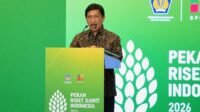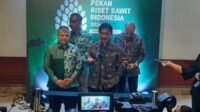


PALMOILMAGAZINE, West Kalimantan — Indonesian palm oil continues to face strong negative narratives on the global stage, particularly around environmental and water-use issues. Bambang, Deputy for Plant Quarantine at the Indonesian Quarantine Agency (Barantin), said palm oil has long been unfairly targeted by misleading campaigns that distort scientific facts.
“Some claim oil palm is wasteful in its water consumption. In reality, it is one of the most efficient crops in absorbing and utilizing water,” Bambang explained. “Its evapotranspiration process even contributes to cloud formation and supports the natural water cycle.”
He called on all stakeholders—from government institutions and industry players to smallholders—to work together to strengthen the positive image of Indonesian palm oil internationally.
Also Read: GAPKI Boosts International Engagement, Secures Six Cooperation Deals Across the US and Europe
In the near future, Bambang is scheduled to attend meetings with the Dutch government in Rotterdam to explore cooperation opportunities in palm oil marketing and diplomatic outreach across Europe. “We want Rotterdam to become a strategic gateway for Indonesian palm oil into Europe, while also helping reverse the negative perceptions that have developed over the years,” he said optimistically.
Bambang also praised the role of the Plantation Fund Management Agency (BPDP), which since 2016 has disbursed substantial funding to support smallholder farmers. These funds have been allocated to smallholder replanting programs, research, human resource development, and international promotion efforts.
“In the early years, the portion of BPDP funds reaching farmers was very small—less than one percent of total collections. But today it has increased significantly, and the impact is real,” he told Palmoilmagazine.com. He noted that in 2016, only around 240 hectares of smallholder plantations were replanted. The following year, the program expanded rapidly to more than 20,000 hectares, and was later targeted to reach up to 185,000 hectares.
Beyond replanting, BPDP has also financed scholarships for farmers’ children, supported plantation infrastructure development, and backed research into sustainable palm oil cultivation technologies. “All of this reflects the state’s concrete commitment to empowering smallholders,” Bambang added.
He further emphasized the urgency of improving land governance for smallholder plantations, as many palm oil plots remain located in forest areas or overlap with corporate concessions.
“I strongly encourage the immediate restructuring and clarification of palm oil land ownership, both for private estates and smallholders,” he said. “The government, through the Ministry of Forestry and other relevant institutions, must accelerate land status resolution so farmers can obtain legal certificates and access formal financing.”
According to Bambang, this step is crucial to ensure fairness, legal certainty, and long-term sustainability across Indonesia’s plantation sector. (P2)