PALMOILMAGAZINE, JAKARTA – Indonesia’s crude palm oil (CPO) reference price traded through PT Kharisma Pemasaran Bersama Nusantara (KPBN) recorded a slight decline on Friday (June 5, 2026), mirroring weaker sentiment in the global palm oil market as Malaysian futures extended their losses.
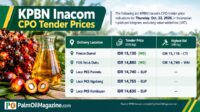
According to data obtained by Palmoilmagazine.com, KPBN set its CPO price at IDR 15,050 per kilogram, down IDR 25 per kilogram, or approximately 0.17%, from IDR 15,075 per kilogram recorded on Thursday.
For franco sales, CPO prices in Kuala Tanjung and Dumai were set at IDR 15,050 per kilogram, while the franco Talang Duku price stood at IDR 14,850 per kilogram.
Also Read: Indonesia Raises June 2026 Biodiesel Price Index to IDR 14,643 Per Liter
Meanwhile, the franco Parindu offering opened at IDR 14,700 per kilogram but was eventually withdrawn, with the highest bid reaching IDR 14,550 per kilogram.
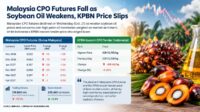
Global market sentiment also weighed on palm oil prices. Crude palm oil futures on the Bursa Malaysia Derivatives Exchange declined again on Friday, marking a second consecutive day of losses amid pressure from China’s vegetable oil market.
According to Reuters, the decline was largely driven by weakness in competing vegetable oils traded in China. However, losses were partially capped by gains in soybean oil futures on the Chicago Board of Trade (CBOT) and a weaker Malaysian ringgit against the U.S. dollar.
Also Read: SPKS Urge Government to Keep MINYAKITA Affordable, Redirect BPDP Funds to Public Welfare
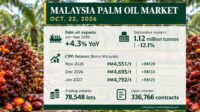
The benchmark August 2026 palm oil contract fell RM48 per tonne, or 1.04%, to RM4,553 per tonne during morning trading.
The downturn followed negative movements on China’s Dalian Commodity Exchange, one of the key indicators for the global vegetable oil market. The most active soybean oil contract on Dalian dropped 1.37%, while palm oil futures fell a steeper 2.49%.
In contrast, CBOT soybean oil futures gained approximately 0.33%, helping to limit further downside pressure on Malaysian palm oil prices.
Also Read: MINYAKITA Price Cap Under Review as Government Recalculates Economic Costs
Market participants attributed the correction to profit-taking after a strong rally over recent weeks. In addition, weaker vegetable oil prices in China continued to dampen sentiment across the global edible oils market.
On the currency front, the Malaysian ringgit weakened around 0.5% against the U.S. dollar. The softer currency improved the competitiveness of Malaysian palm oil exports by making them more affordable for overseas buyers.
Also Read: DSI and the Future of Indonesia’s Palm Oil Industry: Will Farmers and Workers Benefit?
With these opposing market forces at play, global palm oil prices are expected to remain volatile in the near term as traders monitor demand from major importing countries and developments across the broader vegetable oil market. (P3)