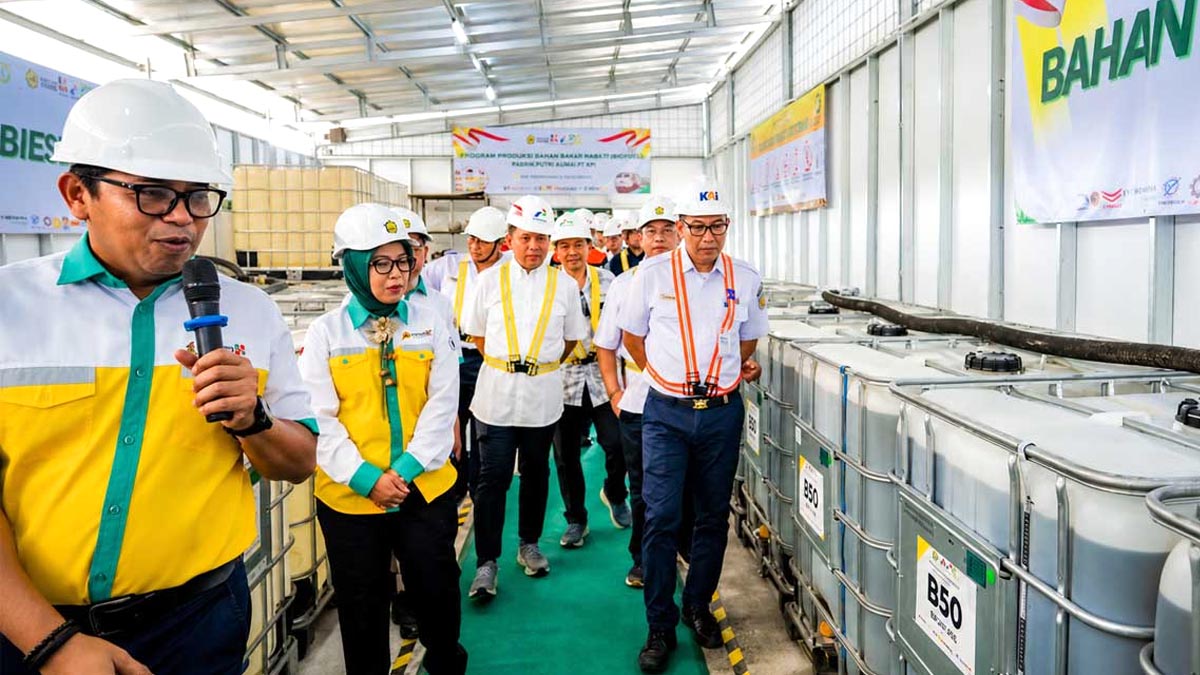
PALMOILMAGAZINE, JAKARTA – The Indonesian government is accelerating preparations for the nationwide implementation of the mandatory B50 biodiesel program, which is scheduled to take effect on July 1, 2026. The policy represents a major strategic initiative to strengthen national energy security, reduce dependence on imported diesel fuel, and expand the utilization of domestically sourced renewable energy.
Eniya Listiani Dewi, Director General of New, Renewable Energy and Energy Conservation (EBTKE) at the Ministry of Energy and Mineral Resources, emphasized that the biodiesel program has become a key instrument in supporting Indonesia’s energy independence while facilitating the country’s gradual energy transition.
“The biodiesel program plays an important role in strengthening national energy security through greater utilization of domestic energy resources while supporting Indonesia’s gradual and sustainable energy transition,” Eniya said in an official statement on June 23, 2026.
Also Read: Indonesia to Launch B50 in July as Prabowo Pushes Palm Oil-Led Energy Transition
According to her, the biodiesel program, which has been implemented since 2015, has generated significant benefits not only for the energy sector but also for the broader economy. The policy has strengthened the domestic palm oil market, supported the sustainability of the national palm oil industry, and reduced dependence on imported fossil fuels.
B40 Delivered Significant Economic Benefits
The government reported that biodiesel distribution under the B40 program reached 14.94 million kiloliters throughout 2025, equivalent to approximately 95.67% of the allocated volume of 15.61 million kiloliters.
The implementation generated substantial economic gains, including foreign exchange savings estimated at IDR 133.3 trillion, additional economic value of IDR 20.92 trillion, and employment opportunities for approximately 1.88 million workers.
Also Read: Indonesia Raises June 2026 Biodiesel Price Index to IDR 14,643 Per Liter
Beyond its economic impact, the B40 program also contributed to greenhouse gas emission reductions. During 2025, the program was estimated to have reduced carbon emissions by approximately 39.66 million tons of carbon dioxide equivalent (CO₂).
“These achievements demonstrate biodiesel’s contribution to national energy security while also generating added value for the Indonesian economy,” Eniya said.
Extensive B50 Testing Underway
Ahead of the B50 rollout, the government is conducting a series of comprehensive evaluations and technical tests to ensure the higher biodiesel blend can be safely and effectively utilized across various sectors.
The ongoing testing program covers a broad range of fuel users, including automotive vehicles, agricultural machinery, mining equipment, marine transportation, power generation facilities, and railway operations.
Also Read: KPBN CPO Price Rises 2.19% on June 24 as Malaysian Palm Oil Market Remains Under Pressure
The objective is to verify that the higher biodiesel blend can meet operational requirements without compromising equipment performance, industrial productivity, or transportation reliability.
Government officials believe that technological readiness and supporting infrastructure will be critical factors in ensuring the successful implementation of B50 while maintaining stable energy distribution and economic activity.
Palm Oil Fund Supports the Program
The biodiesel program continues to emphasize economic viability and long-term sustainability. Incentives for the biodiesel mandate are financed through the palm oil fund mechanism, preventing additional burdens on the state budget.
Besides increasing domestic energy consumption, the B50 policy is expected to boost domestic palm oil demand and generate positive impacts throughout the entire palm oil supply chain, from upstream producers to downstream industries.
Also Read: Tight Supply and Weather Risks Support CPO Above RM4,400, Says MPOC
The government reiterated that future biodiesel development will continue to balance national energy needs, the sustainability of the palm oil industry, and broader economic stability.
Through cross-sector coordination and ongoing evaluations, policymakers expect B50 to become a new milestone in Indonesia’s efforts to establish a more independent, sustainable, and competitive national energy system.
“Through greater utilization of domestic energy resources and stronger cross-sector collaboration, Indonesia aims to build an energy system that is increasingly independent, sustainable, and capable of delivering tangible benefits to society,” Eniya concluded. (P2)