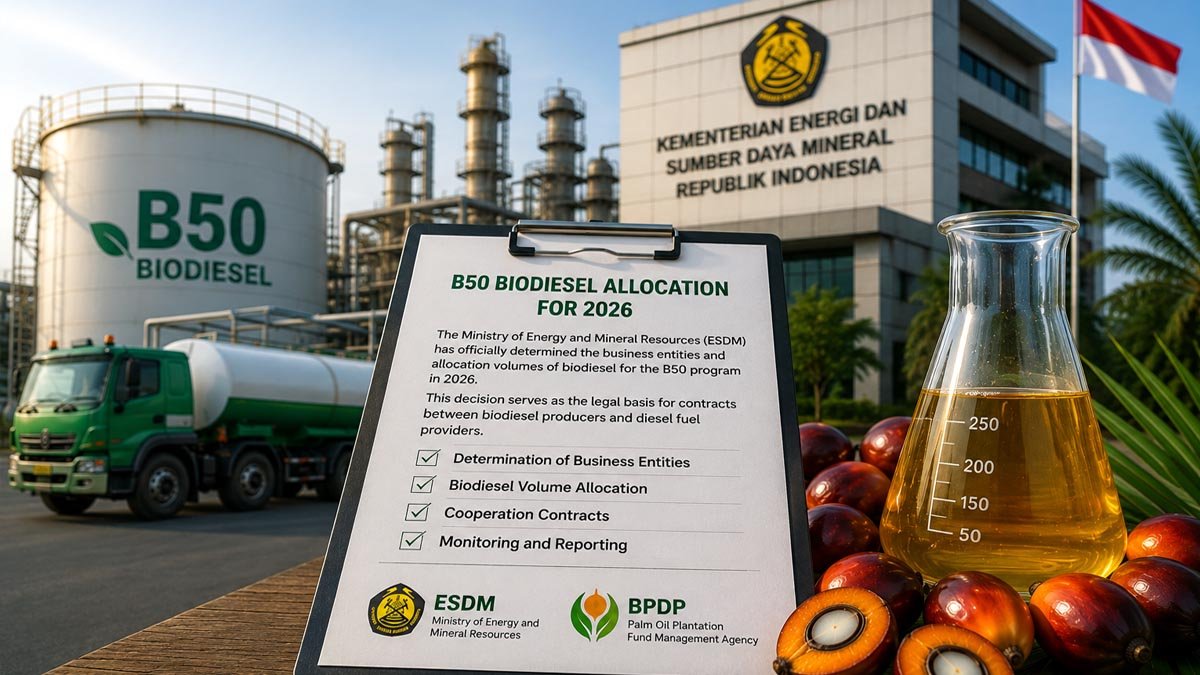
PALMOILMAGAZINE, JAKARTA – Indonesia’s Ministry of Energy and Mineral Resources (ESDM) has officially designated the companies and biodiesel allocation volumes for the 2026 B50 biodiesel blending program, paving the way for supply agreements between biodiesel producers and diesel fuel distributors.
According to a ministerial regulation reviewed by PalmOilMagazine.com on Wednesday (July 29), the policy is based on Article 11 paragraphs (2) and (3) of ESDM Ministerial Regulation No. 24/2021, which governs the supply and utilization of biodiesel under the funding framework of Indonesia’s Plantation Fund Management Agency (BPDP).
The allocation is stipulated in Minister of Energy and Mineral Resources Decree No. 271.K/EK.01/MEM.E/2026, dated June 26, 2026, which identifies eligible diesel fuel suppliers, biodiesel producers, and their respective biodiesel volumes for the nationwide B50 blending mandate throughout 2026.
Following the issuance of the decree, the government has instructed all designated companies to immediately finalize commercial agreements between biodiesel suppliers and diesel fuel providers. These contracts will serve as the legal basis for biodiesel procurement, distribution, and delivery under the allocated quotas.
To strengthen oversight, diesel fuel suppliers are required to submit copies of the signed agreements to the Directorate General of New, Renewable Energy and Energy Conservation (EBTKE), the Directorate General of Oil and Gas (Migas), and BPDP.
The government expects the timely implementation of the B50 mandate to enhance Indonesia’s energy security, expand the use of renewable fuels, and increase domestic consumption of palm oil through the country’s mandatory biodiesel program.
Also Read: MPOC: Indonesia’s B50 Mandate to Keep CPO Prices Above RM4,400/Ton Despite Weak Global Demand
The Directorate General of EBTKE also reaffirmed its commitment to supporting Indonesia’s energy transition by maintaining professional, transparent, and accountable public services. The initiative forms part of the ministry’s integrity program aimed at achieving Corruption-Free Zone (WBK) and Clean and Serving Bureaucracy Zone (WBBM) status. (P3)