
BPDP and Universitas Airlangga are promoting palm oil by-products as alternative livestock feed, aiming to reduce farmers’ feed costs while creating new circular-economy opportunities from the palm oil industry.
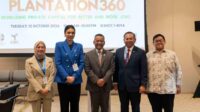
PALMOILMAGAZINE, MALANG — Indonesia’s palm oil industry is being encouraged to play a greater role in supporting the livestock sector as the Plantation Fund Management Agency or Badan Pengelola Dana Perkebunan (BPDP) and the Laboratory for Development Economics (LPEP) at Universitas Airlangga’s Faculty of Economics and Business promote palm oil by-products as alternative animal feed.
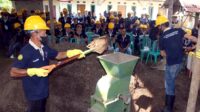
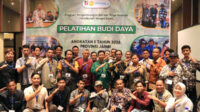
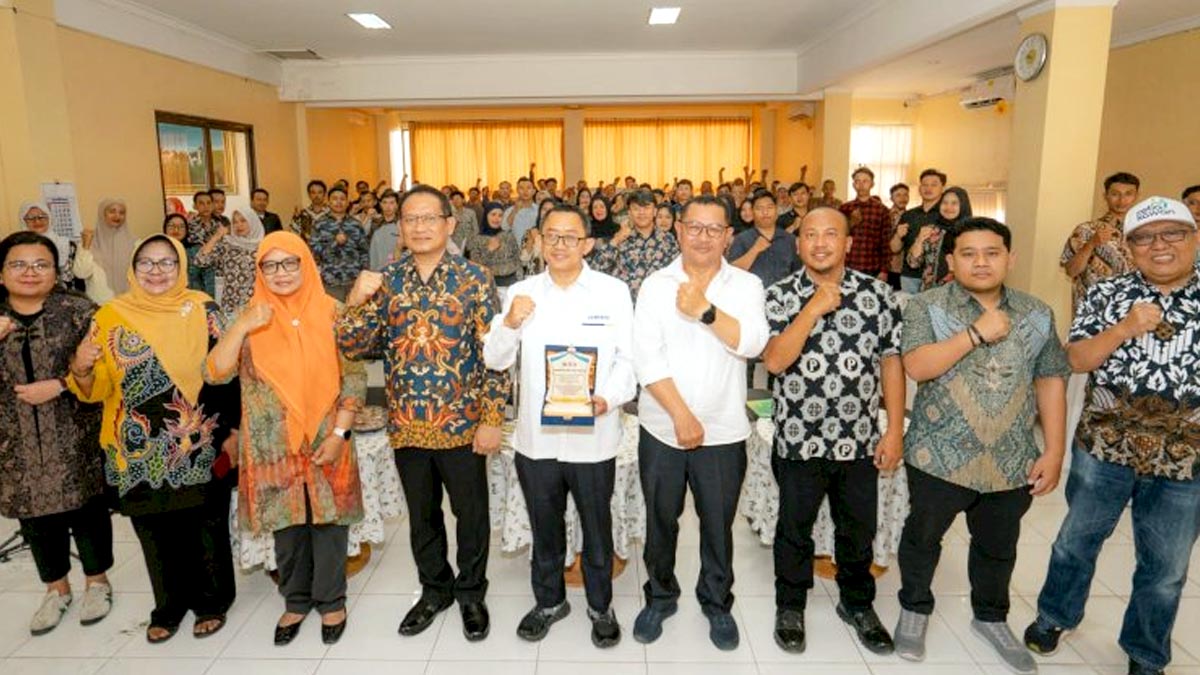
The initiative was delivered through a workshop and practical action program titled “Increasing the Added Value of Palm Oil Waste through Circular Economy-Based Livestock Feed Innovation,” held from Oct. 20–22, 2026, at the East Java GKSI Building in Malang Regency.
Also Read: BPDP and Ditjenbun Strengthen Palm Mapping Skills for Independent Smallholders
The program brought together livestock farmers and micro, small and medium-sized enterprises (MSMEs) involved in animal feed, livestock production and plantation-product processing. The workshop was designed to introduce farmers to the potential of palm oil by-products while highlighting business opportunities from their utilization.
Turning Palm Oil By-Products Into Feed
Prof. Dyah Wulan Sari, chairwoman of LPEP at Universitas Airlangga’s Faculty of Economics and Business, highlighted the significant scale of Indonesia’s palm oil industry and the cost pressures facing livestock farmers.
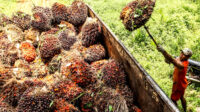
Indonesia produced around 47.24 million tonnes of crude palm oil (CPO) in 2025 from approximately 16.16 million hectares of plantation area, based on data from Statistics Indonesia (BPS) and the Ministry of Agriculture.
Also Read: BPDP Boosts Global Market Access for Indonesia’s Palm Oil, Coconut and Cocoa at TEI 2026
At the same time, feed costs can account for 60%–70% of total livestock production costs, creating a major challenge for farmers.
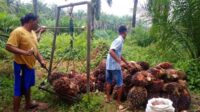
“With our palm oil production so large, every tonne of oil produced also generates by-products such as palm solid, palm kernel meal and fronds. At the same time, farmers are facing high feed costs,” Dyah said, as quoted by PalmOilMagazine from BPDP.
She said the two challenges could be connected through a circular-economy approach, in which by-products from one industry become raw materials for another.
Also Read: KPBN Inacom CPO Price Falls to IDR 15,115 kg on Wednesday as Rotterdam Palm Oil Market Gains
Palm Oil Offers More Than Edible Oil
Helmi Muhansyah, head of BPDP’s Community Cooperation and MSME Division, said the program was part of an effort to broaden public understanding of the potential benefits of palm oil beyond edible oil.
“Palm oil is not only used to produce cooking oil. Its by-products, including palm kernel meal and fronds, can also be utilized as livestock feed,” Helmi said.
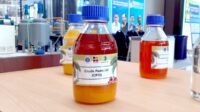
He pointed to research supported through the Palm Oil Research Grant as an example. The research found that Palm Fatty Acid Distillate (PFAD) could be processed into calcium fat for dairy cattle feed, with the potential to improve both milk production and quality.
Also Read: 91 OKU Smallholders Join BPDP-IPB Training to Strengthen Sustainable Palm Oil Productivity
Alternative Feed Supports Dairy Self-Sufficiency
Prof. Rudi Purwono, dean of Universitas Airlangga’s Faculty of Economics and Business, said the development of alternative feed could help strengthen Indonesia’s livestock sector while supporting efforts to meet national milk demand.
Indonesia’s domestic milk consumption remains insufficiently covered by local production, making higher productivity and stronger farmer livelihoods important to improving the country’s dairy supply.
Rudi said high feed costs remain one of the main constraints for livestock farmers. Diversifying feed sources through the utilization of palm oil industry by-products could reduce farmers’ reliance on commercially manufactured feed while opening new business opportunities.
He also said improving the economics of livestock farming would be important to attracting more people, particularly younger generations, into the sector.
Also Read: Astra Agro Lestari Granted RSPO Membership After Two-Year RSPO Assessment
Farmer Experience Highlights Cost Savings
The workshop also featured a case study from Maulana Akbar, a goat farmer from Tapin Regency, South Kalimantan, who has incorporated fermented palm solid into livestock feed.
Maulana mixes fermented palm solid with forage and concentrate. During a 30-day trial, the approach reduced feed costs by 30%–40% compared with the use of tofu residue, while several goats recorded weight gains of 3–4 kilograms.
Also Read: Malaysia CPO Futures Fall as Soybean Oil Weakens, KPBN CPO Price Slips
A consistent supply of palm oil by-products from nearby plantations has also helped ensure the availability of raw materials for his operation.
Participants were subsequently trained to assess the commercial feasibility of palm oil waste-based livestock feed businesses, including production costs, profitability and basic business-model development.
From Feed Processing to Business Financing
The workshop covered technical aspects of livestock feed processing, feed quality and safety standards, feed formulation and fermentation technology. Participants also received practical training in processing palm solid, palm kernel meal and palm fronds.
The program extended beyond technical training to business development. Participants received assistance with obtaining a Business Identification Number (NIB) and business licensing through the OSS-RBA system, as well as information on financing schemes including Kredit Usaha Rakyat (KUR).
Also Read: IPOC 2026 to Strengthen Indonesia’s Palm Oil Strategy for Food, Energy and Economic Resilience
The organizers also facilitated business matching with state-owned banks under Himbara and other financing institutions.
The program concluded with each participant preparing an action plan for developing their livestock-feed business, providing a roadmap for applying the knowledge and technologies gained during the workshop.
The initiative highlights a growing opportunity for Indonesia’s palm oil sector to strengthen its links with livestock production, turning previously underutilized by-products into higher-value inputs while supporting a more circular and economically resilient rural economy. (P3)