
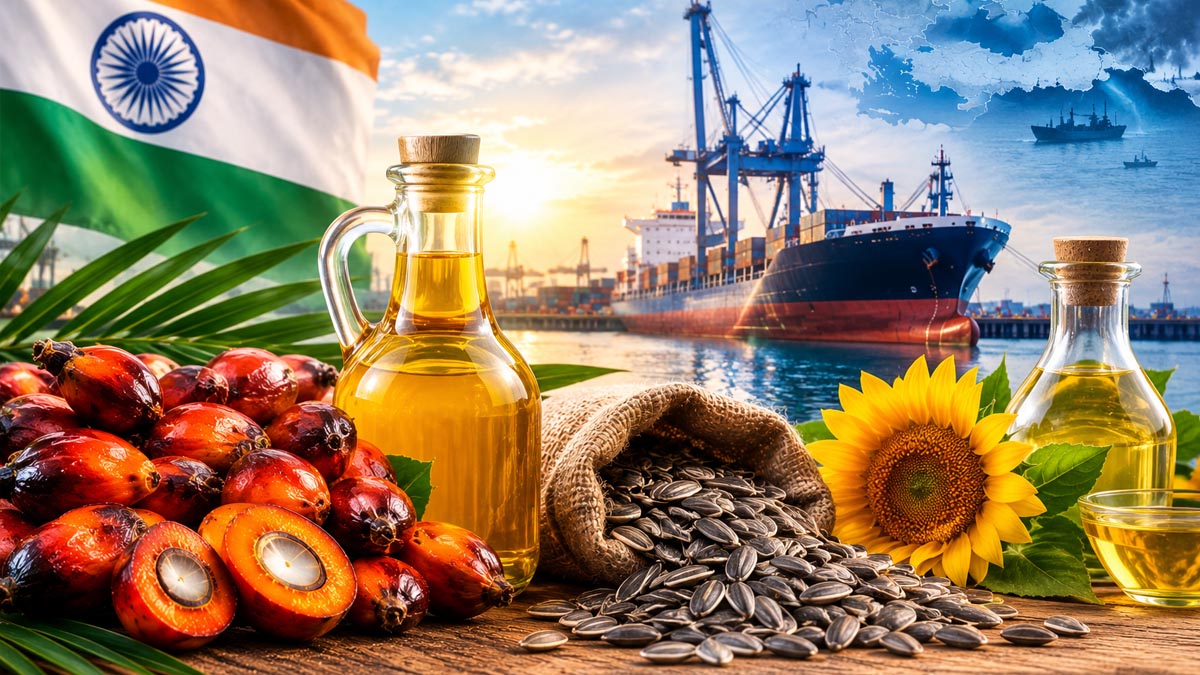
India’s sunflower oil imports fell to 108,837 tons in September, their lowest level in more than four years, prompting refiners to increase palm oil purchases to a seven-month high.
PALMOILMAGAZINE, MUMBAI — India increased its palm oil purchases in September as disruptions to sunflower oil shipments from the Black Sea region pushed imports of the competing vegetable oil to their lowest level in more than four years.
According to The Edge Malaysia, sunflower oil imports fell 32% from August to 108,837 tons, the lowest monthly volume since April 2022, according to data released by the Solvent Extractors’ Association of India (SEA) on Thursday (Oct. 15, 2026).
Also Read: Malaysia CPO Futures Rise, November Contract Gains RM60 to RM4,536/Ton on Friday (Oct. 16)
At the same time, palm oil imports rose 4.5% month on month to 817,884 tons, their highest level in seven months. Soybean oil imports, however, declined 2.2% to 614,965 tons.
The shift toward palm oil by India, the world’s largest importer of vegetable oils, could provide additional support for palm oil demand and help reduce inventories in Indonesia and Malaysia, the world’s two largest palm oil producers.
Black Sea Disruptions Hit Sunflower Oil Supplies
India’s total edible oil imports declined 1.76% to 1.54 million tons in September, largely due to lower arrivals of sunflower oil and soybean oil.
India sources most of its palm oil from Indonesia and Malaysia, while soybean and sunflower oil supplies are primarily sourced from Argentina, Brazil, Russia and Ukraine.
Also Read: KPBN Inacom CPO Price Holds at IDR 14,988/kg on Friday (Oct. 16), Rotterdam Market Weakens
Although sunflower oil remains available in producing countries, logistics disruptions are making it increasingly difficult for exporters to deliver supplies to India.
A Mumbai-based dealer with a global trading firm said damage to Black Sea port infrastructure caused by the Russia-Ukraine conflict has disrupted loading operations and delayed vegetable oil shipments.
Russian and Ukrainian attacks on ports in the Black Sea region in recent weeks have affected export operations at facilities handling grains and vegetable oils.
Also Read: GAPKI IPOC 2026 to Shape Indonesia’s Palm Oil Strategy Amid Global Trade and Geopolitical Risks
An industry official and trade sources also reported last week that a shipment of Russian sunflower oil bound for India had been cancelled, while other cargoes were delayed following attacks on Black Sea ports.
Festive Demand Supports Palm Oil Buying
The disruption comes as edible oil demand typically strengthens during India’s festive season, encouraging refiners to secure alternative supplies.
The combination of tighter sunflower oil availability and seasonal demand is prompting refiners to increase palm oil purchases as a substitute, the Mumbai-based dealer said.
Also Read: IPOC 2026 to Strengthen Indonesia’s Palm Oil Strategy for Food, Energy and Economic Resilience
For Indonesia and Malaysia, stronger Indian demand could provide additional support to palm oil exports at a time when global vegetable oil markets remain sensitive to supply disruptions, competing oils and inventory levels.
India’s shift toward palm oil also highlights the competitive dynamics among major edible oils, with disruptions in one supply chain quickly influencing purchasing patterns across the broader vegetable oil market. (P3)