
Indonesia’s 41st Trade Expo Indonesia brings together 1,873 exhibitors and buyers from 134 countries, with the government emphasizing downstream processing, market diversification, and higher-value exports, including agricultural and plantation commodities.
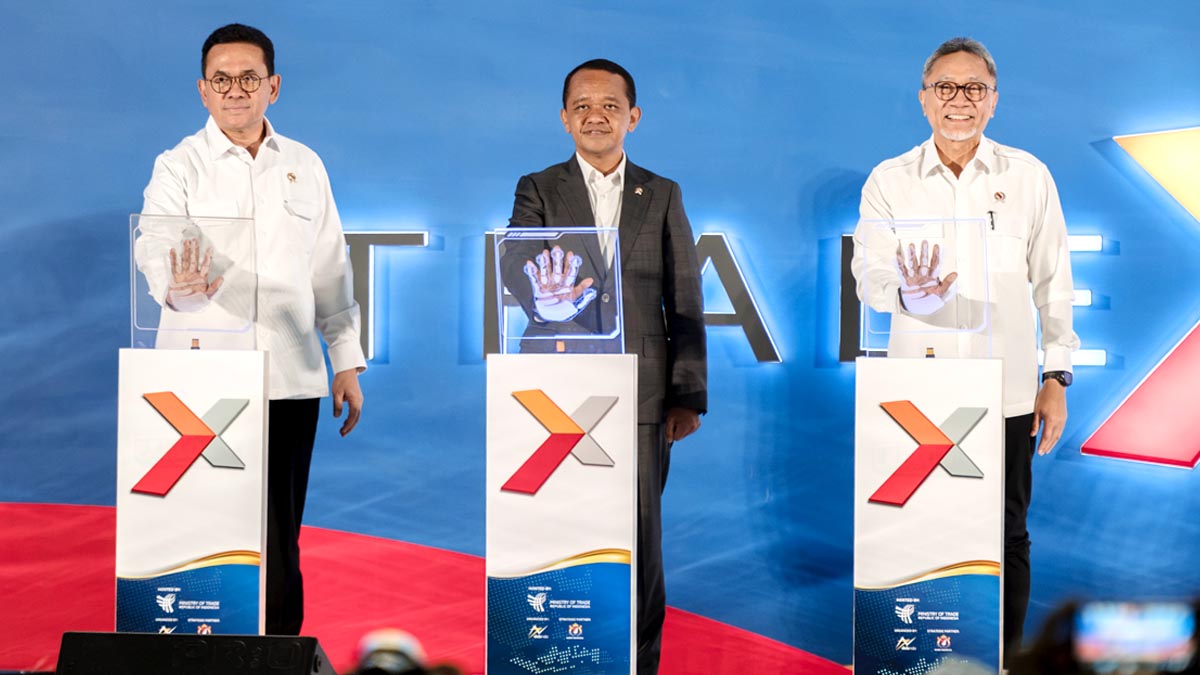
PALMOILMAGAZINE, TANGERANG — Indonesia officially opened the 41st Trade Expo Indonesia (TEI) at the Indonesia Convention Exhibition (ICE) BSD City in Tangerang, Banten, on Wednesday (Oct. 14, 2026), as the government seeks to expand export markets, strengthen product competitiveness, and accelerate the development of higher-value products.
Organized by the Ministry of Trade, TEI 2026 runs from Oct. 14–18 under the theme The Ultimate Hub for Global Sourcing. The exhibition features 1,873 exhibitors, while registered buyers represent 134 countries. The ministry is targeting potential transactions of USD17.5 billion and 30,000 visitors during the five-day event.
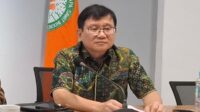
Coordinating Minister for Downstreaming and Energy Transition Bahlil Lahadalia officially opened the exhibition on behalf of President Prabowo Subianto. He said downstream processing and industrialization of natural resources are central to increasing domestic value added and strengthening Indonesia’s economic independence.
“The government is promoting higher-value exports through downstreaming and industrialization of natural resources. Downstreaming is key to increasing the value of Indonesia’s natural resources while strengthening national economic independence,” Bahlil said, according to a statement received by PalmOilMagazine on Thursday (Oct. 15).
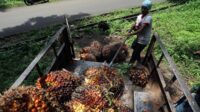
For the agricultural and plantation sectors, downstreaming offers opportunities to transform commodities into processed products with greater economic value. The strategy, however, requires improvements in product quality, supply continuity, and compliance with standards in destination markets.
Also Read: GAPKI IPOC 2026 to Shape Indonesia’s Palm Oil Strategy Amid Global Trade and Geopolitical Risks
168 MoUs Scheduled on Opening Day
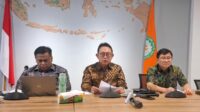
Trade Minister Budi Santoso said TEI serves as a platform connecting Indonesian businesses with international buyers. On the first day of the exhibition, 168 memorandums of understanding (MoUs) were scheduled to be signed between Indonesian exporters and buyers from 22 countries.
Exhibited products span food and beverages, agriculture, manufacturing, fashion and handicrafts, furniture and home décor, as well as industrial estates. The broad range is expected to create new trade opportunities while attracting investment into Indonesia.
Also Read: Indonesia Palm Oil and Derivatives Support 6.72% Export Growth in August 2026
The exhibition supports three priority programs of the Ministry of Trade: protecting the domestic market, expanding export markets, and taking local products global.
Budi said the government is continuing to expand market access through trade negotiations and implementation of trade agreements.
“To date, 25 trade agreements have been implemented, while 13 agreements are currently under negotiation,” Budi said.
Also Read: Indonesia Palm Oil Consumption and Exports Rise, August Stocks Reach 2.214 Million Tons
Greater market access could help Indonesian exporters reach more countries, although businesses still need to ensure compliance with quality requirements, technical standards, and trade regulations in destination markets.
SMEs and Regional Products Target Global Markets
The Ministry of Trade is also strengthening its Dari Lokal untuk Global (From Local to Global) program by facilitating business matching between micro, small and medium enterprises (MSMEs) and international buyers.
The initiative is supported by 46 Indonesian trade representatives in 33 countries, including trade attachés, Indonesia Trade Promotion Centers (ITPC), the Indonesian Trade Consulate in Hong Kong, the Indonesian Economic and Trade Office (KDEI) in Taipei, and Indonesia’s representation to the World Trade Organization (WTO).
Also Read: Indonesia Seeks WTO Approval to Suspend EU Concessions Over Palm Oil Dispute
The ministry is also implementing the Desa Berani Inovasi, Siap Adaptasi (BISA) Ekspor program to identify promising village-based products and prepare them for international markets. Partnerships between MSMEs and domestic retail networks are also being promoted to strengthen distribution and marketing of local products.
Meanwhile, the Campuspreneur program aims to foster young entrepreneurs, including prospective exporters. The Ministry of Trade has established partnerships with 25 universities across Indonesia.
“We are teaching young people how to become entrepreneurs, including helping students recognize the potential to become exporters,” Budi said.
Also Read: Bandung Sahari: Indonesia Still Lacks Research to Build the Palm Oil Narrative
For agricultural and plantation businesses, these initiatives could provide additional channels to market regional products and processed commodities internationally. Sustained export growth, however, will depend on the ability of businesses to maintain quality, meet buyer requirements, and ensure reliable supplies.
South Asia and Africa Emerging as Export Growth Markets
Coordinating Minister for Food Zulkifli Hasan highlighted the potential of nontraditional markets, particularly in South Asia and Africa, as Indonesia seeks to diversify its export destinations.
“Our markets are expanding into new partner countries that we did not previously anticipate. The potential is enormous, especially in South Asia, which has the highest growth. These include Bangladesh, Pakistan and India. We are also entering African markets,” Zulkifli said.
Also Read: Black Sea Sunflower Oil Disruptions Push India to Buy More Palm Oil
Market diversification could help Indonesian exporters reduce their dependence on individual destination countries. For agricultural and plantation commodities, however, capturing these opportunities will require detailed market mapping, product specification adjustments, and stronger distribution networks.
Government Recognizes Exporters and Trade Partners
As part of the 41st TEI, the Ministry of Trade presented the Primaniyarta Awards to outstanding exporters and regional leaders who have contributed to Indonesia’s export growth.
The Primaduta Awards were presented to international trade partners, members of the Indonesian diaspora, and heads of Indonesian diplomatic missions overseas who have actively promoted Indonesian products.
Also Read: Indonesia Palm Oil Exports Fall in July as Shipments to India, Russia Slump
The ministry will also present the Campuspreneur Award to university students recording the highest transactions during the exhibition.
TEI 2026 is supported by Pertamina as Strategic Partner, Bank Mandiri as Bank Partner, and the Plantation Fund Management Agency or Badan Pengelola Dana Perkebunan (BPDP) as Event Partner. Additional support comes from the Indonesian Chamber of Commerce and Industry (Kadin Indonesia), the Indonesia Eximbank or Lembaga Pembiayaan Ekspor Indonesia (LPEI), and other related institutions.
The government expects TEI to serve not only as a promotional platform but also as a catalyst for concrete business partnerships and sustainable export realization.
Also Read: KPBN Inacom CPO Price Falls Slightly to IDR 14,775/kg on Tuesday (Oct. 13), Malaysia CPO Gains RM45
The next challenge will be converting the exhibition’s USD17.5 billion transaction potential into actual sales while strengthening the global position of Indonesian products, including agricultural and plantation commodities. (P3)