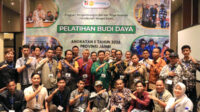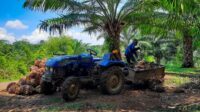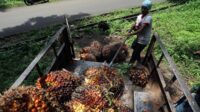

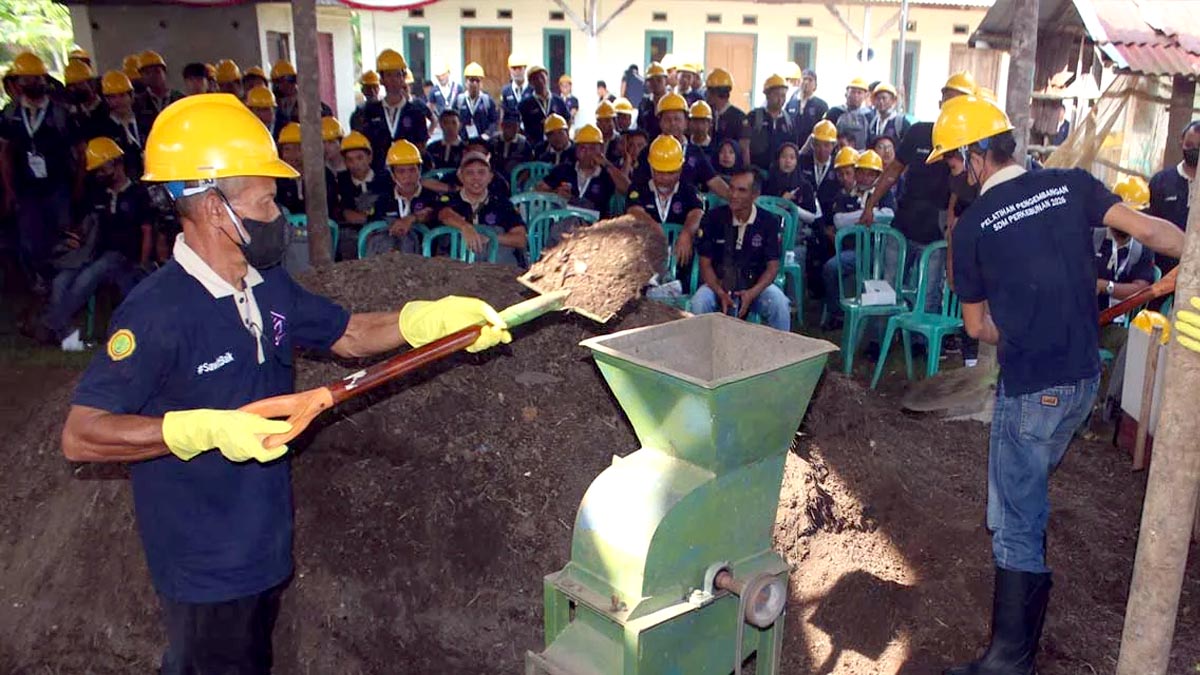
The training aims to help oil palm smallholders reduce fertilizer costs, improve soil health and raise plantation productivity by turning locally available organic materials into farm inputs.
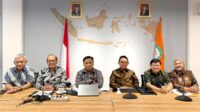
PALMOILMAGAZINE, BENGKULU — Indonesia’s Plantation Fund Management Agency or Badan Pengelola Dana Perkebunan (BPDP), together with the Directorate General of Plantations (Ditjenbun) at the Ministry of Agriculture and PT Citra Widya Education (CWE), has trained oil palm smallholders in Bengkulu to produce and apply organic fertilizer as part of efforts to reduce production costs and improve plantation productivity.
The five-day technical training, held at Hotel Mercure in Bengkulu City, brought together smallholders from North Bengkulu and Mukomuko districts. The program is part of the Human Resources Development Program for the Oil Palm Plantation Sector, funded by BPDP through the Ministry of Finance.
Also Read: 86 Jambi Oil Palm Smallholders Receive Training on Cultivation, Fertilization and Pest Control
Madeslianto, head of the North Bengkulu Plantation Agency, said 162 participants from his district took part in the training, including oil palm growers and civil servants from the local plantation agency who were involved in organizing the program. Smallholders from Mukomuko also participated.
“The training is intended to strengthen smallholders’ skills so they can independently produce and apply environmentally friendly fertilizer, helping reduce production costs and improve soil fertility,” Madeslianto said in a statement received by PalmOilMagazine on Tuesday (Oct. 13, 2026).
Turning Plantation Waste Into Farm Inputs
Y.B. Rodjimin, representing PT CWE, urged farmers to reconsider organic materials that are readily available around their plantations.
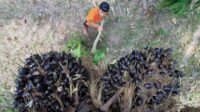
Oil palm fronds, empty fruit bunches (EFB), livestock manure and weeds can all be processed into organic fertilizer when properly managed, he said.
Also Read: SPKS and BPDP Train Aceh Smallholders to Turn Palm Waste into Organic Fertilizer
However, Rodjimin stressed that organic fertilizer should not automatically be viewed as a complete replacement for inorganic fertilizer. Instead, it should form part of a balanced fertilization strategy based on crop requirements and soil conditions.
“Do not view organic fertilizer simply as a cheap fertilizer. See it as an investment in our soil, because healthy soil is the foundation for productive crops,” Rodjimin said.
Organic Fertilizer Seen as Cost-Saving Option
Hj. Sri Herlin Despita, head of the Bengkulu Provincial Food Crops, Horticulture and Plantation Agency, said the use of organic materials could provide smallholders with an alternative for improving farm efficiency, particularly as plantation crops no longer receive fertilizer subsidies.
She stressed, however, that the production and application of organic fertilizer must be supported by proper knowledge of dosage, timing and application methods according to crop requirements.
Also Read: GAPKI Backs Government Plan to Remove Local Burning Exemption in Environmental Law
“Organic fertilizer plays an important role in improving soil structure and fertility,” Sri Herlin said.
She also expressed hope that the training would encourage the formation of farmer groups and business groups capable of producing organic fertilizer independently. Such initiatives could improve soil health while creating opportunities to reduce plantation maintenance costs.
From Mukomuko, AM Azbas Novyan, representing the head of the local Agriculture Agency, highlighted the district’s significant oil palm potential.
Smallholder oil palm plantations in Mukomuko cover around 108,000 hectares, while company-operated plantations account for approximately 52,000 hectares. The district is also home to 15 crude palm oil (CPO) mills.
Also Read: KPBN Inacom CPO Price Rises to IDR 14,988/kg on Thursday (Oct. 15), Rotterdam CPO at US$1,570
The initial training phase included 29 smallholders from Mukomuko. Azbas said farmers in the district currently apply around 2–4 kilograms of NPK fertilizer per oil palm tree annually.
“We hope this training can help us replace or reduce the use of chemical fertilizer with organic fertilizer,” he said.
Smallholder Productivity Remains a Key Challenge
Representing the Director of Oil Palm and Other Palma Crops at Ditjenbun, Mula Putra said Indonesia has approximately 16.8 million hectares of oil palm plantations, with smallholders accounting for 42.6% of the total area.
Despite Indonesia’s position as the world’s largest palm oil producer, smallholder plantations continue to record relatively low productivity, at around 3.6 tons per hectare per year.
Also Read: GAPKI IPOC 2026 to Shape Indonesia’s Palm Oil Strategy Amid Global Trade and Geopolitical Risks
Under Presidential Regulation No. 132 of 2024, the government is promoting three major programs for oil palm plantation development: the Smallholder Palm Oil Replanting Program (PSR), infrastructure and facility development, and human resources development.
Bengkulu has approximately 426,000 hectares of oil palm plantations, with North Bengkulu and Mukomuko among the province’s main production areas.
Mula Putra said strengthening smallholders’ ability to use organic fertilizer could help reduce production costs and improve productivity, particularly amid limited access to subsidized fertilizer.
Also Read: Agriculture Ministry Presses 139 Palm Oil Mills to Reverse FFB Price Cuts
“With oil palm plantations no longer receiving allocations of chemical fertilizer subsidies, substituting chemical fertilizer with organic fertilizer is a strategic effort to increase production and productivity,” he said.
He also stressed that technical assistance should continue after the training ends. Instructors are expected to provide comprehensive training while helping participants apply the knowledge in their plantations.
Local governments have also been asked to monitor and evaluate graduates of the program in accordance with Directorate General of Plantations Decree No. 43 of 2025.
Participants, meanwhile, are expected to become agents of change by sharing their knowledge with other smallholders in their respective communities.
Also Read: East Kutai Accelerates Palm Oil Replanting, 1,900 Hectares Target ISPO Certification
Training Linked to ISPO Readiness
The capacity-building initiative also supports the palm oil sector’s broader sustainability agenda, including preparations for mandatory Indonesian Sustainable Palm Oil (ISPO) certification in 2027, with a transition period for smallholders extending to 2029, as outlined during the training.
By learning to process organic materials available around their plantations, smallholders are expected to turn agricultural and plantation waste into productive inputs, improve soil conditions and manage fertilizer costs more efficiently.
Also Read: ISPO Training Prepares 87 Aceh Singkil Oil Palm Smallholders for Certification
The initiative could ultimately strengthen the competitiveness of Bengkulu’s smallholder oil palm sector by supporting more productive, self-reliant and sustainable plantation management. (P2)