

PALMOILMAGAZINE, JAKARTA — Among climate observers, the name “Godzilla” is no longer just a fictional monster that destroys cities. It is a terrifying nickname for an extremely intense El Niño—a weather anomaly in which the surface temperature of the Pacific Ocean soars far beyond normal levels. For Indonesia, the fury of “Godzilla” El Niño is a warning sign, especially for one sector that serves as the backbone of the national economy: the oil palm plantation industry.
Oil palm is often portrayed as a hardy plant. However, behind its sturdy exterior, it is a tropical plant that is extremely dependent on water. Oil palms require consistent rainfall throughout the year to produce oil. When this “Godzilla” monster arrives, bringing a long, arid drought, our palm oil industry is forced to face a crippling domino effect from upstream to downstream.
This production shutdown begins at the biological level of the oil palm tree itself. When subjected to severe water stress, oil palm trees activate a unique yet detrimental survival mechanism: they stop producing fruit. The trees will shed their flowers (flower abortion) or produce more male flowers than female ones. Without female flowers, don’t expect any Fresh Fruit Bunches (FFB) to be harvested. The oil palm fronds also begin to dry out and break off, hanging limply, which impairs the plants’ ability to photosynthesize.
Also Read: Industry and Public Accountability in Efforts to Mitigate Forest and Land Fires
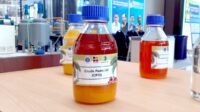
Ironically, the hardships faced by palm oil farmers and business owners do not end immediately when the first rains fall. El Niño has a insidious lag effect. The hydrological damage occurring today will not reveal its worst impact on *Crude Palm Oil* (CPO) production for another 16 to 20 months. The Indonesian Palm Oil Association (GAPKI) estimates that millions of metric tons of potential CPO could simply vanish due to fruits that ripen slowly and trees that are already under stress.
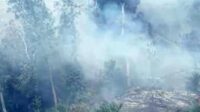
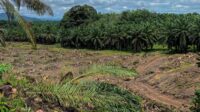
On the ground, the threat doesn’t stop at trees that have stopped bearing fruit. Parched soil turns vast stretches of palm oil plantations—especially on peatlands—into giant tinderboxes. Forest and land fires (karhutla) loom large, posing the risk of incalculable losses in capital investment if the plantations are burned to the ground. Even costly fertilization efforts are rendered futile; without sufficient water, these expensive fertilizers will simply evaporate or settle to the ground without being absorbed by the roots.
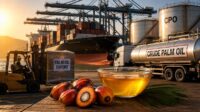
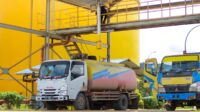
This tragedy is compounded when we consider downstream operations and logistics. On palm oil hubs like Kalimantan, major rivers such as the Kapuas River serve as the main “highway” for barges transporting CPO. When El Niño causes the rivers to shallow, this vital waterway comes to a complete standstill. Barges become trapped and unable to move.
Also Read: GAPKI Strengthens Forest and Land Fire Prevention, Expands Monitoring Around Palm Oil Concessions
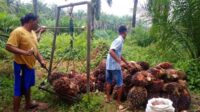
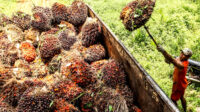
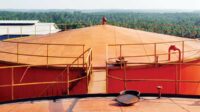
The consequences are dire. Palm oil mills are overloaded because their storage tanks are full, and CPO cannot be shipped. When the tanks are full, the mills will stop accepting FFB supplies from independent farmers. It is at this point that the cries of distress are loudest: palm fruits that have already been harvested pile up and rot on the side of the road, while the selling price of FFB at the farmer level plummets.
Faced with this climate monster, we cannot simply sit back and wait for rain. Aggressive mitigation measures—ranging from water management on peatlands to keep them wet, to the modernization of irrigation systems, to weather modification technology (artificial rain) to fill plantation reservoirs—must be non-negotiable. “Godzilla El Niño” or “Super El Niño” serves as a stark reminder that the success of our green economy hinges entirely on how prepared we are to protect the Earth and adapt to climate change.
Read the full story in the July–September 2026 issue of Palm Oil Magazine
By: Ignatius Ery Kurniawan