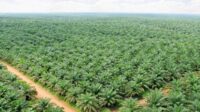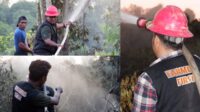
GAPKI says all 751 member companies have met fire-prevention infrastructure requirements and are strengthening joint monitoring with government agencies and communities in villages surrounding their concessions.
PALMOILMAGAZINE, JAKARTA, INDONESIA — Indonesia’s palm oil industry is stepping up efforts to prevent forest and land fires by strengthening monitoring around plantation concessions and expanding cooperation with government agencies and communities at the village level.
Mukti Sardjono, Executive Director of the Indonesian Palm Oil Association (GAPKI), said all 751 GAPKI member companies had met the required qualifications for fire and disaster prevention facilities and infrastructure, while implementing measures to anticipate potential causes of forest and land fires.
Also Read: DSI Strengthens Indonesia’s Strategic Commodity Export Ecosystem Through Pilot Platform
According to Mukti, prevention efforts cannot be limited to concession areas because fires can spread across administrative boundaries.
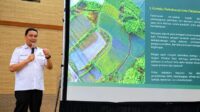
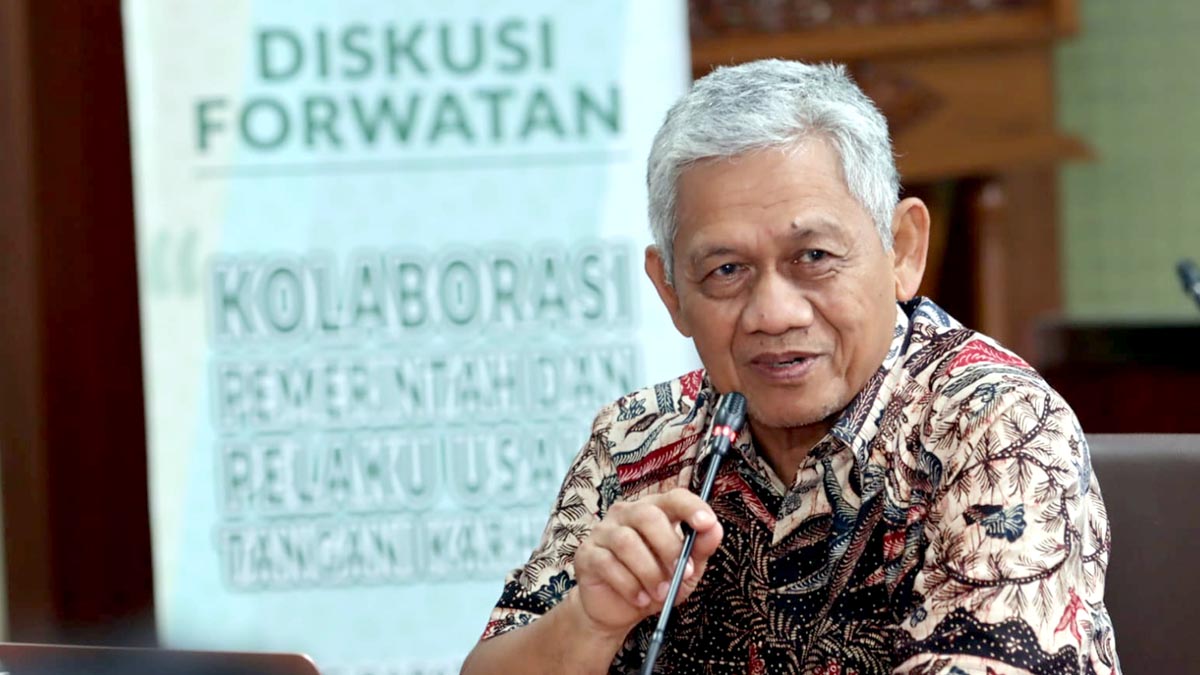
“So far, there have been no reports of fire hotspots entering and burning concession areas belonging to GAPKI members. We have tightened internal monitoring through regular written advisories and established operational cooperation in the field with the Ministry of Forestry and the Indonesian Forestry Concessionaires Association (APHI),” Mukti said during a discussion organized by the Agricultural Journalists Forum (Forwatan) in Jakarta on Thursday (Oct. 1, 2026).
The discussion, titled “Government and Business Collaboration in Tackling Forest and Land Fires,” was held at Building C of the Ministry of Agriculture and attended by PalmOilMagazine.
Also Read: 84% of Indonesia’s September Fire Hotspots Found in Open-Access Areas, Expert Says
Mukti said a landscape-based approach covering areas surrounding concessions has become an important component of GAPKI’s prevention strategy.
“Fires do not recognize administrative boundaries, so prevention at the village level around concessions is one of our main focuses,” he said.
Cross-Sector Collaboration
GAPKI and its member companies are working with the Ministry of Forestry, Ministry of Environment, APHI and local government authorities on forest and land fire prevention and response.
The collaboration is intended to strengthen preventive measures as well as improve response capabilities when signs of fire are detected in the field.
Also Read: Pekanbaru Develops Sustainable Palm Oil Action Plan for 24,000 Hectares of Plantation Area
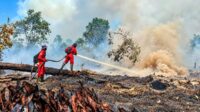
The effort comes amid a high number of hotspots recorded throughout September 2026. Data from the Ministry of Forestry’s Forest and Land Fire Information System (Sipongi) recorded 28,692 hotspots between Sept. 1 and 30.
Hendratmojo Bagus Hudoro, Director of Plantation Protection at the Ministry of Agriculture, said hotspots indicate areas with elevated temperatures but still require field verification.
“A hotspot is an indicator of high temperature that needs to be factually verified through a ground check. Not every hotspot necessarily represents an actual fire,” Bagus said.
Nevertheless, vigilance remains necessary as plantation areas can become more vulnerable to fire during dry periods.
Most Hotspots Outside Formally Managed Areas
Forestry expert Dr. Petrus Gunarso previously presented a spatial analysis based on Sipongi data, oil palm land cover and forest-area maps. The analysis found that 84% of hotspots were located outside formally managed oil palm plantation areas, classified as non-managed/open access areas.
The remaining 16% were detected within formally managed plantation areas.
Also Read: Indonesian Smallholders Step Up Fire Patrols as Land Fires Spread
Petrus said non-managed areas include conversion forests, protected forests and other open areas. The findings highlight the importance of a prevention strategy that extends beyond individual concessions and administrative boundaries.
Soewarso, Chairman of APHI, said forest and land fires are also linked to socio-economic conditions and the certainty of land governance.
In some communities, he said, the use of fire to clear land is still viewed as a relatively inexpensive and fast method. Meanwhile, open access areas or land without clear spatial-management arrangements can make potential sources of fire more difficult to control.
Also Read: RSPO Calls for Coordinated Response to Indonesia Fires to Protect Communities and Wildlife
Government Steps Up Prevention Measures
The government has also introduced a number of mitigation programs. The Ministry of Agriculture has established 251 hectares of demonstration plots for zero-burning land clearing, formed Fire-Aware Farmer Groups in six high-risk provinces and required more than 2,000 plantation business license holders to meet forest and land fire prevention infrastructure standards.
The government’s forest and land fire management framework is also based on Law No. 39/2014, Presidential Instruction No. 3/2020 and Minister of Agriculture Regulation No. 6/2025.
Also Read: Desacralizing Local Wisdom to Mitigate Forest and Land Fires
Against the backdrop of heightened attention to fire prevention, Mukti said coordination among plantation companies, government agencies and surrounding communities would remain critical to preventing hotspots from developing into larger fires.
The approach puts prevention at the forefront, particularly in areas where plantation concessions directly border communities and other land uses. (P3)