

Indonesia’s new Single Export Gateway, scheduled for rollout in January 2027, is designed to facilitate trade, maintain export continuity and strengthen palm oil traceability.
PALMOILMAGAZINE, JAKARTA — PT Danantara Sumberdaya Indonesia (DSI) has emphasized that Indonesia’s planned Single Export Gateway for strategic commodities is intended to strengthen transparency, regulatory compliance and international market confidence in the country’s palm oil industry, rather than create additional barriers to trade.
Scheduled to begin rolling out in January 2027, the system is expected to operate alongside sustainability frameworks, including certification by the Roundtable on Sustainable Palm Oil (RSPO), as Indonesia seeks to strengthen the credibility and traceability of its palm oil supply chain.
Also Read: DSI Strengthens Indonesia’s Strategic Commodity Export Ecosystem Through Pilot Platform
DSI CEO Luke Mahony said sustainability and market access should reinforce one another. He stressed that DSI’s role is to facilitate exports while strengthening industry standards and Indonesia’s standing in international markets.
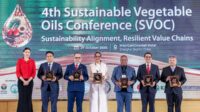
“We welcome this dialogue with RSPO because sustainability and market access must go hand in hand. DSI’s mandate is very clear: we facilitate, not obstruct. We are here to uphold industry standards, simplify regulatory compliance and strengthen global confidence in Indonesian palm oil,” Mahony said during a special dialogue at the RSPO conference.
Established by Danantara Indonesia in 2026, DSI is responsible for overseeing and managing exports of strategic commodities. Under its planned intermediary model, the company aims to establish a more transparent trading system by leveraging data across the industry ecosystem and linking it with market conditions, including sustainability performance, supply, pricing and production.
Also Read: RSPO, CPOPC and Kadin Strengthen Sustainable Palm Oil Collaboration
The model is designed to preserve existing commercial relationships between buyers and sellers. DSI will act as a facilitator to maintain export continuity while strengthening product traceability throughout the supply chain, helping Indonesian palm oil meet the expectations of international buyers.
DSI and RSPO Seek to Align Sustainability with Market Access
DSI’s proposed role comes amid growing international scrutiny of Indonesia’s palm oil industry, particularly over forest and land fires during the 2026 El Niño period.
At the RSPO conference, CEO Joseph D’Cruz responded to public criticism of the palm oil sector by urging members to present credible data and evidence demonstrating their efforts to prevent and manage fires.
Also Read: RSPO Upholds Accountability while Addressing Indonesia’s Fire Crisis at RT2026
Satellite analysis from Nusantara Atlas, presented by TheTreeMap founder Dr. David Gaveau, showed that forest and land fires affected more than 1.9 million hectares across Indonesia between January and September 2026.
Of that total, approximately 14,500 hectares were recorded within RSPO-certified concessions, equivalent to around 0.8% of the country’s total burned area.
“When we look at the fires within RSPO-certified concessions and cross-check that data with RSPO, we found 14,500 hectares of land burned or affected by fire within these concessions. This represents approximately 0.8% of the 1.9 million hectares burned across Indonesia in 2026,” Gaveau explained.
Also Read: RSPO Says Most Indonesia Land Fires in 2026 Occurred Outside Palm Oil Concessions
D’Cruz said RSPO would identify and investigate concessions displaying unusual fire patterns. He also noted that the analysis presented at the conference had not identified burned areas within certified independent smallholder properties.
According to D’Cruz, no data or evidence had been presented at that point indicating that RSPO-certified units had deliberately engaged in burning.
He urged RSPO members to be more transparent in communicating the facts and evidence behind their fire prevention and management efforts.
Also Read: Zero Tolerance For Fires: RSPO Reinforces Strict Zero-Burning Standards
“We must all demonstrate our willingness to defend what we have built. When we choose to remain silent, we allow the worst actors to define our industry and undermine two decades of hard work,” he said.
Connecting Independent Smallholders with Global Buyers
Beyond fire prevention and export governance, the RSPO conference also highlighted the importance of integrating independent smallholders into sustainable palm oil supply chains.
Smallholders account for nearly half of Indonesia’s total palm oil production. Indonesia is also home to approximately 77% of the world’s RSPO-certified independent smallholders.
Also Read: Belayan Sejahtera Cooperative Mobilises Independent Smallholders to Prevent and Fight Forest Fires
As part of RT2026, RSPO recognized 45 new independent smallholder groups from Colombia, Indonesia, Malaysia, Peru and Thailand that had successfully completed their initial RSPO certification.
The organization also hosted an Independent Smallholder Business Matching initiative, bringing together prospective credit buyers and independent smallholder groups from several countries. The initiative aims to expand market access and strengthen the economic incentives available to farmers adopting sustainable production practices.
Several companies received recognition for supporting independent smallholders through RSPO Credits purchases between November 2025 and September 2026. They included Kao Corporation, Nestlé S.A. and Unilever PLC.
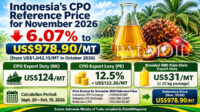
Also Read: Indonesia Cuts November 2026 CPO Reference Price 6.07% to US$978.90/MT, Sets Export Duty at US$124
Recognition was also given to first-time buyers Lakeland Dairies Co-operative Society Limited and Pitak Palm Oil Company Limited.
Through certification, access to international buyers and credit trading mechanisms, RSPO aims to ensure that independent smallholders receive greater economic benefits from adopting sustainable plantation practices.
The integration of sustainability initiatives with DSI’s planned Single Export Gateway represents an important development for Indonesia’s palm oil industry. Coordinating the two agendas could help improve trade transparency, strengthen supply chain traceability and reinforce the competitiveness of Indonesian palm oil in global markets. (P3)