

RSPO says certified members are subject to annual third-party audits, satellite-based hotspot monitoring and independent investigations to strengthen compliance with fire prevention and sustainability requirements.
PALMOILMAGAZINE, JAKARTA, INDONESIA — The Roundtable on Sustainable Palm Oil (RSPO) has underscored the importance of data-driven monitoring and independent verification in addressing forest and land fires in Indonesia, stressing that public assessments of fire incidents should be supported by reliable evidence.
RSPO Chief Executive Officer Joseph D’Cruz said the organisation had established a comprehensive framework covering fire prevention, monitoring and response, with all certified members required to comply with its sustainability standards.
Also Read: RSPO Says Most Indonesia Land Fires in 2026 Occurred Outside Palm Oil Concessions
The framework extends beyond monitoring activities within plantation concessions, encouraging cooperation between plantation companies and surrounding communities to strengthen fire prevention and management.
Joseph explained that RSPO standards have prohibited deforestation and the use of fire since 2018. Certified members are also required to establish protocols and maintain the necessary capacity to prevent, monitor and respond to fire incidents.
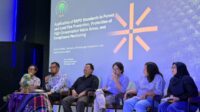
“These standards and systems have been in place for years. They are not something newly introduced simply to address the current fire season,” Joseph said during a press conference at the RSPO Roundtable 2026 (RT2026) on Tuesday (Nov. 3, 2026), attended by PalmOilMagazine.
Also Read: RSPO Upholds Accountability while Addressing Indonesia’s Fire Crisis at RT2026
Annual Audits and Satellite Monitoring Strengthen Compliance
Joseph said RSPO members’ compliance with sustainability requirements is verified through annual audits conducted by independent third-party auditors.
In addition to the certification process, RSPO operates a hotspot monitoring system designed to alert members when potential fire risks are detected within their operational areas.
Also Read: Zero Tolerance For Fires: RSPO Reinforces Strict Zero-Burning Standards
He cautioned against automatically interpreting satellite-detected hotspots as confirmed fires or treating every fire incident as evidence of deliberate burning.
According to Joseph, distinguishing between potential hotspots, confirmed fire incidents and intentional land burning is essential to ensuring that assessments are based on accurate information rather than assumptions.
RSPO also maintains a complaints mechanism and independent investigation procedures to follow up on allegations of violations involving its certified members.
Also Read: Eight Indonesian Palm Oil Companies Face Singapore Scrutiny Over Alleged Links to Haze-Causing Fires
“So far, we have not received evidence or reports indicating that our certified members have deliberately started fires. If anyone has evidence, we encourage them to submit a report. We will investigate and take appropriate action,” he said.
Nusantara Atlas Supports Data Transparency
During the press conference, RSPO also introduced Dr. David Gaveau, founder of TheTreeMap, which developed the Nusantara Atlas platform.
Gaveau, a remote-sensing researcher who has conducted conservation research in Indonesia since 2002, has monitored forest conditions and fire activity using satellite technology.
The Nusantara Atlas platform is expected to help the public access data-based information on conditions on the ground, supporting greater transparency and more objective assessments of forest and land fire incidents.
The initiative reflects RSPO’s broader emphasis on strengthening the role of independent data, satellite monitoring and evidence-based investigations in addressing environmental concerns.
For Indonesia’s palm oil industry, the availability of credible monitoring data and independent verification will be increasingly important in demonstrating compliance, improving accountability and ensuring that allegations of fire-related violations are assessed fairly and transparently. (P3)