
The initiative aims to help oil palm smallholders move beyond fresh fruit bunch sales by developing value-added products, strengthening business capacity, and building access to international markets.
PALMOILMAGAZINE, JAKARTA — Developing downstream palm oil businesses is emerging as an opportunity for smallholders to capture greater economic value from the commodity while diversifying their income beyond fresh fruit bunch (FFB) sales. Through micro, small, and medium enterprises (MSMEs), smallholder-based palm oil products are expected to reach wider markets, including international buyers.
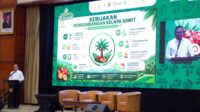
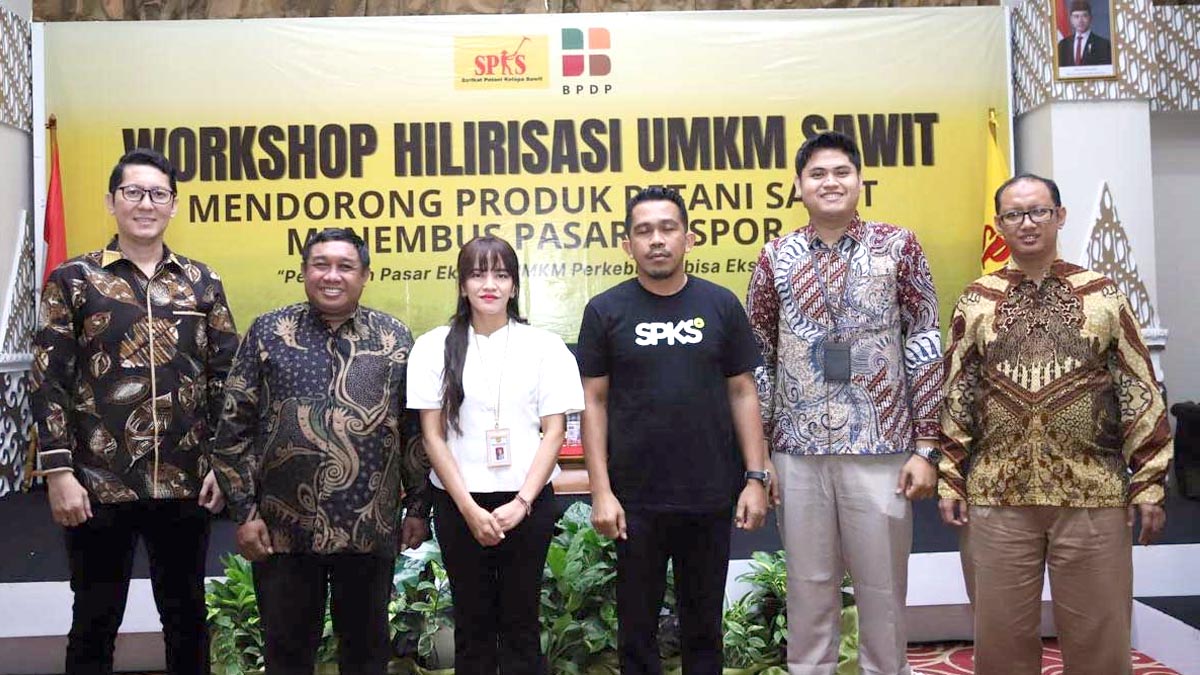
The initiative is being advanced by the Indonesian Oil Palm Farmers Union (Serikat Petani Kelapa Sawit/SPKS) in collaboration with the Plantation Fund Management Agency or Badan Pengelola Dana Perkebunan (BPDP) through a Palm Oil MSME Downstreaming Workshop themed “Encouraging Oil Palm Smallholders to Enter Export Markets.”
Also Read: RSPO Urges Palm Oil Buyers to Purchase Credits from Sustainable Smallholders
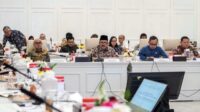
Held at Hotel 101 Urban Thamrin in Jakarta on October 22, 2026, the workshop brought together MSME operators, farmer cooperatives, university students, farmer organizations, non-governmental organizations, and media representatives from several regions, including Sumatra, Jambi, Sulawesi, Aceh, and Java.
According to a statement received by PalmOilMagazine on Monday (November 9, 2026), SPKS Chairman Sabarudin said downstream development offers smallholders opportunities to generate greater economic returns from oil palm.
Several SPKS members have already started producing various downstream products, including soap, chips, dodol (traditional Indonesian confectionery), plates made from palm fronds, and fertilizers derived from oil palm materials.
However, he emphasized that product development must be accompanied by improvements in quality, business institutions, competitive packaging, and marketing networks. MSMEs also need stronger business orientation and strategic partnerships to meet market demand and expand their commercial reach.
BPDP Head of Community Cooperation and MSME Division Helmi Muhansyah reaffirmed the agency’s commitment to supporting the development of smallholder and community-based MSME products, helping them upgrade their businesses and gain access to international markets.
The workshop featured a discussion session with Mutiara Sari, Director of Plantation Downstream Development at the Ministry of Agriculture; Ilham Setia, President Director of PT Arra Setya Abadi; and Arif Zamroni, founder of Cozy Blitar Chocolate.
Also Read: RSPO RT2026: Asian Agri, Apical and Kao Target 7,000 RSPO-Certified Smallholders by 2030
A subsequent session provided an opportunity for SPKS-affiliated MSMEs to present their products and introduce their business potential.
Several products were also handed over to BPDP’s Roemah UMKM, including palm mushroom products, dodol umbul sawit, and snacks made from oil palm shoots produced by Koperasi Simpan Pinjam Karya Mandiri.
Other products included Aleta antibacterial soap from Koperasi Pemasaran Ikatan Petani Sawit Swadaya, palm-frond stick plates from an MSME in Sanggau, and Palma Coco soap from an MSME in South Konawe.
In addition to palm oil-based products, the workshop also showcased cocoa-based products developed by smallholder MSME groups, including cocoa pulp juice, cocoa beans, and cocoa butter.
Strengthening MSME Readiness for Export Markets
Entering international markets requires more than developing innovative products. MSMEs must also ensure consistent product quality, adequate production capacity, business legality, competitive packaging, and compliance with the standards and regulatory requirements of destination countries.
Strengthening cooperatives and business partnerships is equally important to ensure that production, financing, and marketing can be managed more effectively and sustainably.
Also Read: RSPO RT2026: Solidaridad and Henkel Win Excellence Award for Reaching 39,000 Palm Oil Smallholders
Through stronger downstream development, smallholder products are expected to move beyond local-scale businesses and evolve into commercially competitive, value-added products with the potential to access broader domestic and international markets.
For oil palm smallholders, the development of MSMEs could provide an additional source of income while creating opportunities to capture more value across the palm oil supply chain. (P2)