
PALMOILMAGAZINE, BALI — Indonesia’s palm oil industry needs to move beyond simply responding to negative campaigns and focus on securing fair competition in the global marketplace. In Europe, new opportunities could emerge from developments in the trade agreement between Indonesia and the European Union (EU), alongside the implementation of anti-deforestation regulations.
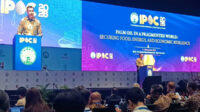
The assessment was delivered by Carola Macagno, Programs & Operations at Competere, during the 22nd Indonesian Palm Oil Conference (IPOC) 2026 and 2027 Price Outlook in Nusa Dua, Bali, on Thursday (Nov. 12, 2026).
After years of facing negative campaigns, Macagno said, the palm oil industry needs a broader strategy to strengthen its position internationally. Rather than focusing solely on defending the commodity against criticism, the industry should also push for equal treatment when competing with other vegetable oils.
Also Read: KPBN Inacom CPO Price Jumps IDR 372 to IDR 14,600/kg on Monday (Nov. 16), Malaysia Futures Fall
Fair competition, she emphasized, remains a critical issue in international trade. Palm oil should be assessed under standards and regulations applied consistently across all vegetable oils, rather than being subjected to different treatment compared with competing commodities.
Indonesia-EU Trade Agreement Offers New Opportunities
Macagno views developments in trade relations between Indonesia and the European Union as an opportunity for the palm oil industry. She expressed hope that the trade agreement between the two sides could be signed soon, potentially helping improve European market perceptions of Indonesian products.
According to her, the agreement could strengthen bilateral trade relations while creating greater opportunities for a more balanced regulatory framework between the two parties.
Also Read: Indonesia’s B50 Biodiesel Plan Faces Export, Fiscal and Environmental Risks, Expert Warns
Improving perceptions in the European market is particularly important given the years of criticism and negative campaigns faced by the palm oil industry. Stronger trade relations, she said, could help Indonesia’s palm oil sector gain greater recognition and strengthen its competitive position in the global vegetable oil market.
EUDR Implementation Remains a Key Concern
Beyond the trade agreement, Macagno also highlighted the European Union Deforestation Regulation (EUDR), which continues to be a major concern for palm oil industry stakeholders.
She acknowledged that uncertainty remains over the regulation’s implementation timeline. However, based on her assessment during the conference, the EUDR is expected to proceed as planned, although she stopped short of offering certainty, noting that the final decision rests with EU authorities.
Also Read: Indonesia Strengthens Palm Oil Traceability Under EUDR, Alongside Cocoa and Coffee
With implementation approaching, Macagno said industry players need to closely monitor further policy developments. She also stressed that the EUDR should not become a justification for restricting fair competition in the vegetable oil trade.
For Indonesia’s palm oil industry, developments surrounding the Indonesia-EU trade agreement and the EUDR will be critical in shaping future access to the European market.
Efforts to improve palm oil’s market perception therefore need to go hand in hand with stronger trade relations and compliance with destination-market requirements.
Also Read: European Parliament Simplifies EUDR, Palm Oil Compliance Deadline Extended to 2027
Macagno expressed hope that positive developments in Indonesia-EU relations would help establish a more balanced trading environment, allowing palm oil to compete fairly alongside other vegetable oils in the European market. (P2)