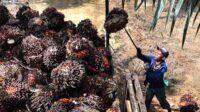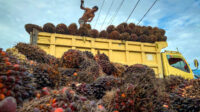
Bumitama Gunajaya Agro’s Sungai Bahaur Estate recorded palm oil yields well above its targets after replanting marginal land in Central Kalimantan, highlighting the role of agronomy and conservation in improving long-term plantation productivity.
PALMOILMAGAZINE, JAKARTA — A palm oil replanting program at Sungai Bahaur Estate (SBHE), part of Regional 4 of Bumitama Gunajaya Agro (BGA Group), has demonstrated that marginal land can deliver high productivity when managed with consistent agronomic practices and long-term planning.
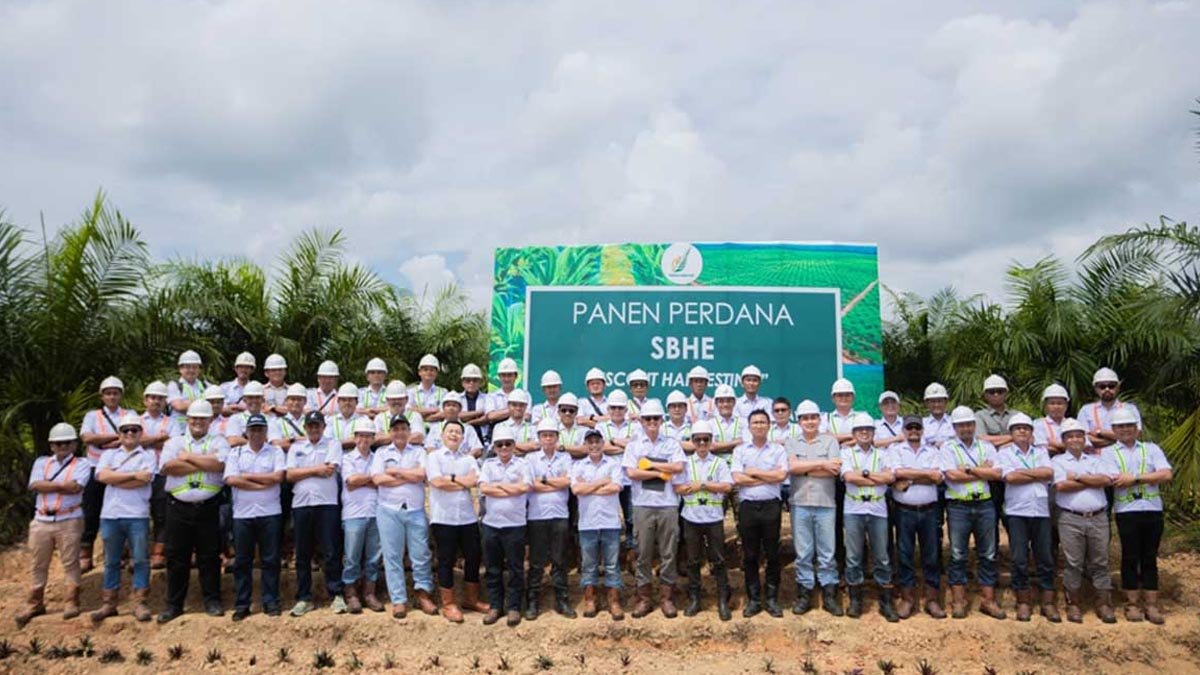
Located in Selucing Village, Cempaga Hulu District, East Kotawaringin Regency, Central Kalimantan, the estate recorded its first harvest at levels well above company targets.
Also Read: BGA Strengthens Independent Smallholder Capacity in Ketapang Through Sustainable Palm Oil Training
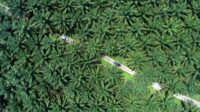
According to an official statement received by PalmOilMagazine on Aug. 8, SBHE manages nearly 4,000 hectares across six divisions, comprising both the company’s core plantation and community plasma estates.
A key challenge is the estate’s soil profile, which is dominated by Dystrudepts, a soil type generally considered marginal in agronomic terms and requiring more intensive management to achieve optimal yields.
Rather than treating the soil conditions solely as a constraint, SBHE has used them as a basis for developing a more structured approach to plantation management.
Also Read: BGA Intensifies Wildfire Prevention Efforts Across Central Kalimantan Ahead of 2026 Dry Season
Replanting as a Long-Term Investment
The replanting program began gradually in 2022 as productivity declined in oil palm stands that had been in the field for more than two decades.
In addition to declining yields, palm heights reaching more than 10 meters had reduced harvesting efficiency and increased occupational safety risks.
By 2026, the replanting program had covered thousands of hectares, including dozens of blocks replanted during the year across several divisions.
Also Read: Central Kalimantan Palm Oil FFB Prices Rise in Second Half of July, Plasma Rate Hits IDR 3,791.30/Kg
The program extends beyond the company’s core estates. Through partnerships with cooperatives, community plasma plantations have also been included in the replanting program, with some areas receiving support through the government’s Smallholder Palm Oil Replanting Program (PSR).
The approach is designed to strengthen cooperation between the company and smallholders while improving plantation productivity and supporting local livelihoods.
Conservation Integrated Into Plantation Management
SBHE has adopted an integrated cultivation approach from land preparation through the productive phase, treating replanting not simply as the replacement of old palms but as an investment in the foundation of productivity for the next planting cycle.
During replanting, biomass from old palms is retained and returned to the field as organic matter to improve soil structure and water-holding capacity.
The replanted areas are then established with high-yielding planting material and managed according to the different growth stages, from immature palms to mature producing palms.
Also Read: RSPO Certification Transforms Belayan Sejahtera Smallholders, Strengthens Village Economy
The agronomic program also includes balanced applications of inorganic and organic fertilizers, while maintaining natural pollinating insects as part of the estate’s ecosystem management.
SBHE Estate Manager Ponsius Wiro said the success of replanting should not be measured solely by how quickly palms return to production, but by whether the plantation can establish sustainable productivity from the beginning of the new planting cycle.
“Replanting success is not measured by how quickly the palms begin producing again, but by the ability to build sustainable productivity from the first day the palms are planted,” he said.
Also Read: Indonesia’s 50% DHE Policy Raises Liquidity Concerns for Palm Oil Industry
Production Exceeds Targets
The results began to emerge during the scout harvesting stage, when SBHE recorded yields significantly above its initial target.
The estate had targeted production of more than 9 tons per hectare, but actual output reached 12.71 tons per hectare, more than 40% above the target.
Performance remained strong when the palms entered their first mature producing stage, known as TM1.
Also Read: 9th Borneo Forum 2026: GAPKI Highlights Innovation and Productivity as Keys to Future Growth
With a production target of more than 18 tons per hectare, the estate recorded actual production of 24.68 tons per hectare, roughly one-third above the target.
The achievement is notable given that much of the estate is located on marginal land. It suggests that a combination of structured replanting, consistent agronomic practices and conservation-based management can produce competitive palm oil yields even under less favorable soil conditions.
Beyond higher yields, replanting has also improved harvesting safety because younger palms are shorter and easier to harvest. Soil and water conservation practices, meanwhile, help preserve the productive capacity of the land for the next planting cycle.
Also Read: 91 OKU Smallholders Join BPDP-IPB Training to Strengthen Sustainable Palm Oil Productivity
The model also strengthens partnerships with surrounding communities through the participation of plasma cooperatives in replanting programs, allowing the productivity gains to benefit both the company and smallholder farmers.
Sungai Bahaur Estate’s experience demonstrates that marginal land does not necessarily prevent high productivity. With appropriate agronomic strategies, conservation commitments and consistent management, marginal areas can be transformed into productive assets that support the long-term sustainability of Indonesia’s palm oil industry. (P2)