Integrated downstream operations, stronger selling prices, and improved processing efficiency helped PT Sumber Tani Agung Resources offset lower fresh fruit bunch and crude palm oil output during the first six months of the year.
PALMOILMAGAZINE, Jakarta, Indonesia — PT Sumber Tani Agung Resources Tbk (STAA) posted solid revenue growth in the first half of 2026, supported by stronger downstream operations and higher average selling prices, despite lower production of fresh fruit bunches (FFB) and crude palm oil (CPO) due to seasonal factors and unfavorable weather conditions.
According to the company’s financial report released on Tuesday (Aug. 4), STAA said the palm oil industry entered a more balanced phase during the first six months of the year. While CPO prices normalized from last year’s elevated levels, global demand fundamentals remained resilient, allowing the company to strengthen its downstream business, improve operational efficiency, and maintain healthy financial performance.
Also Read: DSNG Posts Higher First-Half Profit as Palm Oil and Renewable Energy Drive Growth
Production Declines on Seasonal Factors
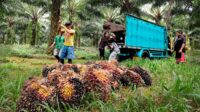
FFB production totaled 478,244 metric tons during January-June 2026, down 7.2% from the same period a year earlier. Output from the company’s nucleus estates declined 8.1%, while production from plasma smallholder plantations increased 2.1% year-on-year.
Estate productivity also reflected seasonal harvesting patterns. Nucleus estate yields averaged 10.3 metric tons per hectare, down 11.8%, while plasma estate productivity reached 8.9 metric tons per hectare, a 5.0% decline from the first half of 2025.
Also Read: Teladan Prima Agro Posts Higher First-Half 2026 Earnings as Revenue Climbs 6.5%
Lower internal production, combined with reduced purchases from third-party suppliers, resulted in total FFB processed at the company’s mills falling 18.7% year-on-year to 810,034 metric tons.
Consequently, CPO production declined 16.8% to 176,344 metric tons, while palm kernel (PK) output dropped 19.1% to 38,962 metric tons.
Despite lower volumes, processing efficiency improved. The company’s Oil Extraction Rate (OER) increased to 21.8%, compared with 21.3% in the corresponding period last year, while the Kernel Extraction Rate (KER) remained stable at 4.8%, reflecting continued optimization across its milling operations.
Also Read: Industry and Public Accountability in Efforts to Mitigate Forest and Land Fires
Downstream Business Drives Performance
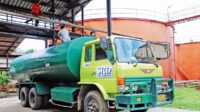
STAA continued to prioritize downstream integration by channeling a larger share of its CPO production into its own refining facilities.
Combined with seasonally lower production, the strategy reduced third-party CPO sales to 70,843 metric tons during the reporting period.
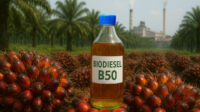
Also Read: Indonesia’s Biodiesel Policy Emerges as a New Price Anchor for Global Palm Oil
In contrast, downstream operations recorded continued growth. Sales of refined palm oil products reached 214,247 metric tons in the first half of 2026, highlighting the increasing contribution from the company’s refinery, which is now operating at a higher level of utilization.
Palm kernel sales edged down 1.7% to 16,011 metric tons, while crude palm kernel oil (CPKO) sales declined 19.9% year-on-year to 22,642 metric tons.
Also Read: Indonesia’s KPBN Inacom CPO Price Rises to IDR 15,800/kg as Malaysian Palm Oil Futures Rebound
Higher Selling Prices Support Revenue
The company also benefited from stronger average selling prices across its key products.
Net average selling prices, after export duties and levies, reached IDR14,890 per kilogram for CPO, an increase of 4.8% from the previous year.
Also Read: Indonesia Cuts August CPO Reference Price to USD 996.52/MT as Export Charges Adjust
Average PK prices rose 9.2% to IDR13,482 per kilogram, while CPKO prices increased 8.6% to IDR29,462 per kilogram.
STAA said the combination of expanding downstream operations, disciplined cost management, improved processing efficiency, and the full contribution of its refinery enabled the company to deliver revenue growth and preserve profitability despite lower seasonal production and a more normalized CPO price environment. (P2)