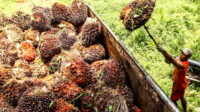
PALMOILMAGAZINE, JAKARTA – Indonesian Agriculture Minister Andi Amran Sulaiman has reaffirmed the government’s commitment to ensuring that oil palm farmers receive fair and profitable prices for their fresh fruit bunches (FFB), emphasizing that farmer welfare remains a key measure of success for the country’s palm oil industry.
Speaking during a coordination meeting on palm oil FFB price developments and stabilization efforts on Monday (June 8, 2026), Amran called on plantation companies and industry stakeholders to comply fully with government-established pricing mechanisms.
As the world’s largest palm oil exporter, Indonesia has a responsibility to ensure that the benefits generated by the industry reach smallholder farmers, who form the backbone of the sector, Amran said.
“Farmers must not be disadvantaged. We want farmers to receive better prices that reflect actual market conditions,” Amran told representatives of plantation companies, industry associations, regional governments, and law enforcement agencies attending the meeting.
The minister stressed that the government will intensify monitoring of FFB pricing implementation across the country. He said he is prepared to personally review reports and conduct field inspections if companies are found purchasing FFB below the applicable price guidelines.
Amran urged regional governments, farmer organizations, and plantation companies to immediately report any irregularities that could harm smallholders. Strong supervision, he noted, is essential to ensure that efforts to improve FFB prices translate into tangible benefits for farmers nationwide.
During the meeting, Amran also highlighted the importance of cooperation between the government and the private sector. He emphasized that the government’s objective is not to hinder business activities but to ensure that the palm oil industry operates in a fair, healthy, and sustainable manner.
“We support businesses that comply with regulations and operate responsibly. However, we cannot allow anyone to engage in practices that harm the public,” he said.
The minister described the palm oil sector as a strategic pillar of Indonesia’s economy, contributing significantly to export earnings, renewable energy development, and employment. More than 15 million Indonesians depend directly or indirectly on the palm oil industry for their livelihoods, making FFB price stability a major government priority.
Amran concluded by calling on all stakeholders to strengthen collaboration in support of a sustainable and inclusive palm oil sector. He expressed hope that ongoing policy measures and enhanced oversight would help raise FFB prices while improving the welfare of oil palm farmers across Indonesia.
“The most important thing is that our farmers prosper. That is the benchmark of our collective success,” Amran said. (P2)