
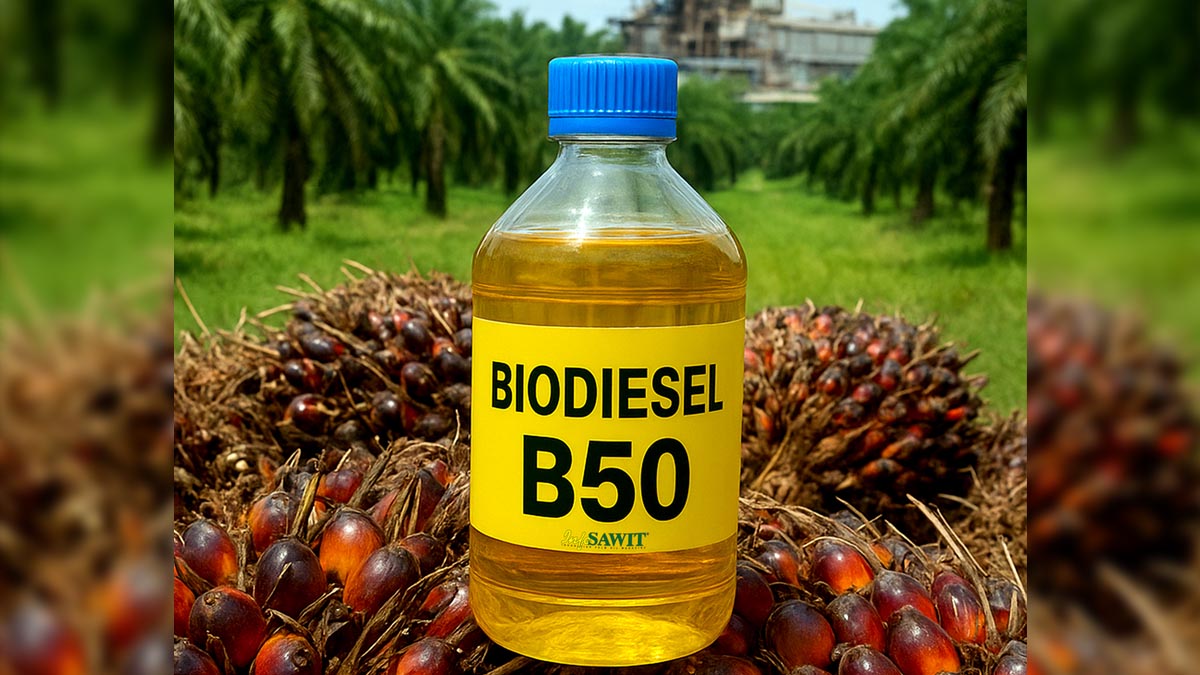
PALMOILMAGAZINE, NUSA DUA, INDONESIA — Indonesia’s government is advancing technical preparations for the expansion of its mandatory biodiesel programme to B50. However, increasing the biodiesel blend will require more than sufficient palm oil feedstock. Infrastructure readiness, distribution logistics, financing requirements and developments in global energy and vegetable oil markets must also be carefully assessed.
Director General of New, Renewable Energy and Energy Conservation (EBTKE) at the Ministry of Energy and Mineral Resources (ESDM), Prof. Eniya Listiani Dewi, said the government had conducted various technical assessments based on its experience implementing previous biodiesel mandates, from B20 and B30 to B35 and B40.
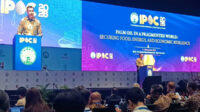
Eniya made the remarks during the 22nd Indonesian Palm Oil Conference (IPOC) 2026 and 2027 Price Outlook.
Also Read: Indonesia Sets November 2026 Biodiesel Price at IDR 14,312 per Liter, Excluding Transport
She emphasised that every increase in the biodiesel blending mandate must be supported by comprehensive assessments covering volume requirements, price developments, programme financing capacity and the infrastructure needed to ensure reliable distribution across the country.
She cited Indonesia’s transition from B35 to B40 as an example, noting that the government had to account for additional infrastructure requirements, including logistics networks and distribution points.
These challenges are particularly significant given Indonesia’s geographical scale and the difficulties of supplying fuel to remote areas, including eastern Indonesia.
Also Read: Indonesia Palm Oil Stocks Fall 19.72% to 2.214 Million Tonnes as Biodiesel Demand Rises
“Experience from implementing B40 is an important reference for evaluating the programme before the government makes decisions on the next stage of the biodiesel mandate,” she said.
Financing Mechanisms and Export Levies Under Consideration
Beyond infrastructure, financing remains a major consideration in the development of the biodiesel programme.
Eniya explained that the government must assess the programme’s funding capacity by taking into account CPO prices, fossil fuel prices and revenue generated from export levies.
Also Read: DSI to Launch Palm Oil Export System on January 1, 2027, with Single-Digit Dollar Service Fee
Changes in commodity prices can significantly affect the level of incentives required to sustain the biodiesel programme. Consequently, policy decisions cannot be based solely on blending targets but must also reflect fiscal capacity and overall economic viability.
Eniya also highlighted how significant fluctuations in energy prices could influence the programme’s economic benefits. Under certain market conditions, biodiesel implementation can help reduce the government’s subsidy requirements for petroleum-based fuels.
However, the extent of these benefits must be evaluated comprehensively, taking into account price movements and the incentives required to maintain programme implementation.
Also Read: Oil World: Global Palm Oil Exports to Fall by Up to 3.5 Million Tons in 2027 as Prices Rise
The government is continuing to examine various policy options to ensure the programme remains sustainable while maintaining the readiness of supporting infrastructure and other industry components.
Regarding technical preparations, Eniya said various requirements were already being addressed. Nevertheless, the government would continue consultations and evaluations before determining the next policy steps.
Improving Palm Oil Productivity to Support Biodiesel Expansion
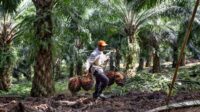
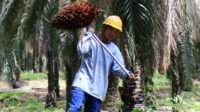
Alongside technical preparations for B50, Eniya highlighted the importance of improving productivity across Indonesia’s oil palm plantations.
She said intensification should become a priority to increase production capacity without relying exclusively on plantation expansion.
Also Read: North Sumatra FFB Prices Reach IDR 3,689.80/kg for 21-Year-Old Palms in November 11–17, 2026 Period
Higher yields per hectare are considered essential to maintaining a balance between growing feedstock demand for the energy sector and the long-term sustainability of plantation ecosystems.
Eniya also pointed to the importance of considering Indonesia’s position in the increasingly competitive global bioenergy market. Experiences from other countries, including Brazil, could provide valuable lessons in developing national biofuel policies.
Beyond biodiesel, she said the downstream development of the palm oil industry should also remain a priority.
According to Eniya, the economic benefits of government policies should not be measured solely through changes in export and import volumes. Assessments should also consider product value addition, employment creation and broader economic contributions.
This means biodiesel development should be positioned within a wider strategy to strengthen Indonesia’s palm oil industry, covering the entire value chain from plantations and processing industries to the energy sector.
The government now faces the challenge of ensuring that any increase in the biodiesel blending mandate is matched by adequate infrastructure, sustainable financing and stronger plantation productivity.
Ultimately, the success of B50 will depend not only on achieving a higher blending percentage but also on the capacity of the entire industry ecosystem to support its implementation. (P2)