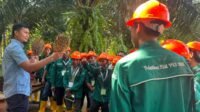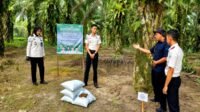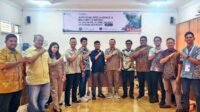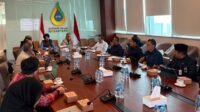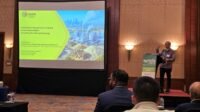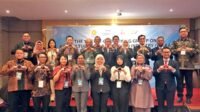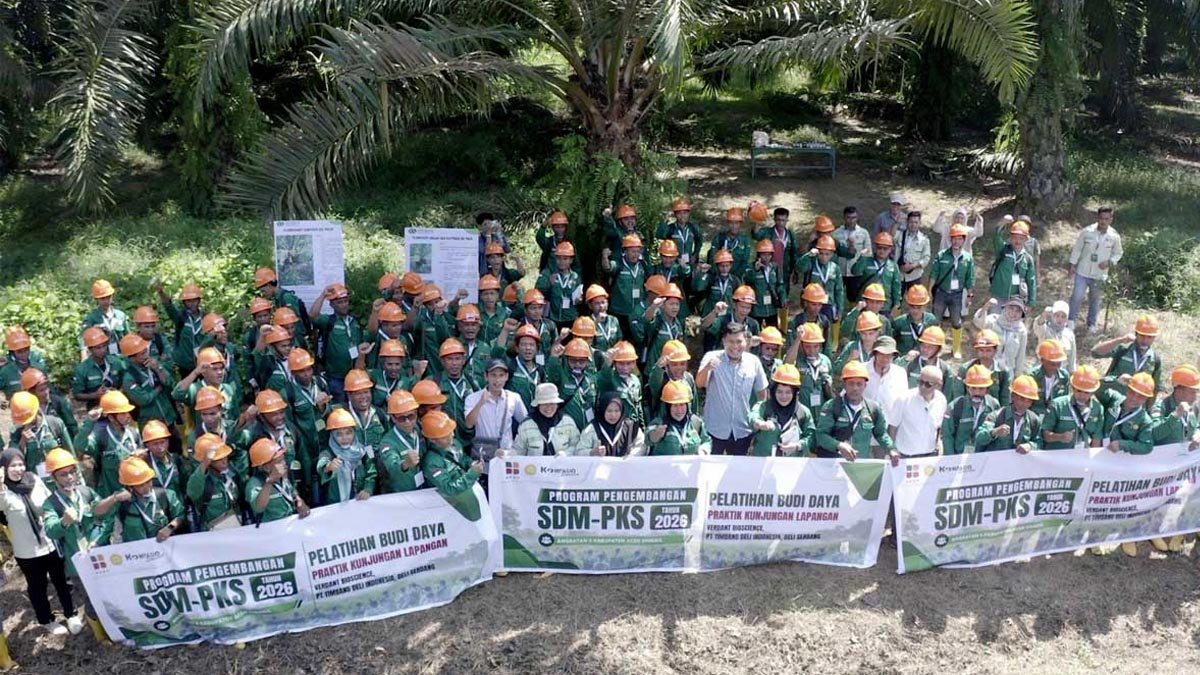
PALMOILMAGAZINE, DELI SERDANG – Practical field experience is becoming an increasingly important component of developing skilled oil palm smallholders. To bridge the gap between classroom learning and real-world plantation management, the Plantation Fund Management Agency (BPDP), the Directorate General of Plantations (Ditjenbun) under Indonesia’s Ministry of Agriculture, and PT Koompasia Enviro Institute (KEI) organized a field trip to Verdant Bioscience, PT Timbang Deli Indonesia in Galang District, Deli Serdang Regency.
The visit formed part of the 2026 Oil Palm Cultivation Technical Training under the Oil Palm Plantation Human Resources Development Program (SDM-PKS), involving 90 independent smallholders and their field facilitators from Aceh Singkil Regency. The program aimed to provide participants with firsthand exposure to Good Agricultural Practices (GAP) implemented at a commercial plantation.
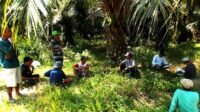
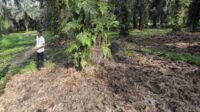
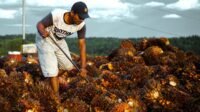
During the visit, participants observed the management of both immature (TBM) and mature (TM) oil palm plantations, as well as nursery operations. They also learned about key technical aspects of plantation management, including standard cultivation procedures, balanced fertilization, crop maintenance, weed control, land conservation, and plantation management systems designed to improve productivity sustainably.
Also Read: Airlangga: Research and Downstream Innovation Will Shape the Future of Indonesia’s Palm Oil Industry
The hands-on learning approach enabled participants to engage directly with plantation professionals, observe day-to-day operations, and compare the practices used on their own farms with industry-standard operating procedures.
According to Ichsan, Master Trainer at PT Koompasia Enviro Institute, the field trip was designed to help participants connect classroom knowledge with practical implementation.
“Through this visit, participants can directly observe how each stage of oil palm cultivation is carried out according to industry standards. We hope they will return home not only with a better understanding of the concepts but also with the confidence to adopt these best practices on their own plantations, leading to sustainable productivity improvements,” Ichsan said in an official statement published by PalmOilMagazine.com on Wednesday (July 29, 2026).
Also Read: BPDP Program Strengthens Skills of 90 Aceh Oil Palm Farmers to Boost Sustainable Productivity
Participants showed strong enthusiasm throughout the program, actively discussing cultivation techniques, plantation maintenance efficiency, and strategies for managing productive oil palm estates with the technical team from Verdant Bioscience.
One participant, Yadi Al Bahri, said the experience broadened his understanding of professional plantation management.
“Previously, we mainly relied on theory or common practices in our area. Seeing the operations firsthand has given us a much clearer understanding of proper cultivation standards. We have learned many techniques that we plan to implement once we return to Aceh Singkil,” he said.
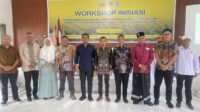
The Oil Palm Cultivation Technical Training was held from 20–25 July 2026 at AIHO Hotel Medan, with participants divided into three batches (IV, V, and VI). Over six days, the program combined classroom instruction with field-based learning to ensure participants could apply the knowledge in practical settings.
Supported by BPDP and the Directorate General of Plantations, the SDM-PKS Program is part of the Indonesian government’s broader effort to enhance the capabilities of the country’s oil palm workforce. Through competency-based training, independent smallholders are expected to adopt more productive, efficient, and sustainable cultivation practices while serving as role models for other farmers in their communities.
The field visit to Verdant Bioscience also underscored the value of collaboration between government institutions, the private sector, and training providers in delivering more effective agricultural education. By combining technical instruction with direct field experience, the program equips smallholders with practical skills to improve the long-term competitiveness of Indonesia’s independent oil palm sector. (P2)