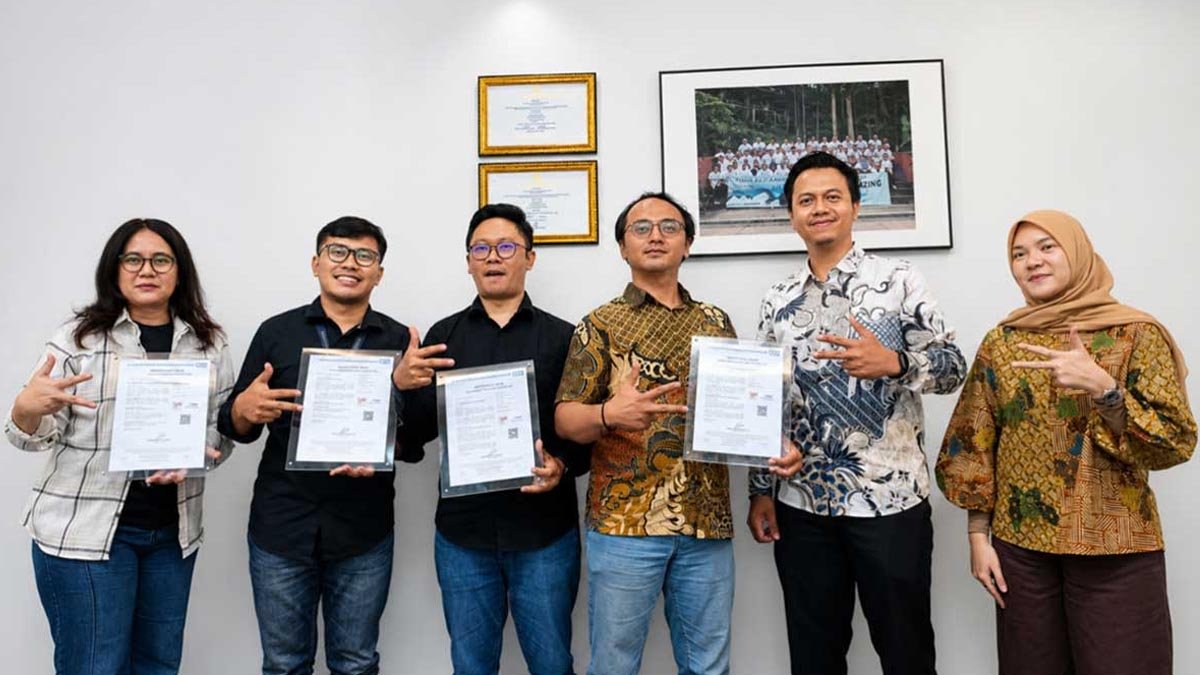
The latest certifications bring six KAS Group plantation companies and three palm oil mills under the ISPO scheme, covering about 70,000 hectares. The group is preparing two remaining subsidiaries for certification by 2027 while considering RSPO certification as a longer-term option.
PALMOILMAGAZINE, JAKARTA — For some palm oil companies, sustainability certification may appear to be the finish line. For Kalimantan Agro Sukses (KAS) Group, however, obtaining certification marks the beginning of a longer process to maintain compliance, strengthen sustainability practices and ensure that operations consistently meet regulatory requirements.
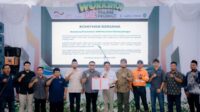
That approach was reflected in the certification of four KAS Group subsidiaries—PT Agro Manunggal Selaras (AMS), PT Borneo Citra Persada Jaya (BCPJ), PT Borneo Citra Persada Abadi (BCPA), and PT Borneo Citra Persada Mandiri (BCPM)—which received Indonesian Sustainable Palm Oil (ISPO) certificates in early June 2026.
Also Read: When Smallholders Support Global Palm Oil Markets, It Is Time to Rethink Farm Scale
The certifications cover approximately 50,000 hectares of plantations and three palm oil mills operating in East Kalimantan.
The achievement adds to two ISPO certificates previously secured by other KAS Group subsidiaries, PT Citra Palma Pertiwi (CPP) and PT Setia Agro Abadi (SAA), which manage approximately 20,000 hectares of plantations.
As of mid-2026, six plantation companies and three palm oil mills within the KAS Group have therefore obtained ISPO certification.
Also Read: Economic Independence and the Long Road Ahead for People’s Cooperatives
Preparation Began in 2021
According to Adi Bijaksana, Sustainability at KAS Group, the achievement was the result of several years of preparation rather than a short-term effort.
The company began strengthening its sustainability systems in 2021–2022, covering areas ranging from infrastructure development and employee facilities to licensing, implementation of ISPO principles and criteria, and occupational health and safety (OHS).
Also Read: 4F and BRIN Research Highlights Links Between Forests, Soil, Oil Palm and Community Livelihoods
“From the initial land development through to production, we have sought to ensure that every process is properly managed. That became the foundation that gave us confidence to pursue ISPO certification,” Adi told.
The company only submitted its certification application in 2025, after determining that its documentation and requirements were complete and aligned with the latest regulations. Internal audits were conducted beforehand to assess the readiness of each operation before entering the formal certification process.
Adi said the biggest challenge was not necessarily the company’s technical or administrative requirements. Instead, the challenge was maintaining consistency in implementing policies developed at the corporate level through to day-to-day operations in the field.
Also Read: BRIN: Indonesia Has Potential to Become a Major Global Palm Oil Biogas Producer
Policies covering OHS, social relations and sustainability governance must be continuously communicated to employees and surrounding communities. This creates an ongoing challenge because implementation depends on behavior, understanding and workplace culture.
“ISPO is essentially a compliance system. Once a company has made the commitment, the challenge is ensuring that every element understands it and implements it consistently over time,” he said.
Sustainability Beyond Compliance
KAS Group views certification as more than a regulatory obligation. The company considers it a tool for measuring its ability to balance business profitability, human welfare and environmental protection.
The triple bottom line—profit, people and planet— has become part of the framework used to assess the group’s long-term business direction.
Also Read: Palm Oil EFB Nanolignin Shows Potential to Remove Lead from Contaminated Water
Currently, around 80% of KAS Group’s business units are ISPO-certified. The company plans to bring its two remaining subsidiaries into the certification process, with audits scheduled in the near term and completion targeted for 2027.
If the process proceeds as planned, all KAS Group plantation units will have obtained ISPO certification.
The group is also looking beyond ISPO. Adi said the company has begun discussing the possibility of pursuing Roundtable on Sustainable Palm Oil (RSPO) certification.
Unlike ISPO, which is mandatory for the relevant Indonesian palm oil industry, RSPO certification is voluntary and is widely recognized for its broader sustainability requirements and potential to provide access to premium markets.
“For now, our focus remains on ISPO because it is mandatory. Going forward, RSPO is one of the options we intend to pursue gradually,” Adi said.
Also Read: Agrinas Palma Opens Partnership with Cooperatives to Accelerate Palm Oil Downstreaming
Auditor Highlights Management Commitment
Vallen Sakti Maulana, ISPO Scheme Manager at PT Global Gateway Certifications Indonesia (GGCI), said the ISPO audits of the four KAS Group companies began in January 2026.
Following verification, corrective actions and a comprehensive assessment, the certificates were issued and formally handed over on June 6, 2026.
Also Read: KPBN Inacom CPO Price Rises to IDR 15,835/kg as Malaysian Palm Oil Futures Strengthen
Vallen said all ISPO principles and criteria are mandatory. Companies cannot selectively implement some requirements while ignoring others.
The requirements cover business legality and land rights, good plantation practices, environmental management, worker protection, relations with surrounding communities, supply-chain transparency and long-term sustainability.
“Plantation companies do not operate in isolation. They are part of communities and ecosystems that must be protected. That is why social relations and environmental responsibility are important components of certification,” he said.
Also Read: PTPN Group Sales Rise 10.89% to IDR 29.1 Trillion in First Half 2026
During the audit process, Vallen identified management commitment as a key differentiating factor. Both central management and operational teams demonstrated a willingness to pursue continuous improvement.
Well-organized documentation, effective operational controls and openness to corrective actions also helped the companies meet ISPO requirements.
The regulatory foundation for ISPO has also become stronger following the designation of ISPO certification as an obligation under Presidential Regulation No. 16/2025.
For GGCI, however, certification should not become merely an administrative achievement. The company expects the four newly certified subsidiaries to maintain the implementation of ISPO’s seven core principles in their daily operations.
Field Teams Key to Certification Process
The relatively smooth certification process across KAS Group was also supported by strong collaboration between corporate management and operational teams.
General Managers, Estate Managers, Mill Managers and field teams played an important role in preparing the operational units and ensuring that certification requirements were implemented on the ground.
Their active involvement in monitoring compliance and completing required improvements helped accelerate the certification process, allowing several business units to secure ISPO certificates within a relatively short period.
For KAS Group, the four new certifications are expected to serve as a model for other subsidiaries still preparing to enter the certification process.
Ultimately, sustainability cannot be reduced to a certificate displayed on an office wall. It must be reflected in consistent business practices that balance productivity, employee welfare and environmental protection.
As global markets place greater emphasis on responsible production, the achievement represents more than regulatory compliance. ISPO certification increasingly serves as an indicator that a company has incorporated governance, traceability and sustainability into its long-term business strategy.
For KAS Group, the latest certifications mark another stage in its corporate transformation. With the foundations already established and strong support from management and field employees, ISPO implementation is increasingly being positioned not as an administrative target but as an organizational culture that must continue to evolve.
In an increasingly transparent and accountable palm oil industry, that approach could provide KAS Group with an important foundation for strengthening competitiveness while demonstrating that business growth and sustainability can advance together. (*)
Source: InfoSAWIT Magazine, July 2026 edition.