

PALMOILMAGAZINE, JAKARTA – Indonesia’s Ministry of Agriculture is stepping up efforts to improve smallholder oil palm plantations through wider adoption of Good Agricultural Practices (GAP), stronger farmer institutions and solutions to longstanding structural challenges that continue to constrain plantation productivity.
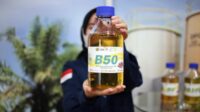
The initiative is considered increasingly important for strengthening the competitiveness of the national palm oil industry, particularly as domestic demand for palm oil is expected to grow alongside the expansion of the B50 biodiesel mandate.
Mula Putra, Oil Palm Development Coordinator at the Directorate of Oil Palm and Other Palma Crops, Directorate General of Plantations, Ministry of Agriculture, said the challenges facing the plantation sector extend beyond crop productivity.
Also Read: Oil Palm Smallholders Urged to Choose Certified Seedlings for Higher Productivity
Land legality, human resource capacity, access to financing, agricultural inputs and supply chain governance also require greater attention, he said.
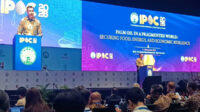
He made the remarks during a discussion organized by the Agricultural Journalists Forum (Forum Wartawan Pertanian/FORWATAN), titled Strengthening GAP and Productivity to Achieve Sustainable Palm Oil, at Building C of the Ministry of Agriculture in Jakarta on Wednesday (Nov. 18, 2026).
According to Mula, one of the persistent problems at the plantation level is the use of planting materials with unclear origins or without certification. Meanwhile, GAP implementation remains inadequate in many smallholder plantations, preventing farmers from realizing the full production potential of their crops.
Land administration is another major challenge. Some smallholders have yet to secure essential documents, including land ownership certificates (Sertifikat Hak Milik/SHM), Cultivation Registration Certificates (Surat Tanda Daftar Budidaya/STDB) and Indonesian Sustainable Palm Oil (ISPO) certification.
Other constraints include fragmented plantation plots, limited mechanization, restricted access to financing and rising production costs.
The use of agricultural inputs that do not meet recommended standards, coupled with low fresh fruit bunches (FFB) oil extraction rates, also affects plantation efficiency and profitability.
Mula added that lengthy supply chains and the limited utilization of palm oil by-products and waste processing remain outstanding challenges for the industry.
Insufficient human resource capacity, both among individual smallholders and within farmer institutions, further complicates the implementation of good plantation management practices.
Stronger Partnerships Needed to Improve Smallholder Productivity
Mula emphasized that improving plantation productivity cannot be the responsibility of farmers alone. Plantation companies and smallholders need to develop stronger partnerships to ensure that improvements in smallholder plantations are implemented more effectively.
He explained that support for large-scale plantations and smallholder estates requires different approaches.
Also Read: 176 OKU Smallholders Receive Palm Oil Cultivation Training to Boost Productivity
Large plantations can be encouraged through regulatory frameworks and incentives, while smallholder development requires more direct support through financing, technical assistance, and adequate facilities and infrastructure.
He also highlighted the importance of spatial planning in developing plasma plantations. Land allocation and spatial suitability must be established from the outset, while land legality issues should be addressed as part of the subsequent process.
Strengthening human resources is equally important, he said.
Also Read: East Kutai Accelerates Palm Oil Replanting, 1,900 Hectares Target ISPO Certification
ISPO implementation, for example, should not be treated merely as an administrative exercise involving document preparation and certification signatures. Both farmers and plantation companies need to change their plantation management practices to ensure that sustainability principles are genuinely implemented in the field.
“ISPO is not just a matter of paperwork. The critical point is changing established practices,” Mula concluded. (P3)