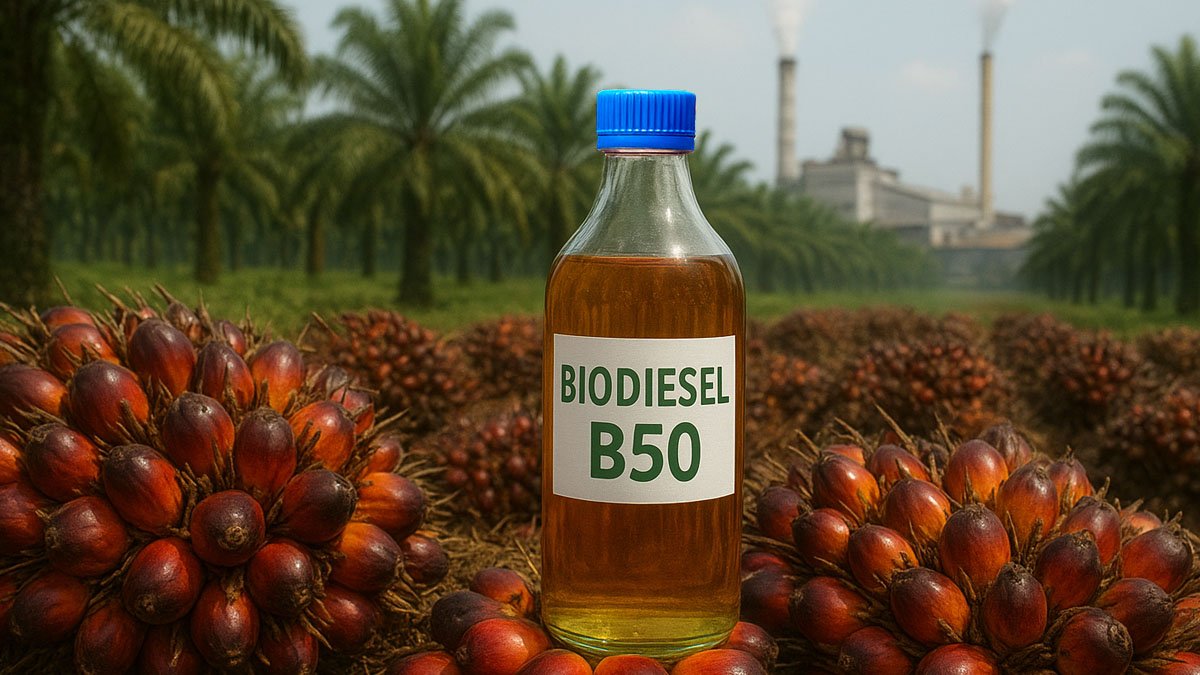
PALMOILMAGAZINE, JAKARTA – Indonesia’s National Defense Council (Dewan Pertahanan Nasional/ DPN) has emphasized that the successful implementation of the B50 biodiesel mandate will not only rely on downstream industrial readiness and processing capacity, but also on strengthening the upstream sector, particularly through sustainable improvements in national oil palm plantation productivity.
The issue was highlighted during a strategic discussion on efforts to boost palm oil productivity in support of the B50 program, held at the DPN Situation Room in Jakarta on Thursday. The meeting was led by Yayat Ruyat, Deputy for Geoeconomics at the National Defense Council, and attended by representatives from ministries and government agencies, palm oil industry players, research institutions, plantation stakeholders, and DPN experts.
During the forum, DPN underlined that productivity improvement is the primary foundation for maintaining biodiesel feedstock supplies as domestic palm oil demand continues to rise under Indonesia’s national energy policy. As a result, strengthening the upstream plantation sector was described as a strategic priority within the B50 implementation roadmap.
Also Read: KPBN CPO Prices Climb to IDR 15,325/kg, Malaysian Palm Oil Market Rebounds
According to information obtained by Palmoilmagazine.com from DPN on Saturday (9/5/2026), key issues discussed included accelerating the Smallholder Palm Oil Replanting Program (PSR), expanding the use of high-quality superior seeds, strengthening research and cultivation innovation, as well as improving financing access and regulatory support to accelerate productivity transformation among smallholders.
Beyond cultivation practices, the meeting also emphasized the importance of tighter supervision over the distribution of certified oil palm seeds to ensure farmers receive planting materials with optimal yield potential.
In this context, the use of DNA technology was viewed as increasingly strategic in verifying the genetic purity of oil palm seeds. The technology is expected to help scientifically validate seed quality and reduce the circulation of counterfeit or uncertified planting materials.
Also Read: BPDP Targets Industry-Ready Research Through 2026 Grant Program
Stakeholders believe this technology-based approach could become a game changer in efforts to sustainably increase Indonesia’s crude palm oil (CPO) productivity while improving efficiency in smallholder plantations, which still face productivity challenges compared to their optimal potential.
DPN further stressed that strengthening palm oil productivity requires cross-sector collaboration involving technical ministries, research institutions, industry players, associations, and smallholders. Such cooperation is considered essential to ensure policies are implemented as part of a coordinated national movement rather than fragmented initiatives.
Through these strategies, the B50 mandate is expected not only to strengthen Indonesia’s energy security through a larger renewable energy mix, but also to increase the economic value of the national palm oil industry, create new downstream investment opportunities, and reinforce Indonesia’s competitiveness as a leading global palm oil producer.
For Indonesia, the success of B50 ultimately goes beyond simply increasing biodiesel blending levels. It also depends on ensuring that the upstream palm oil sector becomes more productive, modern, and sustainable in supporting the country’s future energy needs. (P2)