


PALMOILMAGAZINE, Yogyakarta — The Institut Pertanian Stiper (INSTIPER) Yogyakarta has launched the Sekolah Kopi Nusantara (SKN), a new education and training ecosystem designed to strengthen human resources and professional skills across Indonesia’s coffee industry.
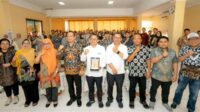
The launch took place on Saturday (Sept. 5, 2026), alongside a motivational lecture for 1,135 new students and the wider INSTIPER academic community. The lecture was delivered by National Development Planning Minister and Head of the National Development Planning Agency (Bappenas) Prof. Dr. Ir. H. Rachmat Pambudy, MS.
The event, held at GRHA INSTIPER, was part of the university’s activities welcoming students for the 2026/2027 academic year. It provided new students with perspectives on the role of young people in addressing Indonesia’s development challenges, particularly in the plantation and forestry sectors.
Also Read: INSTIPER Strengthens Industry Linkages as Graduates Secure Jobs Ahead of Graduation
INSTIPER Rector Dr. Ir. Harsawardana, M.Eng., said the plantation sector plays a critical role in Indonesia’s economic development by generating foreign exchange, creating employment and supporting economic activity in remote areas.
“Choosing to study at INSTIPER Yogyakarta is the right decision because, upon graduation, you will become highly qualified human resources who can actively contribute to the development of Indonesia’s plantation and forestry sectors, which are INSTIPER Yogyakarta’s core competencies,” Harsawardana said, in an official statement received by PalmOilMagazine on Saturday (Sept. 5)..
Rachmat Pambudy encouraged the new students to use their university years to develop technical competencies, character and the ability to respond to real-world challenges.
Also Read: INSTIPER Yogyakarta Welcomes 1,135 New Students, 150 Receive Oil Palm Scholarships
“Use your education at INSTIPER as an opportunity to build competence, character and readiness to enter the workforce and address real problems in society. Indonesia needs young people who are ready to contribute and build the country,” he said.
He added that plantation and forestry sectors would continue to evolve and play an important role in national development.
Sekolah Kopi Nusantara Integrates Formal and Nonformal Education
The launch of Sekolah Kopi Nusantara marked another strategic step by INSTIPER to strengthen education and human resource development in Indonesia’s coffee sector.
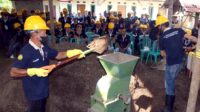
The launch was symbolized by the joint pouring of roasted coffee beans into a grinder, representing the contribution of all stakeholders involved in the initiative. Rachmat Pambudy then switched on the grinder, symbolizing his commitment to supporting and overseeing the development of the program.
Also Read: KPBN Inacom CPO Price Falls Friday, September 4, to IDR 16,025, CIF Rotterdam Drops to US$1,585
The initiative involves the Indonesian Coffee Council, INSTIPER and the Akademi Komunitas Perkebunan Yogyakarta (AKPY), which will operate the Sekolah Kopi Nusantara program.
SKN is designed as an integrated learning ecosystem connecting formal and nonformal education. Competencies acquired through nonformal training can be accumulated, assessed and recognized before participants continue to formal education through a Recognition of Prior Learning (RPL) mechanism.
The nonformal pathway consists of three programs: the Micro Skill Program, lasting three to five days; Applied Coffee Skills, lasting 10–12 days; and the Professional Coffee Academy, lasting 10–12 weeks.
Also Read: Malaysia CPO Futures Rise 0.55% as November Contract Climbs to RM4,931 per Ton
All three programs are competency-based, with training weighted toward practical learning, consisting of approximately 25% theory and 75% practical activities.
The formal education pathway is structured progressively through the D1 program at AKPY STIPER, the D3 program at the Politeknik Industri Perkebunan (PIP STIPER), and undergraduate programs at INSTIPER.
This structure allows participants to develop their skills progressively, from skilled operators and unit supervisors to analysts, planners and innovators within a sustainable coffee production system.
Training Covers Coffee Value Chain from Farm to Market
Dr. Ir. Purwadi, who presented the SKN concept, said the program was designed to address human resource development needs across the entire coffee value chain.
“Sekolah Kopi Nusantara is designed to comprehensively address human resource development in the coffee sector, from upstream to downstream. Participants will learn not only cultivation, but also processing, quality, roasting, brewing, barista skills and coffee business,” Purwadi said.
The learning ecosystem is supported by education and practical facilities operated by YPKPY/INSTIPER.
These include SEAT Ungaran for upstream plantation training, the Pilot Plant Pengolahan Hasil Perkebunan for processing and quality development, and the INSTIPER Lab Coffee for downstream activities such as brewing, espresso, sensory evaluation, service and coffee business.
The program is also intended to strengthen connections among higher education institutions, industry and community needs.
Training will combine classroom learning, field practice, industry projects and competency assessments based on evidence of participants’ skills.
The SKN curriculum covers a broad range of competencies, including Coffee Foundations and Professionalism; Agroecosystems and Plantation Establishment; Sustainable Coffee Production; Harvesting and Post-Harvest Processing; Quality and Traceability; Roasting and Sensory Evaluation; Brewing and Espresso; Barista Skills and Service Operations; Coffee Business and Value Chains; and Industry Immersion and Final Projects.
Through this approach, Sekolah Kopi Nusantara is expected to evolve beyond a conventional training center into an integrated learning ecosystem capable of producing skilled professionals while supporting innovation and strengthening Indonesia’s coffee industry.
Supporting Indonesia’s Sustainable Agroindustry
The launch, held as part of INSTIPER’s new student orientation activities, also underscored the university’s emphasis on connecting higher education with real-world industry challenges, technology and national development needs.
Through Sekolah Kopi Nusantara, INSTIPER aims to provide adaptive and practical higher education that is closely connected to industry while supporting sustainable development.
The initiative is expected to help equip Indonesia’s younger generation with the skills needed to contribute to the growth and transformation of the country’s agriculture, plantation and agroindustry sectors. (P3)