India sees tighter Indonesian export controls as an opportunity to accelerate domestic palm oil production, strengthen bioenergy development, and reduce reliance on imports.
PALMOILMAGAZINE, New Delhi, India — Indonesia’s tighter controls on exports of selected palm oil products are being viewed in India not merely as a shift in global trade policy, but as a catalyst to accelerate the country’s edible oil self-sufficiency agenda. As global supply dynamics evolve, India is seeking to expand domestic palm oil production, strengthen its bioenergy sector, and reduce dependence on imported vegetable oils.
According to a report by Fortune India, Indonesia has maintained its export ban on Palm Oil Mill Effluent (POME) and Used Cooking Oil (UCO) to secure feedstock for its domestic biodiesel and Sustainable Aviation Fuel (SAF) industries.
Also Read: Indonesia Tightens Export Regulations on POME and Used Cooking Oil
The report also noted that Indonesia is considering centralizing exports of strategic commodities, including crude palm oil (CPO), through designated state-owned enterprises. The proposed policy signals a greater government role in managing strategic commodity exports and could have implications for global palm oil supply.
For India, however, these developments are being interpreted as an opportunity to strengthen its domestic oil palm industry and improve long-term food and energy security.
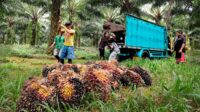
The Indian government launched the National Mission on Edible Oils–Oil Palm (NMEO-OP) in 2021 with the objective of expanding oil palm cultivation to 650,000 hectares by the 2025–2026 fiscal year. Although industry observers have suggested implementation has progressed more slowly than initially planned, India had already reached approximately 640,000 hectares of oil palm plantations by March 2026, placing the country close to its national target.
Also Read: EU Exempts Palm Oil Waste from EUDR, Creating New Opportunities for Circular Economy Growth
As more plantations enter their productive years, India’s domestic crude palm oil output is expected to increase significantly. National production is projected to reach around 1.5 million metric tons by 2030–2031—nearly three times current production levels.
Fortune India also challenged the perception that India’s climate is unsuitable for oil palm cultivation. While much of the country lies outside the equatorial tropics, several southern states possess favorable agro-climatic conditions, particularly when supported by irrigation infrastructure and modern agronomic practices.
The success of Andhra Pradesh and Telangana, which together account for approximately 98% of India’s palm oil production, demonstrates the crop’s commercial potential under suitable growing conditions.
The expansion of oil palm cultivation has also improved farmer incomes. According to the report, some growers in Andhra Pradesh have tripled their earnings after switching from lower-value crops to oil palm cultivation.
Beyond food security, India is integrating sustainability into its oil palm development strategy. New plantations are being established primarily on degraded land or agricultural areas previously planted with lower-value crops, minimizing pressure on forested landscapes.
Oil palm is also recognized as one of the world’s most efficient vegetable oil crops, producing substantially higher oil yields per hectare than competing oilseed crops such as soybean and sunflower.
Also Read: Indonesia Cuts August CPO Reference Price to USD 996.52/MT as Export Charges Adjust
Sustainable oil palm development is expected to contribute to India’s long-term carbon neutrality ambitions. Oil palm plantations can function as carbon sinks, while processing residues offer additional renewable energy opportunities.
One example is the utilization of Palm Oil Mill Effluent (POME) for biogas production. Godrej Agrovet has announced plans to develop compressed biogas (CBG) facilities using POME as feedstock, producing renewable fuel for vehicles, household cooking, electricity generation, and industrial applications.
In addition, the adoption of drip irrigation systems and the expansion of plantations into high-rainfall regions are expected to reduce pressure on water resources compared with more water-intensive crops such as rice and sugarcane.
Also Read: Can Indonesia’s Oil Palm Residues Power the Future of Aviation?
According to Fortune India, Indonesia’s tighter controls on selected palm oil exports should not be viewed as a threat to India’s food security. Instead, they present an opportunity for the country to accelerate edible oil self-sufficiency, reduce import dependence, expand renewable energy production, and improve farmer livelihoods through the sustainable development of its domestic oil palm industry. (P2)