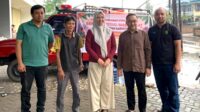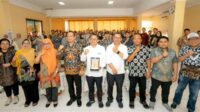
The partnership aims to strengthen community-based waste management while creating economic value from recyclable materials in Sembuluh I Village, Central Kalimantan.
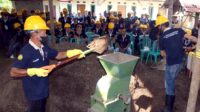
PALMOILMAGAZINE, SERUYAN — PT Kerry Sawit Indonesia (KSY), part of Wilmar Group, has partnered with the Pejuang Muda Community Self-Help Group (KSM) to strengthen community-based waste management through the Sembuluh I Village Reduce, Reuse, Recycle (TPS3R) waste processing facility in Seruyan Regency, Central Kalimantan.
The partnership is aimed not only at reducing waste generated by the company’s operations but also at turning waste into an economic resource while strengthening the community’s capacity to independently manage the TPS3R facility.
Also Read: Agrinas Palma Nusantara Delivers Aid to 1,560 Earthquake-Affected People in NTT
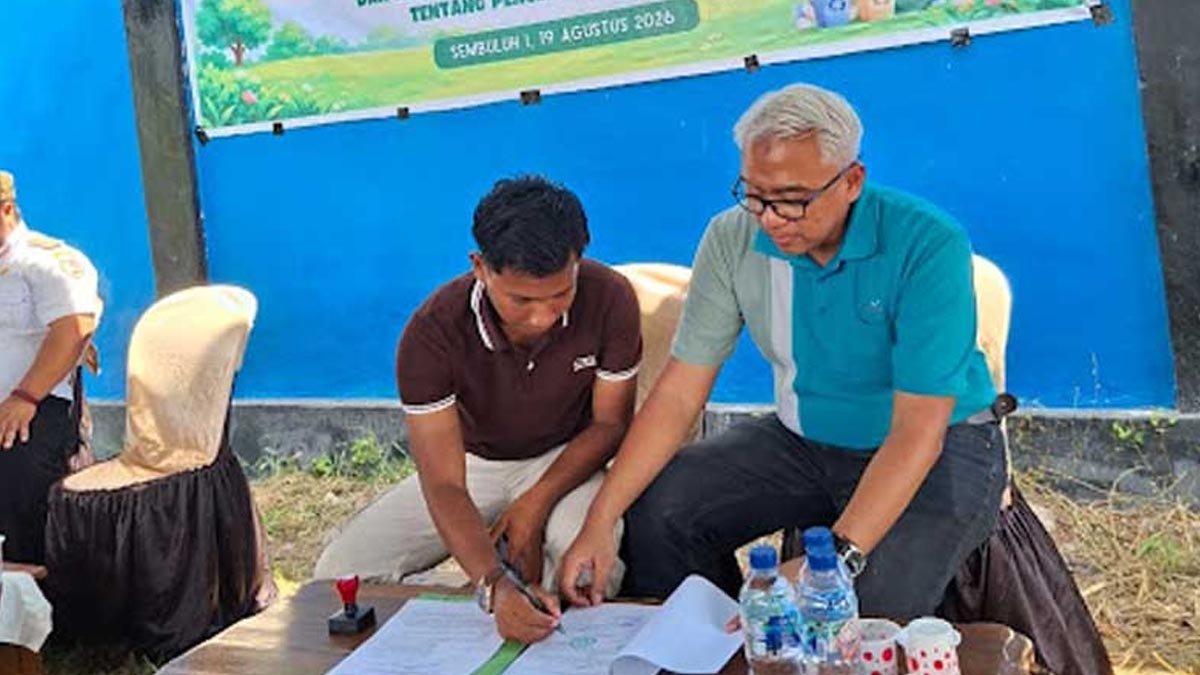
The collaboration was formalized through the signing of a waste management memorandum of understanding (MoU) on Tuesday (Aug. 19). Under the agreement, organic and inorganic waste sorted at the source will be delivered by the company to the Sembuluh I TPS3R facility for further processing.
As part of the initial delivery, the company handed over 113 kilograms of cardboard waste and 50 kilograms of plastic waste to the TPS3R management team.
Supporting a More Independent Waste Facility
Sembuluh I Village Head Hery Subrata welcomed the partnership between the company and KSM Pejuang Muda, saying the collaboration provides dual benefits by helping address waste management challenges while creating economic opportunities for the local community.
In addition to receiving waste from the company, KSM Pejuang Muda has collected waste from 388 households over the past two months, indicating the potential for further development of community-based waste management.
Also Read: Wilmar Highlights People and Workplace Culture as Keys to Future Plantation Success
“The cooperation with the company is very helpful in supporting the operation of the TPS3R so that it can become more independent and create employment opportunities,” Hery said in an official statement received by PalmOilMagazine on Tuesday (Sept. 1).
He said the TPS3R should not be viewed merely as a facility for collecting or reducing waste. With consistent management, the facility could develop into a productive community-based activity that generates economic benefits for residents.
Waste Sorting Key to Effective Management
Support for the initiative has also come from the Seruyan Regency Environmental and Forestry Agency (DLHK). Muhammad Taufik, head of the agency’s Waste Management Division, welcomed the company’s involvement in strengthening waste management through the TPS3R facility.
He said the partnership could serve as an example for other stakeholders to become involved in environmental protection while supporting community empowerment.
Also Read: Wilmar Reports 38% Net Profit Growth in H2 2025 as Feed and Industrial Products Segment Strengthens
“Environmental protection requires support from all parties,” Taufik said.
Seruyan DLHK Head Akhmad Hidayat also welcomed the collaboration, expressing hope that the partnership between Wilmar Group and the Sembuluh I TPS3R would contribute to the local government’s efforts to improve waste management across the regency.
“We hope this cooperation will contribute to waste management in Seruyan and that it can continue sustainably,” Hidayat said.
Also Read: 174 OKU Oil Palm Smallholders Train in Cultivation, Pest Control and Replanting
Wilmar Ensures Waste Is Sorted at Source
Wilmar Group Central Kalimantan Corporate Social Responsibility Manager Widiyanto said the company would provide inorganic waste generated by its operations and employees under the partnership.
The materials include paper, plastic and metal. Before being delivered to the TPS3R, the waste is sorted at the source to ensure that the materials received by the facility can be processed according to their respective categories.
Also Read: Indonesian Lawmaker Urges Palm Oil to Become a Major Source of Energy
The company also ensures that the waste delivered to the facility is not mixed with hazardous and toxic materials (B3).
Sorting waste at the source is an important part of developing a more effective waste management system. Separating materials by type makes them easier to process, reuse and recover for their economic value.
Securing Waste Supply and Creating Economic Value
According to Widiyanto, the continuity of material supply is one of the challenges frequently faced by community-based waste management units. Through the partnership, the company is seeking to provide a more reliable supply of recyclable waste for the TPS3R.
“The company can guarantee waste supplies to the TPS3R, which has been one of the main challenges affecting the sustainability of waste management units. At the same time, the community can gain added value from managing the waste,” Widiyanto said.
Also Read: KPBN Inacom CPO Price Edges Down to IDR 16,000 per Kg on Sept. 2
The collaboration demonstrates how waste management can serve both environmental objectives and community economic development.
With the involvement of the company, local government and community, the Sembuluh I TPS3R is expected to reduce waste generation while developing into a more independent and sustainable waste management unit.
For plantation areas such as Seruyan, this type of collaboration offers a potential model for connecting environmental management with community empowerment. Waste that was previously viewed primarily as a problem can instead be processed as a resource capable of generating economic benefits for local communities. (P2)