Four speakers at Palmex Medan 2026 examined how to turn oil palm residues into usable feedstocks while addressing logistics, mill operations and landscape-level assurance.
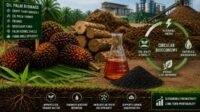
PALMOILMAGAZINE, MEDAN – Indonesia has substantial oil palm biomass resources, but turning them into dependable, commercially viable products requires more than identifying large volumes. Technology, transport costs, existing uses and sustainability safeguards will all shape whether residues can support a circular bioeconomy.
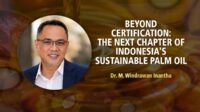
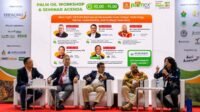
Those issues framed the Palmex Medan 2026 session, “The Circular Bioeconomy of Oil Palm Biomass: A Circular Economy Built on Technological Feasibility, Supply Chain Reliability, and Sustainability,” held at the Santika Premiere Dyandra Hotel & Convention. Moderated by Dr. M. Windrawan Inantha, Executive Director of UN Global Network Indonesia (IGCN), the session brought together perspectives from biofuel technology, biomass supply-chain research, plantation operations and landscape-level sourcing.
Also Read: From Waste to Wealth: Can Oil Palm Biomass Become Indonesia’s Next Green Growth Engine?
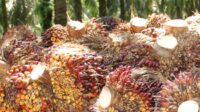
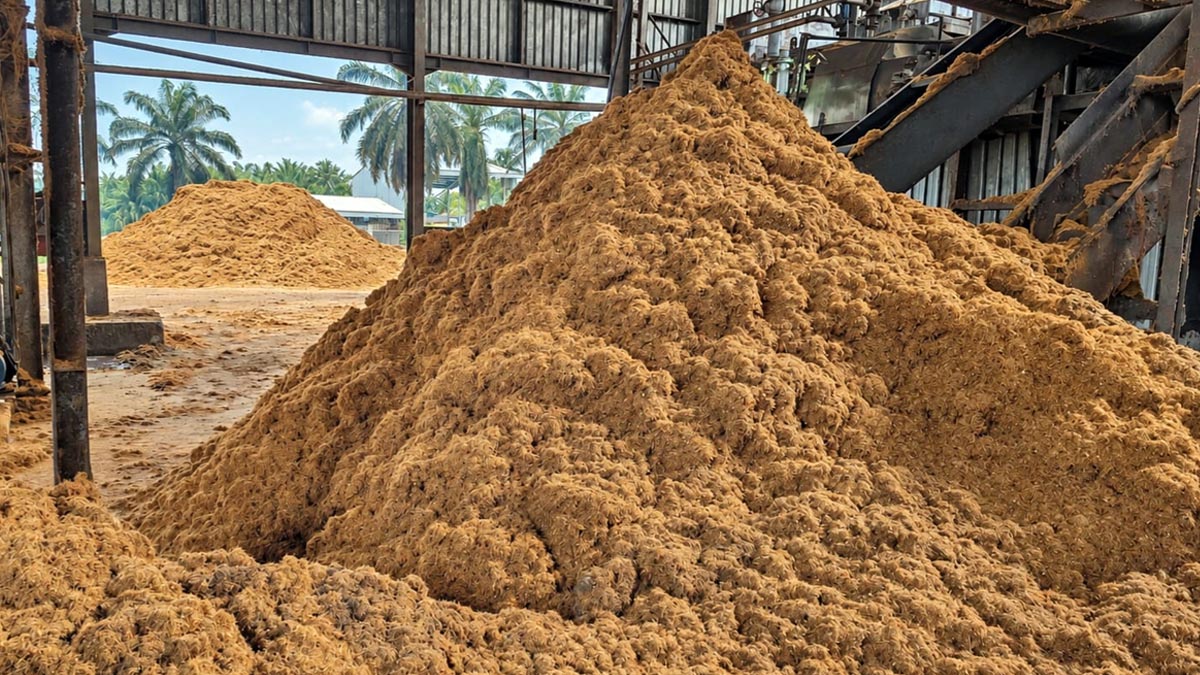
Indicative estimates presented to set the scene put annual oil palm frond production at 175–242 million tonnes of dry matter, empty fruit bunches (EFB) at 48.2–55.4 million tonnes, mesocarp fibre at 24.1–36.1 million tonnes, and palm kernel shells at 11.4–16.9 million tonnes. Palm oil
mill effluent (POME) was estimated at 120–181 million cubic metres. The figures illustrate the scale of the resource, while the speakers stressed that gross biomass volumes do not equal volumes that can be recovered, transported and supplied sustainably.
From residue to fuel feedstock
Mr. Satyanarayana J. V. V., Group Managing Director of Green Lubes Malaysia Sdn. Bhd., presented “Feedstock to Flight: Turning Palm Residues into Bankable Biodiesel and SAF Feedstock.” He described the company’s plans to upgrade existing biofuel infrastructure for sustainable aviation fuel (SAF) feedstock production and proposed recovering oil from POME, mesocarp fibre and EFB at palm oil mills.
“We are thinking outside the box by upgrading our biodiesel plant into a facility for SAF feedstock. At the same time, mills can increase their revenue by recovering oil from mesocarp fibre, POME and EFB,” said Satyanarayana, in a statement received by PalmOilMagazine on Thursday (Oct. 8).
Also Read: Ministry of Industry: Palm Biomass Among the Safest Non-Food Sources for Future Bioethanol
The company’s presentation cited oil extraction rates of 0.5% to 1% at operating plants and described a proposed model in which recovered oil would be purchased for biofuel applications. Actual recovery and returns would depend on site conditions, plant performance and
commercial arrangements. Green Lubes Malaysia also identified long-term feedstock supply, space and utilities at mills, and reliable offtake as requirements for the model.
Also Read: Indonesia’s Oil Palm Biomass: A Renewable Energy Opportunity
Availability is only part of the supply-chain question
Prof. Dr. Diana Chalil of the Consortium Studies on Smallholder Palm Oil at the University of North Sumatra (USU) examined the issue in “Is There Enough, and Can It Move? The Real Structure of Indonesia’s Palm Oil Biomass Supply Chain.” Her presentation looked at EFB availability and transport in North Sumatra and Riau, drawing on a sample of 28 mills: 15 in North Sumatra and 13 in Riau.
The analysis estimated that around 23.08 million tonnes of EFB could be available from annual production of 46.16 million tonnes, after accounting for existing uses. Those uses include returning EFB to plantations as organic material, processing it into ash for fertilizer, and selling it for other uses. The study also showed how distance, road conditions and truck capacity can affect transport costs. In a cited EFB-to-bioethanol case, shipping costs represented a much larger share of feedstock costs than the EFB itself, underlining the importance of locating processing facilities close to supply.
Also Read: Indonesia’s Palm Oil Industry Drives Sustainable Economic Transformation
A grower’s view of integrated utilisation
dr. Rizal Fadli, Sustainability Operation Head at PT Sumber Tani Agung Resources Tbk (STAA), presented “From Waste Stream to Power Plant: An Integrated Grower’s Biomass Stocktake and the Road to Full Utilisation.” His session brought the plantation and grower perspective into the discussion, focusing on how biomass streams can be assessed and used across an integrated operation. This perspective connected potential end uses with the practical realities of mill and plantation systems.
Sourcing assurance beyond the mill boundary
Mr. Jimmy Wilopo, Senior Project Manager, Landscape, at Daemeter Consulting, presented “Sourcing Beyond the Fence Line: Landscape-Level NDPE Assurance for Biomass Feedstock, Lessons from Siak–Pelalawan.” He described the Siak Pelalawan Landscape Programme (SPLP), an initiative involving nine upstream and downstream palm oil companies working across a shared sourcing landscape.
Riau contributes around 20% of Indonesia’s palm oil production, while approximately 35% of the Siak-Pelalawan landscape is forested, including some of Sumatra’s remaining peat forest. The programme brings companies together with government and other local actors to address issues that individual supply-chain programmes may not resolve on their own. Its activities include forest and peat protection, deforestation monitoring and response, smallholder and community support, traceability, social dialogue and multi-stakeholder collaboration.
Also Read: KPBN Inacom CPO Price Falls to IDR 14,625/kg on Wednesday (Oct. 7), Malaysia CPO Futures Weaken
Together, the presentations highlighted a connected set of decisions for biomass projects: which residues can be recovered without undermining their existing uses; whether processing technology can meet product and cost requirements; how supply can be collected and transported reliably; and how sourcing can be monitored across plantations, mills and the wider landscape.
The session concluded that biomass potential is an important starting point, but practical implementation depends on matching technology to feedstock, building viable supply chains and ensuring that new uses deliver value while maintaining responsible production. (P3)