PALMOILMAGAZINE, JAKARTA – Indonesia’s sustainable palm oil journey has come a long way over the past decade. Certification has expanded, government policies have evolved, traceability is receiving greater attention, and sustainability is increasingly being addressed not only at plantation level but also across districts and landscapes.
Yet the next challenge may be more difficult. How do these different initiatives connect into a system that works on the ground and can continue beyond individual programmes and projects?
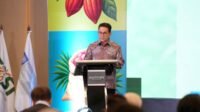
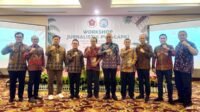
This question was at the centre of a recent discussion held at the invitation of the Coordinating Ministry for Food Affairs during the Regional Learning Forum on Sustainable Commodities in Jakarta. Session 3, “Sustainable Palm Oil Beyond Certification: Landscape Governance and Jurisdictional Approaches,” brought together perspectives from government, the private sector, civil society and development partners.
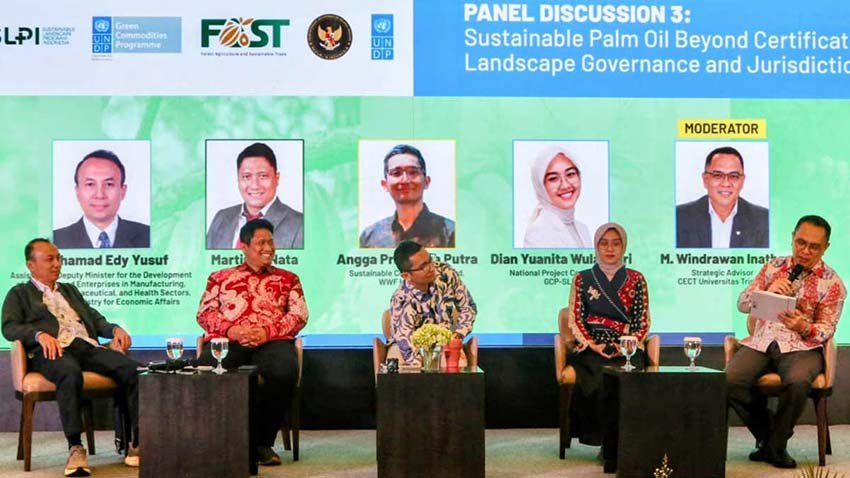
The discussion also reflected a longer journey, one that stretches back more than a decade and involves many hands across government, business and civil society.
Also Read: Can Indonesia’s Oil Palm Residues Power the Future of Aviation?
From FoKSBI to Regional Action
The roots of this work go back to 2015, with the early development of FoKSBI, the Indonesian Sustainable Palm Oil Forum. One of its founding ideas was straightforward. The complexity of palm oil sustainability could not be addressed by government, companies, NGOs or farmers working in isolation. A platform was needed where these interests could meet.
That process fed into a broader national discussion, which eventually led to the National Action Plan for Sustainable Palm Oil, or RAN-KSB, established through Presidential Instruction No. 6 of 2019.
But a national action plan alone could not address the very different realities of Indonesia’s palm oil-producing regions. Many of the issues that determine sustainability, including land legality, farmer registration, environmental management, local infrastructure and conflict resolution, sit closely with provincial and district governments. This was the rationale behind RAD-KSB, the Regional Action Plan for Sustainable Palm Oil.
Also Read: Closing the Biomethane Loop: Why POME Must Become Part of Indonesia’s Energy Strategy
In 2020, UNDP engaged me to lead and facilitate a highly participatory process to develop the RAD-KSB Guidance, working with government institutions and other stakeholders on a practical framework that regional governments could use to translate the national agenda into action. The significance of that work became clearer the following year.
On 20 September 2021, the Ministry of Home Affairs issued Circular Letter No. 525/5133/SJ on the Guidance for the Development of Regional Action Plans for Sustainable Palm Oil. The circular asked governors, regents and mayors in palm oil-producing regions to prepare RAD-KSB using the guidance, establish regional implementation teams, monitor progress and report on implementation. What began as a participatory drafting process had become an official government reference for regional implementation.
RAD-KSB’s relevance has since gone beyond sustainability planning. The Ministry of Finance has incorporated it into the performance component used to allocate palm oil revenue-sharing funds, or DBH Sawit, creating a much stronger connection between sustainable palm oil planning and incentives for local governments.
Also Read: West Papua Develops Regional Action Plan for Sustainable Palm Oil Under RAD KSB Initiative
ISPO Is Also Changing
Another encouraging development is the continuing evolution of the Indonesian Sustainable Palm Oil certification system.
During the forum, the Coordinating Ministry for Economic Affairs presented developments in ISPO. One change that deserves particular attention is the government’s plan to involve independent monitors, academics and NGOs in the ISPO Committee. It may sound like an institutional detail, but it matters. A sustainability standard gains strength not only from the number of certificates it issues, but from its governance, transparency and the ability of different stakeholders to take part in the system.
Independent monitors, academics and NGOs can bring perspectives that government or industry alone may not surface. Their involvement can create stronger checks and balances and help build confidence in how ISPO is governed. This should be seen as an opportunity to strengthen ISPO, not simply to expand its structure.
Also Read: Strengthening Incentives Key to Advancing Smallholder Palm Oil Traceability in Indonesia
Traceability Must Connect the Pieces
Certification is only one part of the picture. PT Surveyor Indonesia presented its work on palm oil traceability, an area becoming more important as domestic regulation and international markets demand better information about the origin of commodities.
Traceability should not, however, become another standalone system. Indonesia already has multiple datasets and information systems covering plantations, land, companies, farmers, certification and supply chains. The challenge is increasingly about connecting them, so a strong traceability system can answer some basic questions. Where was the palm oil produced? Who produced it? Is the plantation legal? Is the producer certified? Through which mill and supply chain did the product move?
For large companies, obtaining this information is increasingly part of normal business. For independent smallholders, the situation can be far more difficult. This is why traceability must be designed not only as a compliance requirement but also as a tool for inclusion. Poorly designed, it can exclude smallholders who lack documentation, technology or resources. Designed well, it can help bring them into formal and more sustainable supply chains.
Why the Landscape Matters
WWF Indonesia’s contribution to the discussion also pointed to another important development: growing interest in landscape approaches. A plantation does not exist in isolation. Water, forests, biodiversity, villages, mills, plantations and smallholder farms all interact within the same landscape, and land conflicts and environmental problems rarely follow concession boundaries.
Certification normally assesses a defined management unit. A landscape or jurisdictional approach asks a different question: how are sustainability issues being managed across a larger geographic area? The two approaches should not compete. Certification can provide assurance at producer or supply-chain level, while landscape and jurisdictional approaches can address problems that require cooperation among multiple actors. Indonesia increasingly needs both.
Also Read: SPKS Urges Stronger BPDP Funding to Expand Palm Oil Certification and Boost Smallholder Productivity
Beyond Certification Does Not Mean Without Certification
The phrase “beyond certification” can easily be misread. It does not mean certification has become irrelevant. ISPO, RSPO and other sustainability systems remain important tools for setting standards, measuring performance and giving markets assurance. But certification cannot carry the entire sustainability agenda.
A certificate alone cannot resolve unclear land status across a district. It cannot build a complete smallholder database. It cannot settle every land conflict, manage an entire watershed or ensure that different government agencies share compatible information. These are governance challenges, and this is why RAN-KSB and RAD-KSB remain important. They provide a space where certification can be connected with government planning, farmer development, environmental management, data, traceability and local economic priorities.
Also Read: Beyond Certification: How Palm Oil Is Trying to Prove Real Environmental Impact
The Next RAN-KSB Should Build on What Already Exists
The first RAN-KSB covered 2019-2024. The question now is not whether Indonesia needs another action plan, but what the next phase should achieve.
UNDP has emphasised the need for stronger institutional arrangements in the plan’s continuation, and for good reason. Sustainability programmes frequently run into the same problem: strong activities are built up during a project period, but their continuation becomes uncertain once the funding ends. The answer is not necessarily another project. The better approach is to institutionalise what has already worked.
Indonesia already has more than a decade of experience from FoKSBI, RAN-KSB, RAD-KSB, ISPO reform, traceability initiatives, landscape programmes and many other efforts by government, companies, civil society and development partners. UNDP’s continued engagement is an opportunity to consolidate these experiences rather than start again.
The next phase should focus on connecting them. RAN-KSB can provide national direction. RAD-KSB can translate it into provincial and district priorities. ISPO can provide producer-level sustainability assurance. Traceability systems can connect production with supply chains and markets. Landscape approaches can address environmental and social challenges that extend beyond individual concessions. And smallholders must be able to participate in all of them.
Also Read: Stronger RAN-KSB 2025–2029 Regulation Seen as Key to Reforming Indonesia’s Palm Oil Industry
From Programmes to Institutions
After more than a decade of collective effort, one lesson is becoming increasingly clear. Indonesia does not lack sustainable palm oil initiatives. The challenge is making them work together.
The next chapter of sustainable palm oil should therefore be less about creating additional programmes and more about connecting the ones that already exist, strengthening institutions and making sure successful approaches survive beyond individual projects.
Certification will remain an important part of that system. But the future of sustainable palm oil will depend on what happens around the certificate: the quality of governance, the credibility of traceability, the participation of smallholders, the condition of the surrounding landscape, and the ability of national and regional institutions to work together. That is what going beyond certification should mean.
From the early FoKSBI discussions to today’s debate on ISPO, traceability and landscape governance, the direction of travel is clear. What is needed now is an open invitation: for government, companies, smallholders, civil society and development partners to carry this work into its next phase together. (*)
By Dr. M. Windrawan Inantha