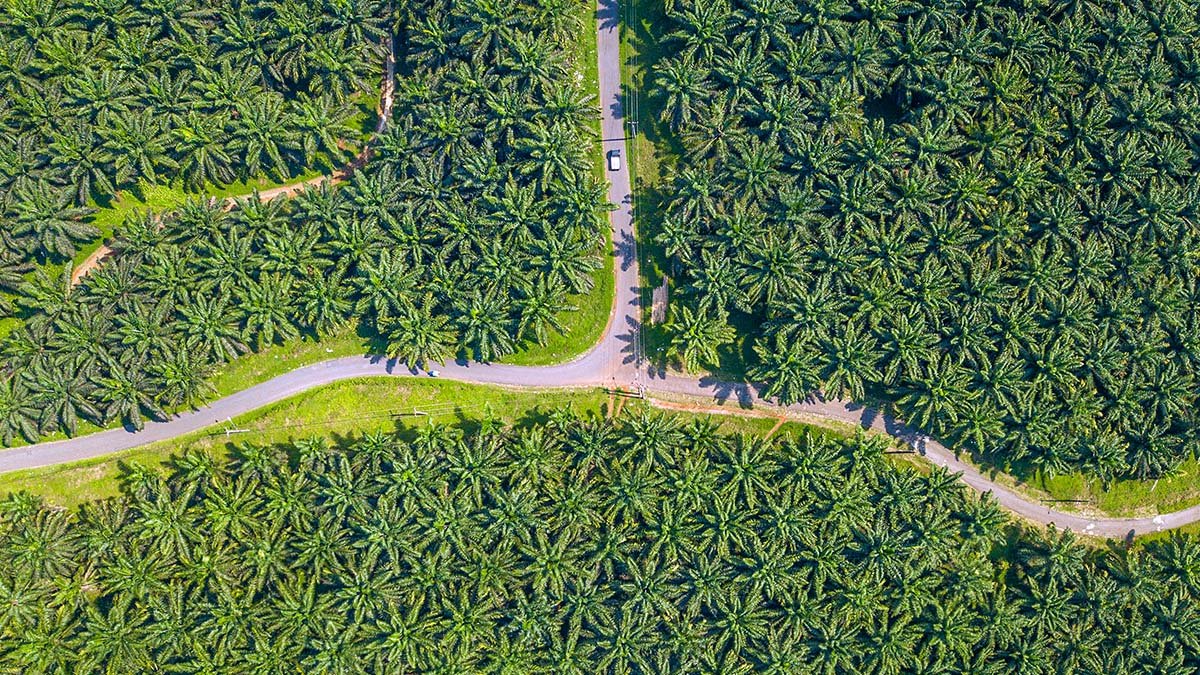
The province has identified 66,005 hectares of potential land for palm oil expansion, but stakeholders are urging stronger land governance, fair partnerships and greater benefits for smallholders.
PALMOILMAGAZINE, PALEMBANG — South Sumatra has been designated as one of the priority areas for Indonesia’s national palm oil expansion program, opening opportunities for plantation development and investment. However, the program must be implemented carefully to ensure that farmers and local communities benefit from the expansion.
South Sumatra palm oil observer H. Rudi Arpian said the expansion program should be viewed as both a major opportunity and a significant responsibility. The government, he said, should not focus solely on increasing plantation acreage but must ensure that the development generates tangible economic benefits for local communities.
Also Read: BPDP and Ditjenbun Strengthen Palm Mapping Skills for Independent Smallholders
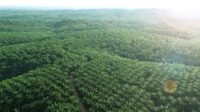
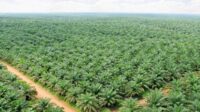
The South Sumatra provincial government has identified approximately 66,005.65 hectares of potential land for the expansion program. However, the identified area cannot automatically be converted into new palm oil plantations because it still requires technical verification and field checks.
The verification process is needed to establish land status and legality, spatial planning compliance, and other technical considerations. Of the identified area, approximately 45,071.38 hectares are located within convertible/production forest areas, while 20,934.27 hectares are classified as Other Use Areas (Areal Penggunaan Lain or APL).
“Palm oil expansion must be implemented based on the principles of legality, productivity, sustainability and community benefit,” Rudi told PalmOilMagazine.
Also Read: South Sumatra Independent Smallholder FFB Prices Reach IDR 3,574.95/kg in August 2026
Economic Opportunity Must Come With Good Governance
According to Rudi, well-managed palm oil development could generate broad economic benefits. In addition to attracting investment, plantation expansion could create jobs, stimulate rural economies, strengthen downstream industries and increase regional revenues.
However, expanding plantation acreage does not automatically guarantee stable fresh fruit bunch (FFB) prices or higher farmer welfare.
FFB prices remain influenced by several factors, including CPO prices, global market conditions, plantation productivity, production costs, fruit quality and the trading system. Therefore, the economic benefits of expansion must be designed from the outset rather than simply measured by the increase in plantation acreage.
“What must be ensured is that the economic value generated by the development can be enjoyed by local communities and remain within the region,” he said.
Also Read: When Smallholders Support Global Palm Oil Markets, It Is Time to Rethink Farm Scale
Farmers Must Be Part of the Value Chain
Rudi warned that the expansion program should not simply result in larger corporate plantations while surrounding communities are left with jobs primarily as plantation workers.
Farmer institutions, he said, must be strengthened through cooperatives, farmer groups and transparent partnership schemes that improve smallholders’ bargaining positions.
Also Read: 101 South Sumatra Smallholders Complete BPDP-IPB Oil Palm Training to Improve Productivity
Under existing regulations governing community plantation development, companies are subject to provisions concerning the facilitation of plantations for surrounding communities, including a 20% obligation under specified conditions and schemes. Such arrangements may take the form of credit schemes, profit sharing, other agreed financing mechanisms or alternative partnership models.
The requirement, therefore, should not remain merely an administrative figure.
“Local governments must ensure that community rights and benefits are actually delivered and can be monitored,” Rudi said.
Avoid Repeating Past Problems
Rudi stressed that palm oil expansion should become an opportunity to improve plantation governance rather than repeat problems from the past.
Potential risks include unclear land legality, conflicts with local communities, development in areas that violate regulations and partnership commitments that fail to materialize.
Authorities must also prevent situations in which farmers lose their bargaining power or local communities end up working as laborers on land that should provide them with economic benefits.
Productive food-producing land, areas that do not comply with spatial planning rules, and locations facing social or environmental concerns should not be sacrificed simply to meet plantation expansion targets, Rudi said.
Also Read: 87 Aceh Singkil Palm Oil Smallholders Trained to Prepare for ISPO Certification
Palm Oil Can Grow, But Other Commodities Must Be Protected
South Sumatra has a strong palm oil plantation base. However, Rudi cautioned against making the pursuit of the country’s top palm oil production ranking the primary development objective.
Based on 2024 palm oil production data from the Ministry of Agriculture, South Sumatra ranked approximately fourth nationally, with production estimated at around 3.96 million to 4.1 million metric tons, behind Riau, Central Kalimantan and North Sumatra.
Future development, therefore, should focus more on improving productivity, increasing value-added activities, raising farmer welfare and strengthening downstream industries.
At the same time, commodity diversification must be maintained. Rubber, palm oil, food crops, horticulture and other plantation commodities all remain important to the livelihoods and economy of South Sumatra.
“Farmers’ entire economic choices should not become dependent on a single commodity,” Rudi said.
Also Read: APHI-GAPKI Urge Joint Protocol to Speed Up Forest and Land Fire Response
Government Must Be Involved From the Start
Rudi urged the central and South Sumatra governments to look beyond the amount of land available for development and address several fundamental questions from the outset.
These include who will benefit, the legal status of the land, the partnership model, the future of surrounding farmers, potential impacts on food security and the environment, and how much added economic value will remain and circulate within rural communities.
These questions, he said, should form part of the program’s success indicators.
“Good expansion is not simply about increasing plantation acreage, but about improving people’s welfare,” he said.
Rudi views South Sumatra’s palm oil expansion program as a major opportunity that should be pursued intelligently. Palm oil development and investment remain important, but they must go hand in hand with protection of community rights, legal certainty, environmental sustainability, food security and the long-term viability of smallholder plantations.
The expansion of plantation acreage should not come at the cost of weakening farmers’ bargaining positions.
“Palm oil should be a ladder to prosperity, not a trap for farmers.”
Ultimately, the success of palm oil expansion should not be measured solely by how many hectares are planted. A more meaningful measure is how effectively the program improves productivity, creates greater value and raises the welfare of farming families. (P3)