PALMOILMAGAZINE, PEKANBARU – The Provincial Government of Riau has begun reassessing the management of its palm oil Revenue-Sharing Fund (DBH), particularly in the infrastructure sector, in response to regulatory changes and mounting regional fiscal pressures.
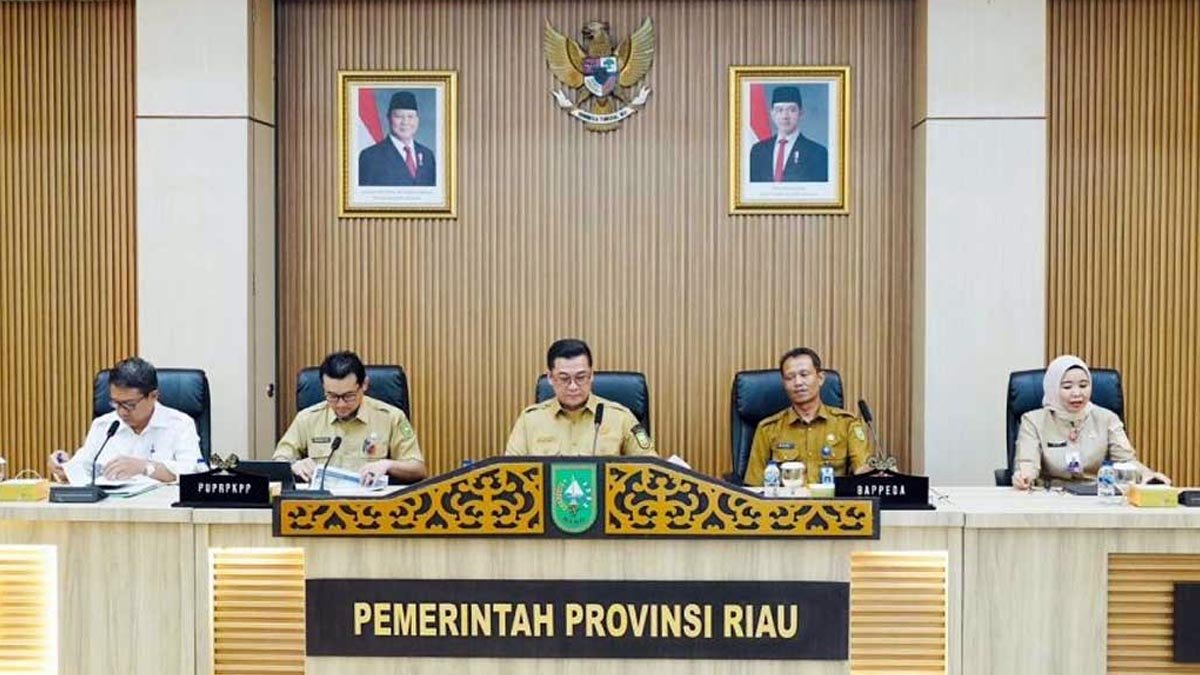
The move was discussed during a coordination meeting held on April 26, 2026, as quoted by Palmoilmagazine.com from the Riau Media Center. The session, which took place in the Melati Room, was led by Regional Secretary Syahrial Abdi.
During the meeting, Syahrial emphasized the importance of building a shared understanding of recent policy changes, especially following the introduction of new regulations governing the disbursement of palm oil DBH funds.
Also Read: Strengthening Incentives Key to Advancing Smallholder Palm Oil Traceability in Indonesia
He noted that while there is no dispute over the revenue-sharing mechanism itself, the actual funds received by the region have shown a declining trend, prompting the need for more adaptive management strategies.
“This discussion is necessary because there are fundamental regulatory changes. We are not debating the revenue-sharing formula, but it is clear that the amount received is decreasing,” he stated.
The situation is further compounded by increasing fiscal constraints, which demand more efficient and targeted use of public funds. Every allocation must now deliver measurable impact on regional development.
Also Read: BPDP Funding Imbalance Raises Concerns as Biodiesel Outpaces Support for Palm Oil Smallholders
The coordination meeting also highlighted the need to adjust regional work plans in line with the latest provisions under the updated Peraturan Menteri Keuangan Nomor 10 Tahun 2026, which replaces Peraturan Menteri Keuangan Nomor 91 Tahun 2023. Under the new framework, verification of regional needs must align with the actual DBH allocation and on-the-ground conditions.
One key policy shift allows regions to receive funding as both producing and border areas—where previously only one category could be applied. This change is expected to make fund distribution more proportional and reflective of each region’s geographic and economic contributions.
In addition, the use of DBH funds is no longer strictly focused on infrastructure development. At least 15 percent of the allocation can now be directed toward other priority needs under a more flexible mechanism introduced by the government.
However, the new policy also brings stricter administrative requirements. Regional governments are now expected to demonstrate higher levels of accountability in both planning and reporting fund utilization.
Syahrial stressed that the coordination meeting forms part of a broader evaluation of DBH management procedures, aimed at improving transparency and ensuring funds are used effectively amid evolving policy dynamics.
“This means administrative processes will become more stringent. This meeting is part of our effort to evaluate and improve procedures,” he concluded. (P2)